The Server Room, Ars Technica's community for IT professionals, is sponsored by Dell's Future of Storage. This article is part of our ongoing series of topics and discussions related to IT and storage technology.
The steady upward march of hard disk capacities (and the downward march in price per bit) continued apace this week, with a number of storage-related announcements worth noting. Here's a quick overview of the highlights:
On the mobile front, Toshiba announced the world's first 5,400RPM, 1.8" drive to hit the 160GB mark this past Tuesday. The new SATA 1.5Gbps drive weighs in at 80GB per platter, so there will be an 80GB single-platter version and a 160GB dual-platter version.
Drives like this will allow magnetic storage to continue to fend off solid state disks in the near term, especially for ultramobile devices like the Eee PC and its slew of imitators. Looking a bit further out, though, let's not forget that the Intel/Micron joint flash venture will have 80GB and 160GB SSDs out in the second half of this year. While the flash-based drives will have a dramatically higher cost per bit, they'll also be much faster than magnetic storage and should offer some battery life advantages.
So will consumers go for the cheaper storage or the faster, more power-efficient storage? My bet is that in the current economic climate, cheap will win in the consumer space.
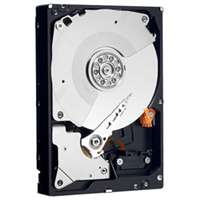
Turning to the desktop, Western Digital matched Toshiba's Tuesday press release with an announcement of its own: the division of the venerable Caviar line into three separate sub-lines. At the high-end, there's the Caviar Black, which is WD's enthusiast drive. The new Black is represented by two models, 750GB and 1TB, both of which are 7,200RPM drives with 333GB platters. The drives are $199 for 750GB and $249 for 1TB, and both sport a SATA 3Gbps interface and 32MB of cache.