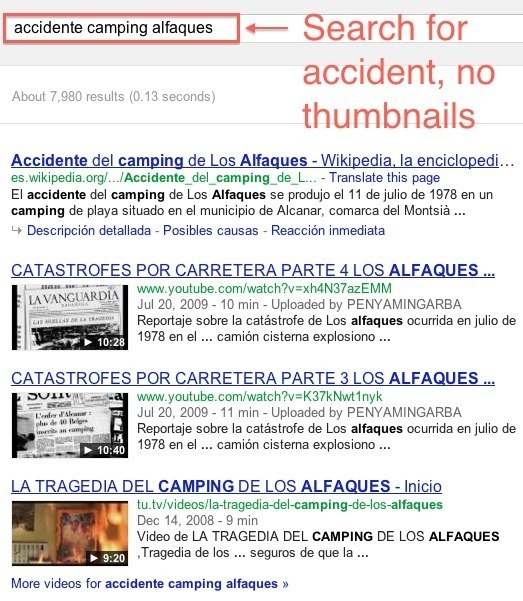
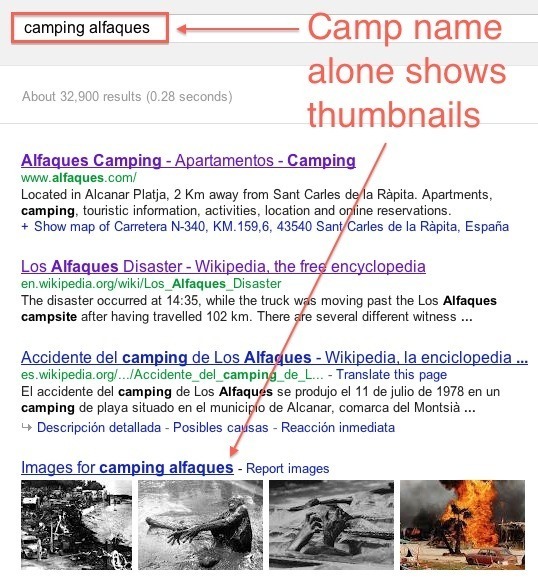
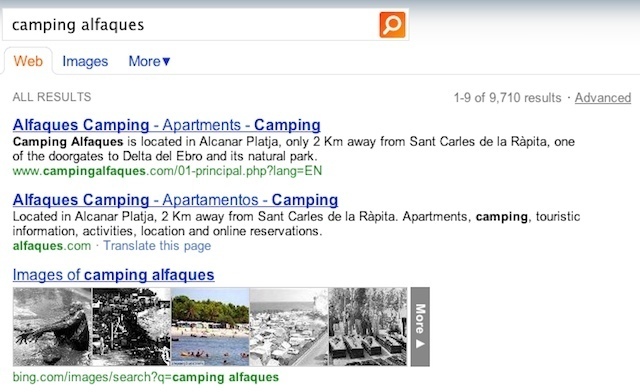
Last week, we covered the story of Camping Alfaques, a Spanish vacation spot whose owner recently sued Google in a local court. His concern: top search results that feature grisly images (note: thumbnail versions of a few appear in a screenshot below) of dead bodies from an old tragedy. Such cases have so many implications for the future of search engines and the companies who depend on them that we spoke to the owner of Camping Alfaques to learn more about his situation. He told us what led him to sue Google, how much the case matters to him, and why he doesn’t want anything “deleted” from the ‘Net—just relocated.
Mario Gianni Masiá, now the owner of an oceanfront vacation spot called “Camping Alfaques” in southern Spain, was a child in 1978 when a tanker truck exploded into a fireball on the road just beyond the site. 23 tons of fuel ignited, immediately turning 200 campers to ash and badly burning several hundred more. Safely on the other side of the camp, Mario was unscathed.
Photographers descended, of course; pictures were snapped, graphic shots of bodies stacked like charcoal, carbonized arms rising from the earth. Newspapers covered the deaths. A movie was made. But 30 years is a long time, and while memories of the disaster never vanished, visitors to the campground didn’t have the most shocking images shoved in their faces just for planning a trip.
Until two-and-half years ago, Mario says, when Google’s algorithm changed. Suddenly, right there in the top results for his vacation business, were black and white photos of charred human flesh. Mario has been trying ever since to convince Google that it needs to change this. He doesn’t suspect any malice on Google’s part, but neither is he willing to throw up his hands in the face of Google’s ranking equations.
“Algorithms can have errors,” he said when we spoke by phone this week. “Significant errors, like this one, have to be addressed.”
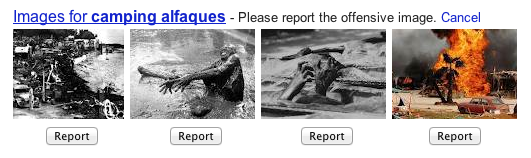
Years of trying to get them addressed have had little effect. A regional IT consultant told him that the websites hosting the pictures had no interest in making any changes, so Mario decided to try Google. He began reporting the images as offensive, using Google’s own tools, sometimes clicking on each five times a day; it had no result. He sent a certified letter to Google, begging them to associate the graphic images with searches for the accident and not with generic ones for his campground; they said there was nothing they could do.

 Loading comments...