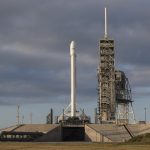
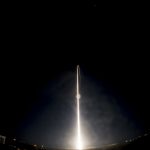
On May 15, SpaceX launched its heaviest payload ever to geosynchronous transfer orbit, a vantage point far above the Earth. Because the Inmarsat satellite weighed more than six tons, it was originally scheduled to launch on SpaceX’s Falcon Heavy rocket. Back when the launch contract was signed in 2014, neither SpaceX nor Inmarsat anticipated the regular Falcon 9 rocket would have the capability to lift so much, so high.
However, since the Falcon 9 began regular flights in 2012, SpaceX has acted more like a startup company than a traditional aerospace company, making two or three major upgrades to the booster and dozens of smaller modifications designed to improve its performance. By doing so, SpaceX has essentially doubled the rocket’s lift capacity. Partly as a result of this, the US military now allows SpaceX to bid for national security payload launches.
SpaceX has paid for these upgrades by leveraging private investment alongside revenues from government and commercial launch contracts to improve its products. This innovative approach to the aerospace business, including the pursuit of reusability, has upended the global launch market, and it has sent competitors such as the US-based United Launch Alliance (ULA) scrambling to compete on price.
Government award
A day after SpaceX’s Inmarsat launch last month, the US Department of Defense quietly awarded ULA an amount not to exceed $27.4 million to convert its launch vehicle from “heritage avionics to common avionics.” According to the contract award, the work was to be completed by July 1, 2019 at the company’s facilities in Decatur, Alabama. The avionics on board a rocket include communications, navigation, and management of multiple systems to control flight.
The government award to ULA reinforces the notion that, traditionally in aerospace, the government pays for rocket upgrades. But it is also curious because of its timing—for work to be completed two years from now. Based upon information in an article written by two ULA engineers and published in Advances in the Astronautical Sciences Guidance, Navigation and Control, the avionics system has already been upgraded. Moreover, the February 5, 2016 launch of a GPS satellite for the Air Force marked the first launch of the common avionics system.

 Loading comments...