It might seem odd for someone who writes about climate change to be a racing fan, but no one ever said life was uncomplicated. Concern for the environment and a desire to see cars run flat out around a track aren't necessarily mutually exclusive, as car companies and racing teams test new automotive technology in the crucible that is the race track.
Most major racing series, mindful of the need to put out a more green image, have plans in the works to make their industry a little more environmentally friendly. The Indy Racing League runs their cars on corn-based ethanol, Formula 1 has plans to introduce regenerative braking technology, and NASCAR has recently leaped into the latter half of the 20th century with the use of unleaded gas. But if you're looking for a racing series that best advances automotive technology, you need to be watching the American Le Mans Series.
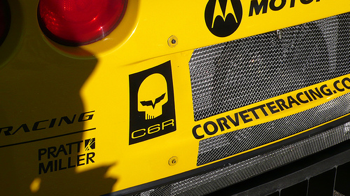 A series that runs in the US with rules (mainly) written by the organizers of the 24-hour race at Le Mans, the ALMS is a series for sports cars, from the production-based GT1 and GT2 classes to the exotic, carbon-fiber bodied P1 and P2 prototype classes. Audi and Peugeot have been contesting the P1 class with a pair of prototypes (the R10 and 908) that both feature V12 diesel engines, and most other competitors are using a biofuel ethanol/gasoline blend.
However, although corn's use as a biofuel has been touted frequently by politicians (who may or may not have been campaigning in Iowa), it is becoming more and more obvious that corn-based ethanol is not the panacea once thought. Cellulosic ethanol, on the other hand, doesn't involve taking food and converting it to fuel. And that's just what Corvette Racing are going to be using to power their C6.R racing cars this season. The C6.R competes in the GT1 class, which features production-based sportscars that have then been highly modified. Earlier today, I got a chance to speak to team boss Doug Feehan about the fuel switch for 2008.