Malicious apps hosted in the Google Play market are trying a clever trick to avoid detection—they monitor the motion-sensor input of an infected device before installing a powerful banking trojan to make sure it doesn’t load on emulators researchers use to detect attacks.
The thinking behind the monitoring is that sensors in real end-user devices will record motion as people use them. By contrast, emulators used by security researchers—and possibly Google employees screening apps submitted to Play—are less likely to use sensors. Two Google Play apps recently caught dropping the Anubis banking malware on infected devices would activate the payload only when motion was detected first. Otherwise, the trojan would remain dormant.
Security firm Trend Micro found the motion-activated dropper in two apps—BatterySaverMobi, which had about 5,000 downloads, and Currency Converter, which had an unknown number of downloads. Google removed them once it learned they were malicious.
The motion detection wasn’t the only clever feature of the malicious apps. Once one of the apps installed Anubis on a device, the dropper used requests and responses over Twitter and Telegram to locate the required command and control server.
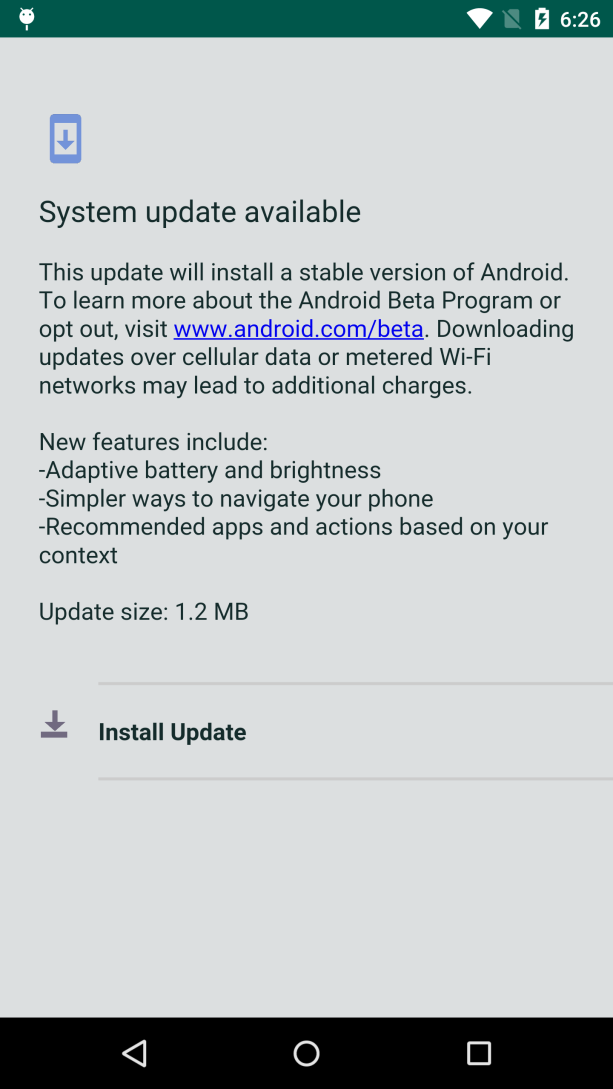
“Then, it registers with the C&C server and checks for commands with an HTTP POST request,” Trend Micro researcher Kevin Sun wrote. “If the server responds to the app with an APK command and attaches the download URL, then the Anubis payload will be dropped in the background.” The dropper then tried to trick users into installing the app using the fake system update shown below:

 Loading comments...