The Palo Alto Research Center (PARC) is known beyond Silicon Valley for its role developing products—Ethernet, WSYIWYG editors, laser printing. But mentions of those historic heights were kept at a minimum during this week’s Power of 10 conference. The message of the day was clear with the first words to greet guests at the registration table (via both conference workers and a commemorative bookmark).
“Just wanted to let you know, ‘Xerox PARC’ is so 10 years ago. Today, we’re ‘PARC, a Xerox company.’”
PARC’s Power of 10 is a year-long series of events, including public-friendly guest presentations and this half-day conference, to commemorate the company’s first ten years of independent operation. In 2002 Xerox incorporated PARC as an independent, wholly owned subsidiary, shifting the R&D pioneers toward an open innovation business model that took center stage on Thursday.
Open innovation itself consists of companies finding ideas from both internal and external sources, then collaborating with others to implement them, theoretically sharing both risk and reward during the process. It’s not a new practice by any means, but the terminology was coined soon after PARC’s independence, with the book Open Innovation by Henry Chesbrough. He’s the executive director of the Program in Open Innovation at UC Berkeley and happened to be the day’s first keynote speaker.
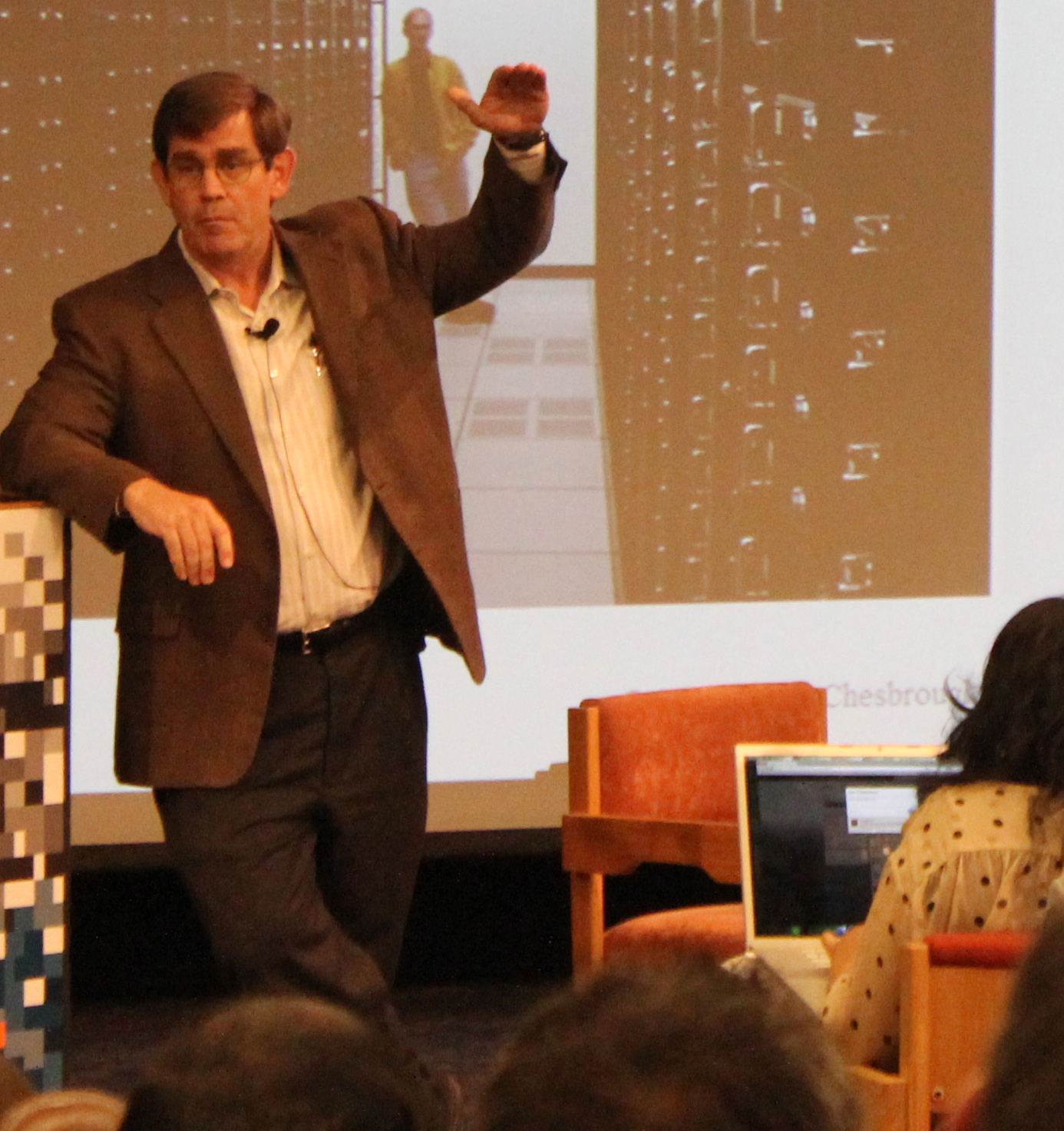
Chesbrough applauded PARC’s operative structure, calling it a much more connected means to innovation. To illustrate it, he compared the idea with a funnel. When a company operates with an internal focus, it limits what information comes in and channels it in one direction. But, “in open innovation, you drill holes in the funnel to let good ideas in, and out,” he noted. The openness leads to more ideas, better ideas, and ideas that become reality more quickly. In open innovation, Chesbrough sees the lead company on a product operating as more of an orchestrator than creator.

 Loading comments...