Though Microsoft has released four previews of Internet Explorer 9 over the past six months, none of them included much of a user interface. The company was keeping that under wraps, with the first public unveiling happening in a few weeks, on September 15. But with an apparent mistake by one of Microsoft’s Russian Web properties, it looks like the secret might be out: the site posted a screenshot that apparently shows the new browser UI, as noticed by Mary-Jo Foley at ZDNet.
Though the blog post has now been deleted, it’s still currently available in the Bing cache. As well as the single screenshot, the site described five features of the new browser. Some of these are well-known—standards compliance, performance—but the site also described new user interface features.
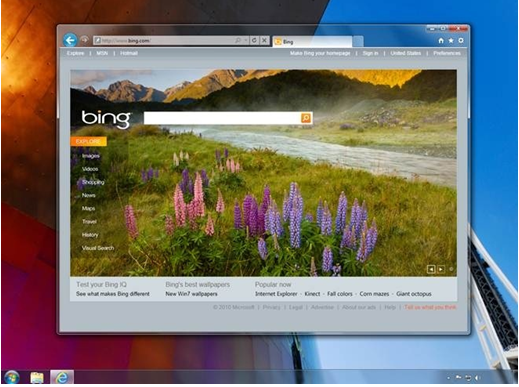
The machine translation of the page isn’t entirely clear, but it suggests that the new browser will allow tabs to be torn off from the browser window (as already found in Chrome and Safari, for example), and that there will be some kind of provision for creating icons for specific sites, perhaps something similar to Chrome’s application mode.
Most striking is the new interface that Internet Explorer 9 will apparently include. It has been pared down and simplified, with the multiple menu buttons of the Internet Explorer 8 toolbar condensed to a single menu. The tabs, address bar, and toolbar have all been condensed into a single row.
The screenshot does have a number of odd features, however. The styling of the back and forward buttons is reminiscent of the style used—and abandoned—during the Longhorn development process, with the back button larger than the forward button—a design also found in Firefox.
The buttons are also unusual in that the oversized back button appears to be truncated at the bottom, where it runs into the actual browser frame, which looks both ugly and inattentive. Also surprising is that Microsoft has, apparently, switched to using the same reload icon as found in Chrome, Firefox, et al.—a single clockwise circular arrow—instead of the paired arrows that it has been using since Internet Explorer 1.
 Loading comments...