Skip to content
Finish him!

Mortal Kombat 11 review: Great gameplay, excessively packaged

A visual tour de force that can be a little overly gross and grindy feeling.

Aurich Lawson | 105
Classic characters (klassic karacters?) Raiden and Johnny Cage face off in a nostalgic-themed arcade level.
Story text

The original Mortal Kombat was part of the arcade experience that quite literally shaped my life in gaming—I’ve been a dedicated fighting game community member ever since. Looking back, the entire original trilogy of games feels special, and the early-year hype for Mortal Kombat 11 recently stirred up some of that nostalgia. After a long time of mostly ignoring the franchise’s releases, I was genuinely looking forward to trying a new Mortal Kombat game.

As a somewhat serious fighting game player, I’m good enough to know I’m not particularly good. Fighting games are a pretty deep rabbit hole, and there is always more to dig. I’m registered to compete this August in Street Fighter V and the new (and still unreleased) Samurai Shodown at Evo, the annual global fighting game event in Vegas. I run a weekly night hosting players for a multitude of fighting games (but mostly Street Fighter titles). No matter the preferred title, though, I’m happy to nerd out and talk frame traps or fighting game theory.

I’m a fan of the Mortal Kombat series in general, but I stopped paying much attention after the third arcade title in the mid ’90s. So before playing MK11, I caught up on some quick summaries of the rebooted franchise lore that came along with NetherRealm Studios’ (NRS) Mortal Kombat 9 in 2011. My perspective on the game may very much be that of a lapsed fan these days, but those early titles will always hold a special place.

With all that out of the way, I’ll say that Mortal Kombat 11 gives me mixed feelings.

Visual feast
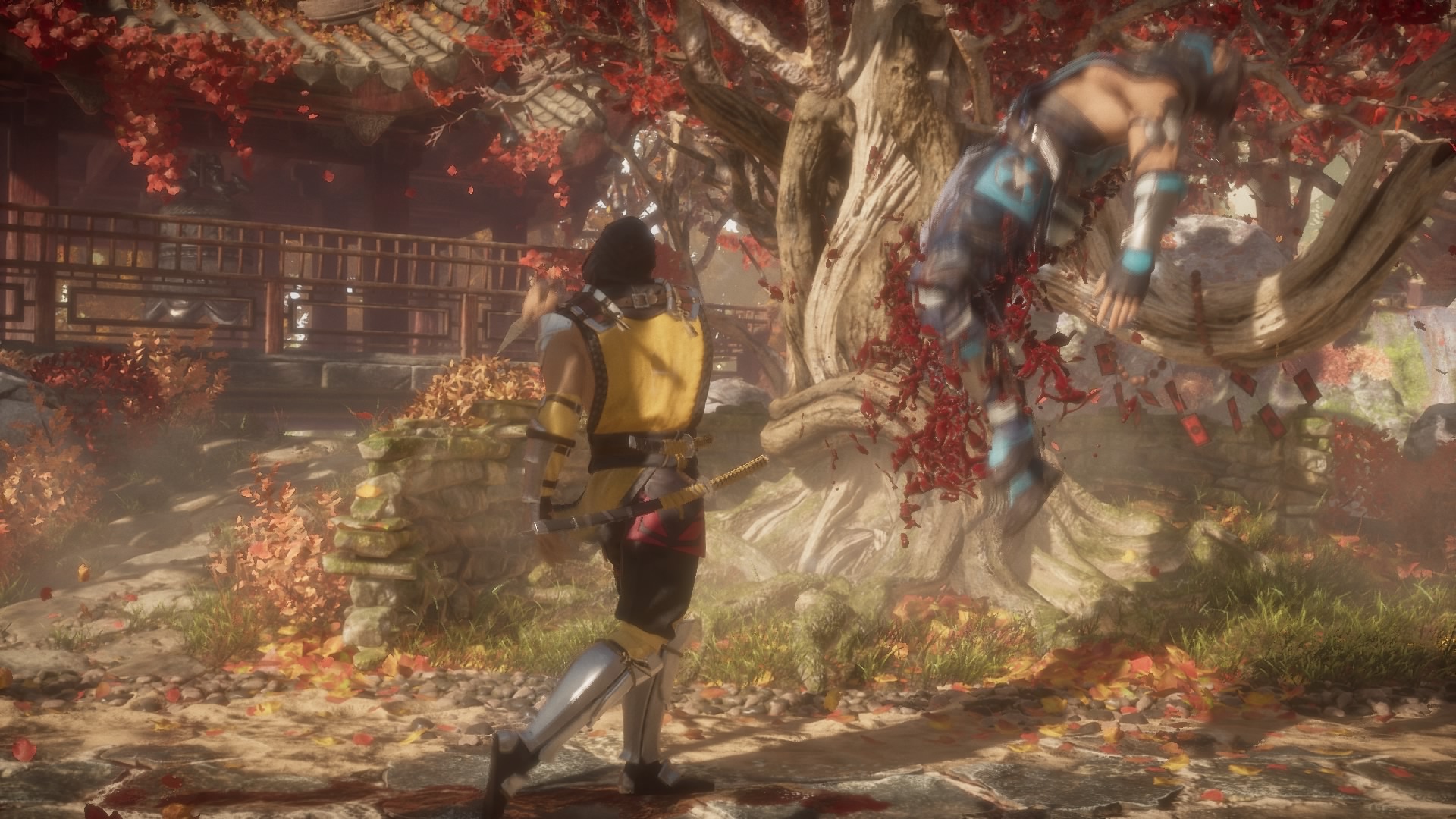
Scorpion uppercutting Sub Zero into the air in a spray of blood has been a series staple since day one.

To begin with, the game is gorgeous. NRS is using a highly modified version of the Unreal Engine 3, and whatever the studio has done makes the game outshine Unreal Engine 4 fighters like Tekken 7 and Street Fighter V in graphic fidelity. Everything from the character models and stages to the lighting and effects oozes high-budget polish. The blood and viscera (we’ll get to that!) have never looked so shiny and fluid.
The stage designs might be my favorite part. There’s a broad variety of locations, from a ship sailing a blood-tossed sea, to a desert-housed military base complete with a cactus you can scrub your opponent’s face on, to a throwback to the original Mortal Kombat tournament stage with the audience of orange-robed Shaolin monks—except this time they’re silent corpses instead of a sea of bobbing heads.

Mortal Kombat has always been a series that emphasized atmosphere, and this might be its strongest atmosphere yet. Smoke and dust swirl in the backgrounds, candles glow softly, and interactable elements (like the aforementioned cactus) give each stage a little extra personality.

The character designs are great, too, with a varied mix of both visual and play styles. The bulk of the cast are old favorites, such as Scorpion, Sub Zero, and Raiden, but there are a few newer NRS-era characters, like the blood-magic-wielding Skarlet and Cassie Cage, daughter of Johnny Cage and Sonya Blade (her parents are in the game, too). Yeah, the game is old enough that the original characters have hooked up to have kids. There’s also a handful of interesting newcomers, like Geras, who can manipulate time, or the six-armed Kollector, who has so many limbs he dedicates two just for holding up his backpack.

The original MK games were made using digitized actors to create all of the poses, creating a much more “realistic” style at the time compared to the more cartoony Street Fighter. Now NRS uses 3D models, but it still relies heavily on motion capture to help animate them and serve as a link back to the tech that started the series off. This has been a mixed success on previous titles, which were deservedly criticized for some odd poses and choices. MK11 is much improved in that department, but it still retains a bit of a stiff feeling that stems all the way back to the original games. It feels like it’s 80-percent a stylistic choice but 20-percent just plain-old bad animation. That’s an improvement over past games like Mortal Kombat X and Injustice 2, though, where the ratio was maybe 50/50, to be kind.

Overall, even taking into account the occasional wonky animation choice, MK11 is easily the best looking “realistic” 3D fighter on the market. Games like Dragon Ball Fighterz or Guilty Gear, which are rendered in 3D, but with cel shading techniques, stand out for their style, but if you’re looking for finely rendered skeletons of four-armed, half-human half-dragons (RIP Goro), NRS is on top of the pile.

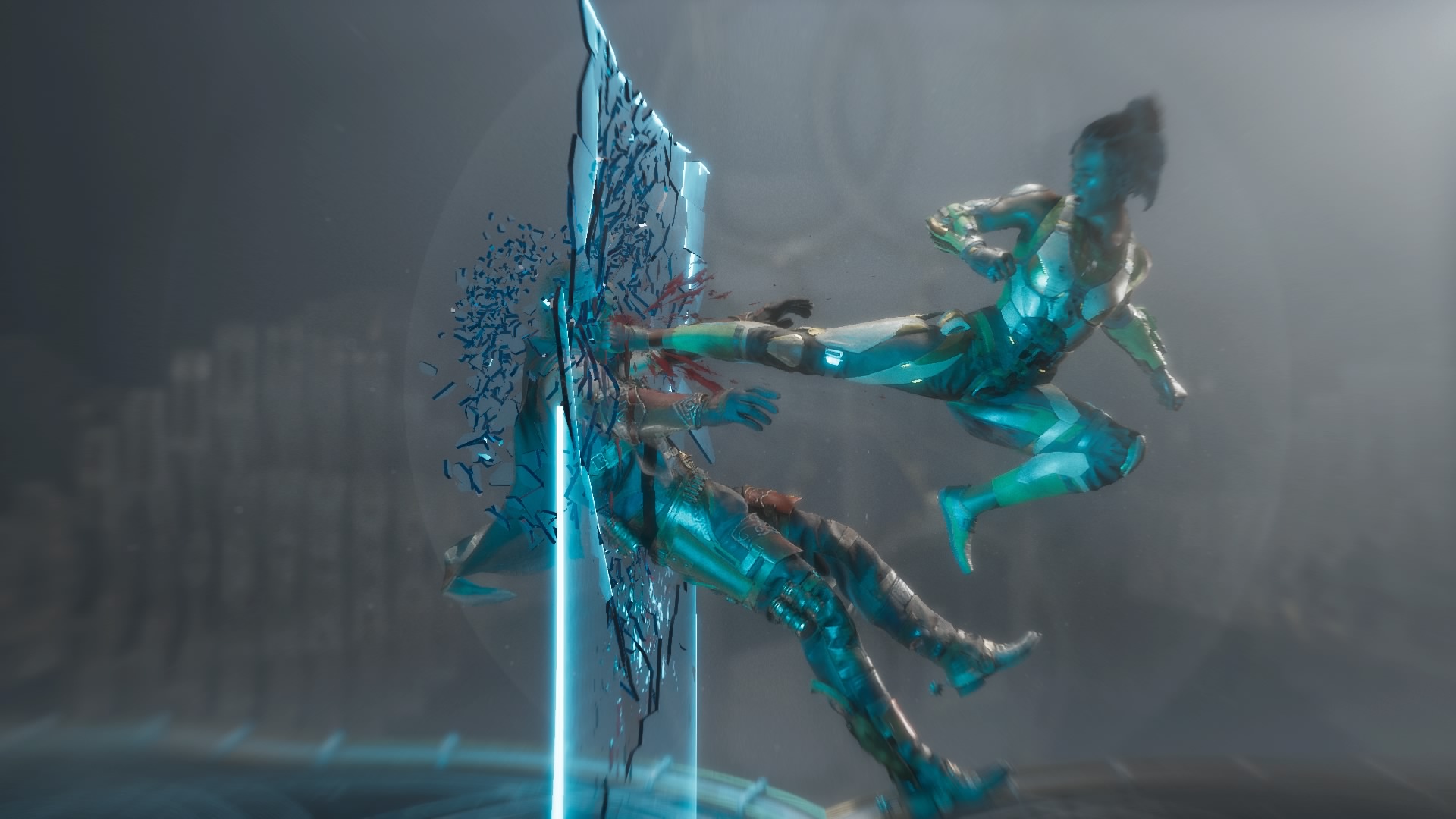
Jacqui Briggs, daughter of Jax from MK2, performing the end of her Fatal Blow attack.

Fatal blows

All this graphic fidelity of course leads us to the thing the series is most known for: excessive gore and violence. Mortal Kombat has always been an adolescent fantasy series—with undead ninja assassins, Shaolin monks, femme fatales, and lightning gods—but it’s the fatalities that really put it on the map. You could tear someone’s head off after defeating them, then hold it aloft as the spine dangles below. It was a bit exaggerated, but the graphics were realistic for their time.

MK11 turns the blood up to 11 and really makes the most of the graphic engine. Want to rip someone’s face off, smash their skull open, and jab their brain out on your arm spike so you can take a big, juicy bite of it while blood gushes out in slow motion and you mug for the camera? NRS has got you covered. How about vomiting up a torrent of bugs into your victim’s mouth, so they can writhe in pain before erupting into a mass of legs, the corpse now being worn like a hermit crab’s shell? No problem!

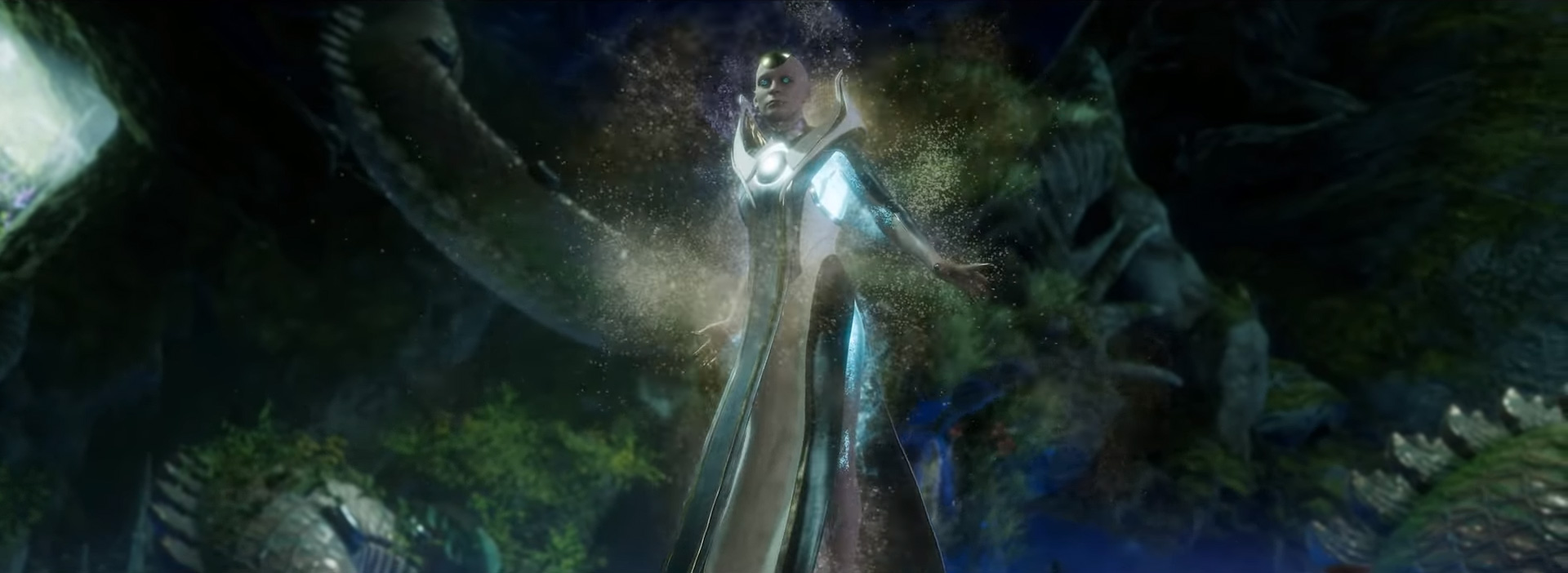
The time-manipulating boss of the story repeatedly rips you in half, or flays the skin from your body, then reverses time to do it all over again. If you can think of a way to tear someone apart, chances are good the game has you covered.

The violence and sadism are excessive, but that’s what the series is known for. Every character has two overly involved fatalities, as well as an assortment of shorter kill animations called brutalities. Of the latter, my personal favorite so far is crushing your opponent under a falling Mortal Kombat arcade cabinet in a nice series callback. It’s gross but mostly in good fun, certainly part of the Mortal Kombat package.

With MK11, I have two real complaints about the lack of restraint shown by the game’s tendency to go overboard. The first and largest issue involves a new mechanic for the series, called a Fatal Blow.

A Fatal Blow is a move you can do once a match that becomes available when your character drops below 30-percent health. It’s a comeback mechanic, meant to give the losing player a chance to strike back. I’m not a giant fan of things that reward people for losing, but making it only work once a match means there’s some strategy to when you employ it, at least.

The problem is that the animation triggered by a Fatal Blow is so long. The name is a misnomer: it’s not a blow, it’s a whole series of them. Johnny Cage, for instance, starts with his glowing green shadow kick, right to the chin, slow-motion blood flying from his opponent’s mouth. Next come some more kicks and flips, this time slamming the victim to the ground, his boot to the head, more slow-motion blood flying out. He’s not done, though; now he’s whipping out his Oscar-look-alike trophy, holding it aloft to let the light gleam off it, before reaching down to smash it across the opposing face. Even that’s not enough, as Cage finally leaps back, grips the trophy, and stabs it into his foe’s chest, with, you guessed it, more slow-motion blood flying everywhere.

The whole thing takes a whopping 12 seconds to complete. That might not sound like a lot, but keep in mind this is an essential game mechanic you’re likely to see every single match (sometimes twice a match). Those slow animations add up fast when repeated ad nauseam.

Fatalities are optional, only happening after the match is over. Between multiple fatalities and brutalities, there’s also a decent amount of variety. Fatal Blows, on the other hand, are a core mechanic that plays out as the same long sequence every time. They get old very fast, there’s no way to skip through them, and they happen mid-match, really killing the flow of the action. I found myself avoiding using my Fatal Blow against the CPU during fights when I was confident I didn’t need it to win, simply because I didn’t feel like sitting through the animation again.

If the current roughly 12-second Fatal Blows had been divided up into six individual two-second options, randomly selected each time, it would have felt much more satisfying and snappy. As it is, it’s easily my least favorite aspect of the gameplay.

Cassie Cage kicking her mother so hard in the chest her heart flies out.
D’Vorah’s fatality begins with her vomiting bugs into her opponent’s mouth.

The other place the lack of restraint shows through is an ironic result of the care and depth NRS has put into its characters. The long and generally well-crafted story mode offers a lot of chances to build real personalities and feeling into each protagonist. They deal with loss and sadness and family in a relatable way.

And that makes it much more jarring when they sadistically torture each other.

The opening of the story has a fight scene between Cassie and her mother, Sonya, billed as a rite of passage for Cassie’s military promotion. That works as a good excuse for a fight scene. You get to control Cassie, putting a little hurt on her mom. Wait, huh? Cassie, why are you picking up that power tool? Holy crap, you just jammed it into your mother’s head and started drilling her brain out, blood is flying everywhere. I thought this was a friendly fight? That’s messed up, girl.

At one point in the story, a character takes a bullet to the leg. He can’t fight anymore; they have to help him out. It’s very dramatic. He’s also the guy who was getting half disemboweled earlier, with spikes jammed through his head, bullets bouncing off coins and into his eyes, and just generally getting ripped to shreds. The disconnect between when the blood matters or not is kinda funny, but it also removes a lot of the story tension.

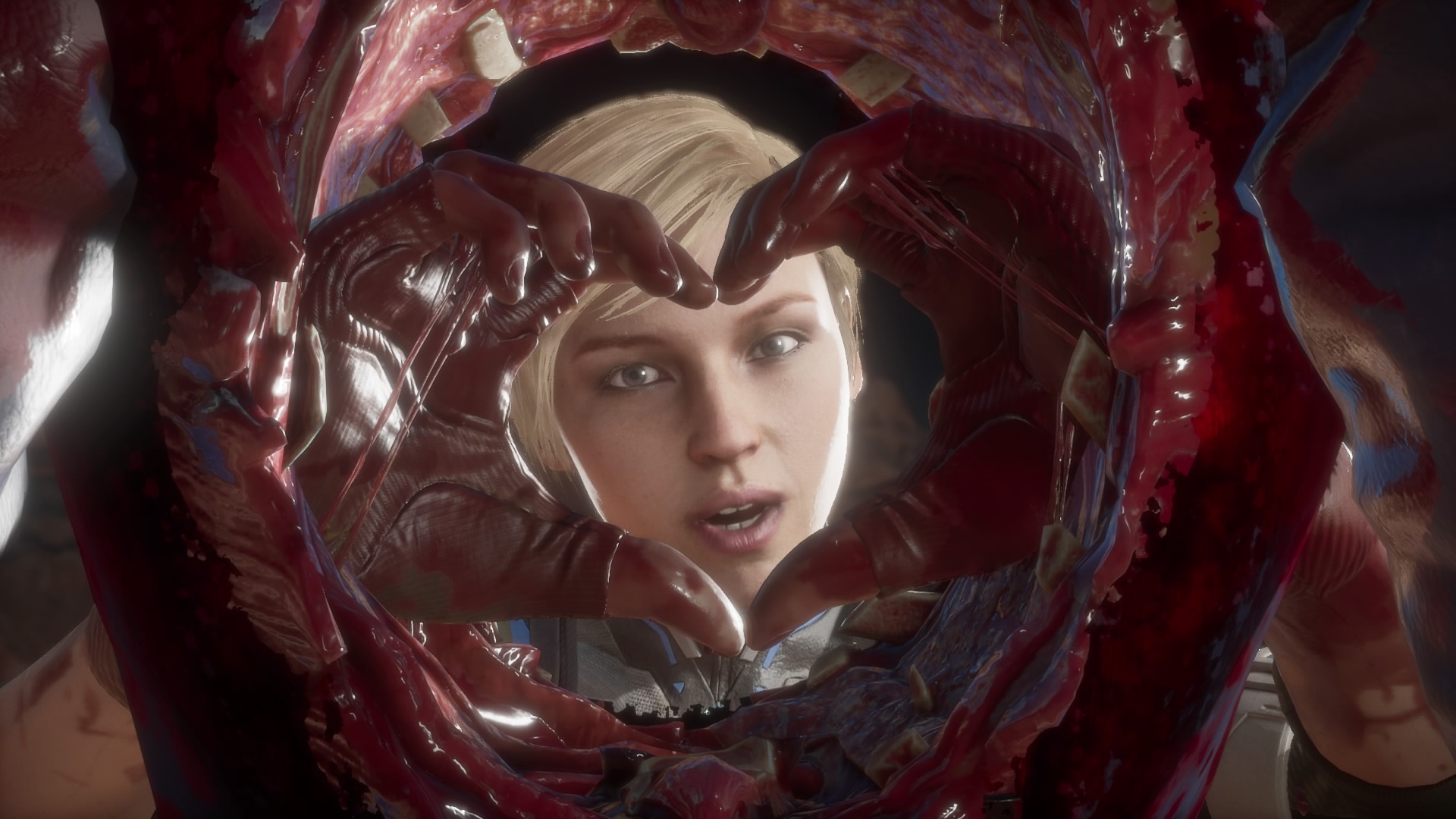
Even outside of the story, things get weird in MK11 with the story mode. You can’t perform fatalities during story fights, against your family members or otherwise. But in a normal versus match? It might seem like a quibble in a game so awash in violence, but it’s a little extra weird to see Cassie kick a hole in her father’s chest, sending his heart flying, and then pose behind the gaping wound to make a heart with her hands and send a kiss to the camera.

Mortal Kombat and excessive violence had gone hand in hand from the start. But MK11 can feel like it’s trying too hard, with animations that start to feel dragged out and forced. More respect for the viewer’s time would have been nice. Ending a match with a long Fatal Blow and then getting the invitation to perform the fatality right after can feel like the Simpsons meme: “Stop, stop! He’s already dead!”

Cassie poses for a tender family moment.

High theater

Most fighting games treat their story mode as a bit of an afterthought, but NRS puts serious time and budget and thought into its stories. It has become a staple of the Mortal Kombat series since it was rebooted, and it’s a great way to flesh out the characters and lore. The story also provides more content for those who aren’t big on hopping online to fight or don’t have friends who are into offline play.

The story is gloriously cheesy and corny to the brim—“we’ve go to work together for the fate of the universe” stuff. You might roll your eyes at it, or you might eat it up. I personally mostly ate it up, but I did plenty of eye-rolling, too. It’s worth playing through and it’s fun, but do not expect Oscar-winning stuff. It does give the characters more depth, which I appreciated later when I was playing as them in normal matches.

MK11’s story mode is basically a series of cut scenes that transition smoothly into fights. You play as whatever character happens to be in that part of the story, and after the fight you go back into passive viewing. You can set the difficulty to Very Easy if you want to just mash through and watch, or you can challenge yourself by cranking up the AI.

Without giving away too much plot, I’ll say I appreciated the time travel gimmick, which created some good excuses for fun stages to fight on with both “old” and “young” versions of the characters. In that sense, the story serves the actual versus gameplay by integrating everything.

The voice acting is mostly solid, with the glaring exception of Sonya Blade, who for some reason is voiced by MMA-turned-WWE star Ronda Rousey. She’s terrible, and the choice of casting is perplexing. There’s a lot of “I just want to make things right!” angst that gets old, but overall it moves along briskly enough.

Kronika, the time-wielding protagonist of the MK11 story.

Gameplay counts

So the game looks great, it’s excessively violent, the level of excess you’re down for can be a personal choice, and there’s a story mode for chill solo sessions. But how does MK11 play? In a word, great.

One of the reasons the long Fatal Blows bug me so much is because I find the actual gameplay really fun. It would be easy to dismiss the long animations if I didn’t know how much I was going to keep seeing them, but I want to keep playing sets. This might be the most solid-playing game NRS has made so far based on talking to other players and spending time with Mortal Kombat X and Injustice 2.

MK11 is “neutral” heavy, meaning that the battle for control of the screen and spacing (the neutral) is strong. It also has a strong “footsies” flow, focusing on the little dance fighters do by moving in and out of the contested neutral, looking for openings and chances to initiate combos and mixups. The upside to a game being strong in these areas is that, as you grow and improve and as the people you play get better, the game keeps expanding in terms of your understanding and interactions and positioning.

As a Street Fighter player, the adjustment to the NRS style takes a little time. The timing of the buttons and the movement all feel pretty different compared to what I’m used to. But I’m starting to get the hang of it, and I think if you’re a less experienced fighting game player you’ll actually have an easier time. The buttons and special moves and overall control of the game are friendly to new players while containing more than enough depth for experienced players.

In the fighting game community, we call games like MK11 “dial-a-combo.” This means you can essentially mash out the buttons for your combo sequence without a lot of nuance to the timing. As long as you hit them fast enough to all connect in the sequence, you’re good. Hours practicing tight one-frame links between moves aren’t necessary. You just need to get the muscle memory for some good button sequences down. If you love being creative with your combos, there is some depth that comes from corner juggling, and things can get pretty wild once you’re experienced.

Special moves are performed mostly with a couple of directional presses and a button: back, forward, punch; down, forward, kick. Once you get a feel for the timing they’re easy. I normally play fighting games on arcade sticks, but MK11 is clearly optimized for pad play.

The tutorial is solid, and it teaches you everything you need to know. There are a lot of really thoughtful touches. When you demo a combo, for instance, the game pulls up a virtual pad with buttons that light up as the combo progresses to help you see what to press, and it adds a “click track” alongside it to help with timing. I found that I picked up the timing of something much faster listening to the rhythm and playing it back in my head.

Another welcome touch is that the in-game movelists contain all of the frame data and damage and information you might want to know. The game also lets you pin up to 10 moves to the screen as a reminder of the special moves and combos you’re trying to practice. No pausing needed.

Then there’s the block button, which will be familiar to Mortal Kombat vets but takes some adjustment for most other fighting game players. If someone teleports behind your character, you don’t have to switch your blocking direction like you would in Street Fighter, since the button is universal for both sides. That’s pretty handy for a defensive-minded player.

Character variety at launch is strong, and there are plenty of styles to choose from. The DLC character train is already pulling out of the station, but if you’re interested in putting time into the game the value proposition for new characters is good. But if you don’t think you want to play with other people or you’re not interested in following along as the meta for the game grows and the roster expands, then you can wait for the ‘komplete’ edition that will likely come later. I personally find buying characters for fighting games a solid value compared to the time I get out of the gameplay.

Baraka faces Kollector, a new multi-limbed character playable for the first time in MK11.
Get over here!

Netkode

With arcades a thing of the past for most people (and no arcade release of MK11 for that matter), you have a few choices when it comes to playing with other people. You can invite some folks over to your place, you can seek out a local venue (such as Next Level Battle Circuit in Brooklyn, or Wednesday Night Fights in Oakland or Santa Ana, California), or you can do what most do—hop online.

Fighting games run at 60 frames a second, and it’s essential that they run smoothly and as responsive as possible. Nobody wants to lose to a laggy match. While there’s no magic to fix a bad connection, the best fighting game netcode relies on a partially asynchronous networking model called rollback. In a nutshell, the game is able to predict and rewind the game state to keep players synced up even with small packet hiccups.

NRS has a rep for having some of the best rollback code in the fighting game world. If you’re interested in geeking out over how it works, I highly recommend this GDC talk by one of the company’s developers. Reports from a wide variety of players confirm that MK11 is no exception.

There’s no substitute for offline play, both in terms of smooth frames and being able to interact with your opponent, be it learning and teaching or rubbing in the salt of a loss. But for accessible gameplay, online can’t be beat. The solid netcode is a big win for MK11.

Time krystals are earnable in-game, but you can purchase them if you’re looking for a shortcut.
Single player content includes a story mode, ‘gimmick’ fights in Towers of Time, a more traditional arcade ladder in Klassic Towers, and lootbox exploring in The Krypt.

The loot box grind

Talking about DLC leads into probably the weakest part of MK11‘s offering: it’s not microtransaction-heavy, but I almost wish it was.

There’s a very robust system of character customization built into the game. That includes skins to change your appearance and different gear to switch up the cosmetics of your weapons (some of these confer in-game bonuses for single player play, but none of them affects the outcome of multiplayer matches). You can unlock brutalities and the moves required to perform a character’s second fatality. There’s also cool concept art, backgrounds, and other non-game-play cosmetics.

There’s a lot of stuff, and it’s all a neat incentive to keep playing. But it’s also hidden behind a real slog of a grind. This manifests itself in two areas of the game: The Towers of Time and The Krypt.

The Towers of Time are made up of a series of fights against CPU opponents with various twists. One fight might rain acid down on the stage, weakening you. Another might have missiles that fly out or opponents with larger than normal health. The fights are definitely not geared toward being fair. To offset this somewhat, you can earn “konsumables” that negate some of the unfair parts or give you an advantage. This can create a loop where you fight to earn things that help in future fights. I personally don’t find the extra gimmicks particularly fun, but your mileage may vary.

Beating the towers, or playing the game in other ways, rewards you with seven (yes, seven) kinds of in-game currency. From “koins” to “Time Crystals” to “hearts” to “souls,” you can then take your hard-earned loot into The Krypt.

The Krypt is a little mini-world to explore, letting you wander around in a third-person perspective, looking for walls you can break and solving little puzzles to open new areas or chests. Chests can only be unlocked with all that in-game currency, and which chest has which item set is completely random. Unlike previous games, there’s no way to exchange notes and figure out precisely where an item set you’re looking for might be. To unlock everything and guarantee the item you might want, you need to find and unlock every single chest the Krypt has to offer.

There are some exceptions to this rule and some major chests are the same everywhere, but overall you’ve got to play a guessing game, where you grind for your currencies, find a chest, open it, and hope it has something you want. If not, rinse and repeat. That rinsing and repeating might take a while. Some chests, for instance, need 250 hearts to open them. You gain hearts by performing fatalities. One. At. A. Time. Hope you like watching those animations over and over.

There is a store where you can buy Time Krystals, and you can exchange those for cosmetics like skins. But there are only five individual skins for sale every 24 hours of real-world time. If you want that cool Scorpion skin you saw someone playing with and it’s not for sale that day, you’re out of luck. Check back tomorrow. And the day after. And the day after. Eventually you can buy it for 500 Time Krystals, but good luck with the wait. Alternately, you can grind in the Tower and search the Krypt. Again, best of luck.

NRS says the system isn’t designed to drive you to real money purchases, and it’s right. It’s not that kind of loot box slime. But it’s almost worse, in a way. I don’t mind spending a couple bucks on something that would make me enjoy the game more. Instead, I have to spend the currency I have the least of these days: time.

Player feedback on this system had been understandably sour, and NRS says it’s going to try to address the grind through patching, and they’ve already released one. But it seems their solution is giving people more starting in-game currency (which helps get you started but still leaves you at the mercy of randomness and then runs out) and making the Tower battles feel less unfair (a nice start but doesn’t really address the time grind still).

If this kind of grind is a turnoff for you and you think you want the cosmetics, you might want to wait and see what the final solution is and if NRS goes far enough to address the concerns.

Game adjustments

One final bit on game patches and adjustments: NRS is pretty famous for somewhat frequently patching and balancing its games after release. This can be a mixed blessing; it’s nice when it fixes exploits or overpowered strategies that are wrecking the game, frustrating when your character has things taken away, or the game meta keeps changing and you have to keep track of what’s changed to stay competitive.

For MK11, there seems to be a new twist: they’ve introduced a new style of “hotfix” that doesn’t require patches to be downloaded. They simply tweak the variables behind the game to adjust issues. This comes with a downside, though: right now your console or PC has to be online for the fixes to stick. At all times. Go offline and the changes revert. If you’re a tournament organizer with a stack of PS4s, you need to make sure they’re all online at the venue or you won’t have the latest patch people expect. It’s not clear now this might affect Switch owners playing offline on the go.

I reached out to my Warner Bros/NRS contact for a comment on if this is a temporary solution or the way the game will work for the rest of its supported life, but I haven’t heard a response yet. I should also note that the Towers of Time require online also, but for most people playing at home being online is a normal use case. Be aware of it if you have a network situation that doesn’t fit that style well, though.

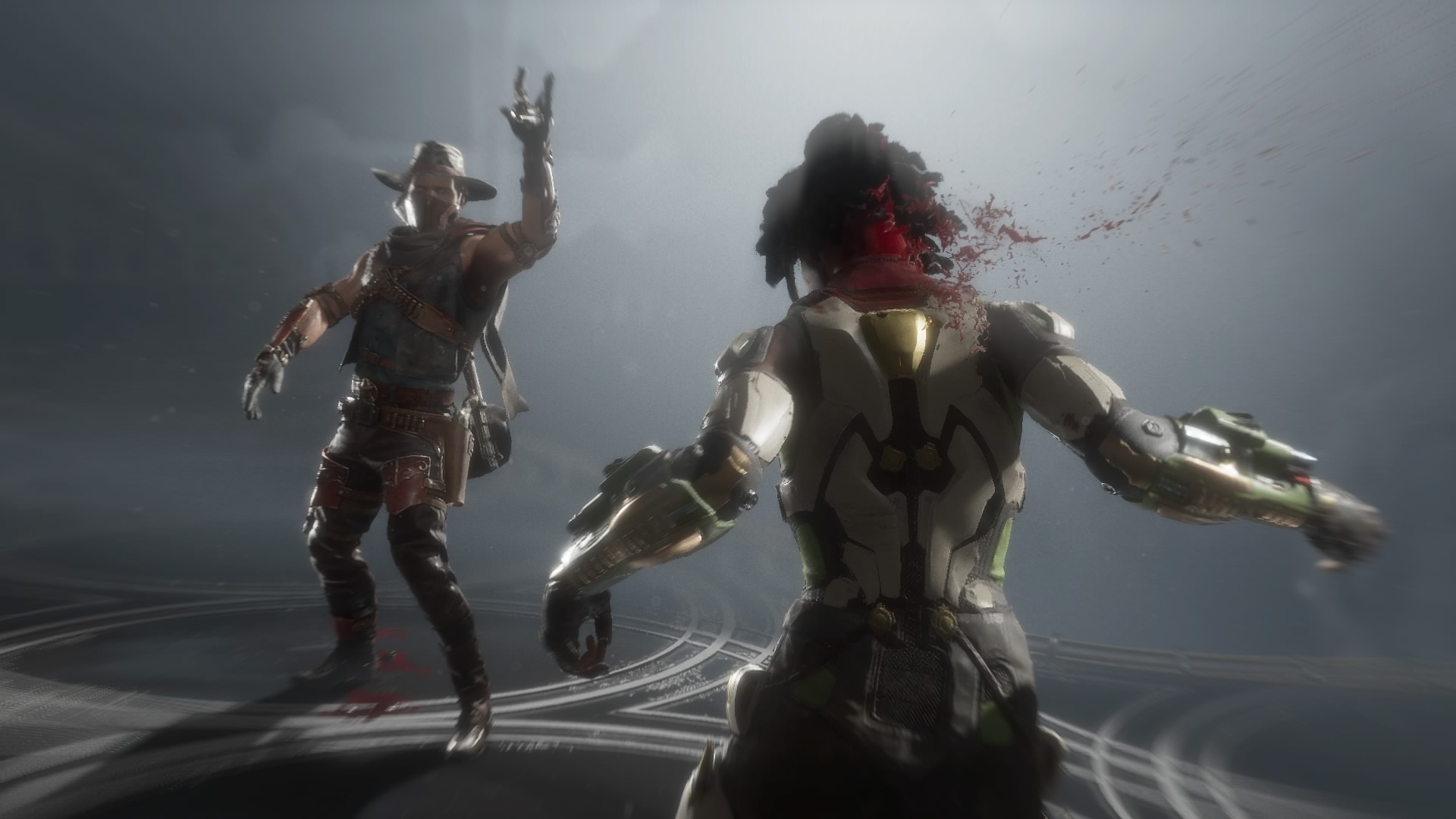
Erron Black putting the final touches on his Fatal Blow.

Final thoughts

MK11 is a mixed package. The presentation is great, but the animations can get a bit tiring, and the over-the-top violence can get numbing. The gameplay is really solid, but the grind to get the cosmetics and upgrades feels even more tiring and numbing. Hopefully the grindy parts are adjusted, and the long animations aren’t a deal breaker, just an annoyance.

Right now, with the game in the state it’s in, I’d recommend it for fighting game fans or Mortal Kombat fans. If you’re a more casual player, I might wait to see how the patches work out or if there’s a bundle with DLC characters available later.

It’s a fun game with a ton of attention to detail and love obviously poured into it. It just could have used an editor.

Photo of Aurich Lawson
Aurich Lawson Creative Director
Aurich is the creative director at Ars Technica, where he oversees the look and feel of the site as well as the day-to-day story graphic needs.
105 Comments