The iPhone 8 exists simultaneously in two time periods—an emerging future pervaded by innovative new apps incorporating augmented reality and machine learning and a past when LCD displays offered the best quality and the user’s relationship to the screen was less emphasized.
The A11 Bionic chip is a marvelous feat of engineering, offering industry-leading performance and powering the most accessible AR platform yet. But it’s tied to a display technology that the industry is finally ready to move on from and a design that didn’t even seem fresh when it was introduced three years ago.
And then there’s the price. The iPhone 8 starts at $699—$50 more than the iPhone 7 entry price last year. Yes, this device starts at 64GB of storage now instead of 32, but that price tag puts it just shy of the Samsung Galaxy S8. The 256GB iPhone 8 Plus is only $50 less than the entry-level 64GB iPhone X, though the storage difference is notable.
When weighed against other phones in its class, the iPhone 8 poses the question: “Which do consumers care more about—performance or the design and screen?” I’m going to go out on a limb here and say that today, many consumers care a lot more about the design and the screen. Initially, that makes the iPhone 8 hard to recommend to some.
That’s the current problem with the iPhone 8. By several metrics, it’s a great handset—I’m just not sure for whom.
Table of Contents
What’s the difference?
We’re reviewing the iPhone 8 and the iPhone 8 Plus together. Almost everything we say here can be applied to both phones, but they do diverge in a couple of ways. Other than the batteries, the distinctions between these phones are virtually the same as they were last year. Here’s an outline of some of the differences:
Specs at a glance: Apple iPhone 8
Screen
1334×750 4.7-inch (326PPI) pressure-sensitive IPS touchscreen with DCI-P3 color gamut
OS
iOS 11.0
CPU
Apple A11 Bionic (2x high-performance cores, 4x low-power cores)
RAM
2GB
GPU
Apple-made A11 Bionic GPU
Storage
64 or 256GB
Networking
802.11ac Wi-Fi (866Mbps), Bluetooth 5, NFC (Apple Pay only)
Ports
Lightning
Camera
12MP rear camera with OIS, 7MP front camera
Size
5.45″ x 2.65″ x 0.29″ (138.4 x 67.3 x 7.3mm)
Weight
5.22oz (148g)
Battery
1821mAh
Starting price
$699 unlocked
Other perks
Wireless charging
Screen size and resolution: The iPhone 8 has a 4.7-inch 1334×750 screen, and the 8 Plus has a 5.5-inch 1920×1080 display. The 8 Plus is actually displaying a 2208×1242 image and scaling it to 1080p, which may impact performance in some scenarios. However, this distinction is generally not visible to the naked eye.
Internals: The iPhone 8 Plus has 3GB of RAM, while the iPhone 8 has 2GB.
Battery: A teardown revealed that the iPhone 8 has a 1,821mAh battery, while the iPhone 8 Plus has a 2,675mAh battery.
Camera: Both phones have a 12MP rear camera with an f/1.8 aperture and optical image stabilization (OIS). The Plus adds a second 12MP camera with an f/2.8 aperture that can be used to simulate optical zoom up to 10x.
Software: The iPhone 8 Plus’ larger screen lets it do a few things the iPhone 8 can’t.
Design and aesthetics: Glass is back
The iPhone 8 and 8 Plus are very familiar handsets. The dimensions are almost the same as those of the iPhone 6, 6S, and 7. Most, if not all, of your old cases for those phones will fit if you still have them.
In fact, from an aesthetic standpoint, the iPhone 8 is essentially 2014’s iPhone 6. It adds some ideas that date back to 2010’s iPhone 4—a glass front and back, with a metal band (this time it’s aluminum) around the edges. But this latest release doesn’t have the iPhone 4’s striking, Leica camera-inspired look to it. The iPhone 8 is also subtly heavier than the past couple of iPhones, which sounds like a bad thing, but it actually gives the phone a more premium feel. The iPhone 6’s surfboard always felt a little flimsy in my hand even though it proved quite sturdy, but others won’t agree.
The iPhone 8 and iPhone 8 Plus.
Samuel Axon
The iPhone 8 and iPhone 8 Plus.
Samuel Axon
The iPhone 8 and iPhone 8 Plus.
Samuel Axon
The iPhone 8 and iPhone 8 Plus.
Samuel Axon
The iPhone 8 and iPhone 8 Plus.
Samuel Axon
The glass back of the iPhone 8.
Samuel Axon
There’s a Lightning port, but still no headphone jack, on the bottom of the iPhone 8.
Samuel Axon
A smooth aluminum band wraps around the top of the iPhone 8.
Samuel Axon
The volume controls adorn the left side of the iPhone 8.
Samuel Axon
The power button and the SIM card slot adorn the right side of the iPhone 8.
Samuel Axon
The front of the iPhone 8 Plus looks almost indistinguishable from that of the iPhone 7 Plus.
Samuel Axon
The iPhone 8 Plus has a dual-camera setup.
Samuel Axon
The glass back of the iPhone 8 Plus.
Samuel Axon
There’s a Lightning port, but still no headphone jack, on the bottom of the iPhone 8 Plus.
Samuel Axon
A smooth aluminum band wraps around the top of the iPhone 8 Plus.
Samuel Axon
The volume controls adorn the left side of the iPhone 8 Plus.
Samuel Axon
The power button and the SIM card slot adorn the right side of the iPhone 8 Plus.
Samuel Axon
We like the glass back more than its aluminum predecessor; it feels and looks a little more premium, though that is always subjective. The overall difference is fairly subtle, but it’s more noticeable with some colors than others.
The switch to glass raises concerns about durability. Apple claims this phone’s glass is 50 percent more durable than what we saw in prior iPhones, but, whether that’s true or not, it doesn’t remove the concern. Multipledroptests have confirmed that you’d best exercise caution when carrying this device.
Fingerprints are also an issue, if you’re the sort to be concerned about that. It’s less noticeable on the lighter-colored phones (our review units were silver and gold), but when we examined the Space Gray phone at Apple’s Cupertino event on September 12, it was covered in noticeable fingerprints only moments after being wiped off by Apple’s representative pre-demo.
Other than the glass back, this iPhone design is largely unchanged since last year. There’s still a camera bump. It’s still rounded around the edges, which makes it pleasant to hold but easy to drop.
The screen sizes are identical to the past several iPhones, and the bezels are the same, too. There’s still a home button, and it still provides haptic feedback, customizable by the software. Despite Apple’s claims that this is “an all new design,” it’s not. It’s the same iPhone design we’ve been using since 2014.
Now, you might say that 2014 wasn’t that long ago. You might argue that the endless drive for a new design is a fool’s errand if the design we have is already ideal. And I would agree. Except the iPhone 6, 6S, 7, and 8 (and their Plus big siblings) are not the Platonic ideal of the smartphone—certainly not in 2017.
Specs at a glance: Apple iPhone 8 Plus
Screen
1920×1080 5.5-inch (401PPI) pressure-sensitive IPS touchscreen with DCI-P3 color gamut
OS
iOS 11.0
CPU
Apple A11 Bionic (2x high-performance cores, 4x low-power cores)
RAM
3GB
GPU
Apple-made A11 Bionic GPU
Storage
64 or 256GB
Networking
802.11ac Wi-Fi (866Mbps), Bluetooth 5, NFC (Apple Pay only)
Ports
Lightning
Camera
12MP rear camera (one f/1.8 lens with OIS, one f/2.8 telephoto lens), 7MP front camera
Size
6.24″ x 3.07″ x 0.3″ (158.4 x 78.1 x 7.5mm)
Weight
7.13oz (202g)
Battery
2,675mAh
Starting price
$799 unlocked
Other perks
Wireless charging
Personally, I find this design rather loose when compared to the stark uniformity of the Samsung Galaxy S8. The bezels at the top and the bottom seem absolutely enormous by standards set by other flagship phones late last year and earlier this year. Where the Galaxy S8 uses the true blacks of OLED technology in tandem with an almost-edge-to-edge display to achieve a seamlessness between body and screen, content and container, the iPhone 8 remains resolute in its contrast between these elements.
It’s not really that the design is bad; it’s just falling behind our expectations. Of course, many who are considering the iPhone 8 are already entrenched in the Apple ecosystem and cannot or will not consider an Android alternative. The comparison to other phones in the marketplace might not matter as much to those people, and in those cases, expectations could be different.
But if Apple is the only choice for you, the iPhone X is right around the corner, and it adopts all the new design conventions that we’ve come to expect, albeit for a few hundred dollars more. Those new ideas are available on some flagship Android phones at price points much closer to that of the iPhone 8 than the iPhone X, though, so it’s hard not to feel like Apple loyalists have been let down this time.
The display: Still color-accurate, now with True Tone
OLED might be the new wave, but the iPhone 7 had one of the best LCD displays available in a smartphone, and that still applies to the iPhone 8. While some smartphone manufacturers tested the waters with OLED as far back as a few years ago, Apple has focused on providing excellent color accuracy in its displays—something that OLED was not always very good at until more recently.
The new phones’ basic specifications are the same as those of the iPhone 7 and 7 Plus—they’re IPS screens with 1334×750 and 1920×1080 resolutions for the iPhone 8 and iPhone 8 Plus, respectively, along with 1400:1 and 1300:1 contrast ratios. Last year’s models brought the move to DCI-P3 for a wider color gamut. It was a noticeable improvement, and you still get that here. But there’s nothing dramatically different about this display as compared to the iPhone 7.
Apple has added a new feature called True Tone that is presently only available on the iPad Pro, the iPhone 8, and iPhone 8 Plus. Its name is misleading; it’s not about improving color accuracy at all. Instead, the phone senses the lighting around you and automatically adjusts the screen’s white balance to provide a comfortable viewing experience.
The result is an image that is objectively less accurate but may seem subjectively preferable. Your eye adjusts to various ambient lighting conditions, so the screen adjusts to provide you with an image that is subjectively consistent across various environments. It’s most helpful when you’re somewhere with very warm lighting, where a cool, blue-shifted display would introduce eye strain (especially when reading text).
At its most noticeable, it might remind you of the Night Shift feature that Apple brought to iOS and macOS devices a while back. When we tested it, though, we usually found the difference to be rather subtle—which is the idea. It’s a welcome feature for comfort, but it does not improve the actual quality of the image. It’s up to you whether you enable it or disable it.
One more note on the display: you may have seen news going around claiming that Netflix has updated its iOS app to support HDR playback on the iPhone 8, iPhone 8 Plus, and iPhone X. Many of these reports are missing a key piece of information: the iPhone 8 and 8 Plus do not have HDR displays, so you won’t be watching HDR video on them no matter what the Netflix app may support. You’ll have to wait for the iPhone X to experience that.
Wireless charging
Apple has opted in to the Qi wireless charging standard from the Wireless Power Consortium. It’s a welcome choice, as Qi has emerged as the current leader in wireless charging, so there are charging stations in many locations. This is one feature that would not have been worthwhile if Apple had gone with a proprietary technology.
I’ve already explained how Qi wireless charging works in detail, but the gist is that the system uses two coils: one in the charging pad and the other in the phone. The charging pad’s coil generates an electromagnetic field that induces a current in the phone’s coil.
All the wireless charging pads announced for the iPhone 8 and 8 Plus so far max out at 7.5 watts—2.5 more than the wired wall plug charger that comes with the iPhone 8 but half the wattage that you’ll find in the latest Qi chargers used by Samsung and others.
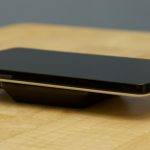
Wattage isn’t everything, though, so we tested it. We charged an iPhone 8 with a Belkin Boost Up wireless charging pad, and it worked exactly as promised. We placed the phone on the pad, and almost immediately we heard the ping noise that tells you the phone is charging. It’s very easy but, then again, so was plugging in a charging cable. Finding the right position on the charger wasn’t an issue. Your mileage will probably vary depending on which pad you buy.
We were still able to use the phone while it rested on the pad, even if this was a little awkward. We weren’t able to test Apple’s own multi-device charging pad (AirPower), shown during the iPhone 8’s unveiling, as it won’t be available until next year.
As expected, charging speeds were much slower on the wireless charging pad than they were with the phones’ bundled wall chargers. If you’ve just hit 10 percent and need a quick charge, this isn’t what’s going to do it. Want to just top off your phone by leaving it on your desk at various points throughout the day? The pad is perfect for that.
This is as good a place as any to mention that the iPhone 8 supports fast charging from high-wattage chargers. Apple says you can use a USB-C to Lightning cable to connect the phone to the wall charging blocks like the ones you get with a MacBook—29W, 61W, or 87W—to charge the phone much more quickly than it would charge on its own adapter. It’s also possible with third-party USB-C adapters that support USB-PD. In our tests, it was notably faster than either wireless charging or the packaged, 5W iPhone charging adapters.
The cameras: Still good, but portrait lighting is hit or miss
The cameras in the iPhone 8 and 8 Plus are, by and large, not changed from last year’s phones. The iPhone 8 has one rear-facing 12MP camera with an aperture of f/1.8 and 5x digital zoom. The iPhone 8 Plus has two 12MP cameras—one wide angle and one telephoto, at f/1.8 aperture and f/2.8 aperture respectively. The Plus model is capable of optical zoom up to 2x, and digital zoom up to 10x, thanks to the added telephoto lens.
Daylight photography with the iPhone 8.
Samuel Axon
Daylight photography with the iPhone 8.
Samuel Axon
Daylight photography with the iPhone 8 Plus.
Samuel Axon
Daylight photography with the iPhone 8 Plus.
Samuel Axon
Daylight photography with the iPhone 7.
Samuel Axon
Daylight photography with the iPhone 7.
Samuel Axon
Daylight photography with the iPhone 8 Plus.
Samuel Axon
Daylight photography with the iPhone 7.
Samuel Axon
Daylight photography with the iPhone 7 Plus.
Samuel Axon
Daylight photography with the Samsung Galaxy S8+.
Samuel Axon
Daylight photography with the Google Pixel.
Samuel Axon
Both models have optical image stabilization. Unlike the iPhone 7 and 7 Plus, these two phones automatically shoot in HDR mode; there is no longer a toggle to switch in and out of it when taking a photo. These were good cameras last year, and they’re still good cameras.
Closeup photography with the iPhone 8.
Samuel Axon
Closeup photography with the iPhone 8.
Samuel Axon
Closeup photography with the iPhone 8 Plus.
Samuel Axon
Closeup photography with the iPhone 8 Plus.
Samuel Axon
Closeup photography with the iPhone 7.
Samuel Axon
Closeup photography with the iPhone 7.
Samuel Axon
Closeup photography with the iPhone 8 Plus.
Samuel Axon
Closeup photography with the iPhone 7.
Samuel Axon
Closeup photography with the iPhone 7 Plus.
Samuel Axon
Closeup photography with the Samsung Galaxy 8+.
Samuel Axon
Closeup photography with the Google Pixel.
Samuel Axon
The colors are great, and low light performance is very good for a smartphone. We really don’t have much to add to our assessment of the iPhone 8 and 8 Plus cameras, here. But take a look at the gallery for comparisons between the models—the iPhone models all produce very similar results, but you can spot some notable differences between the iPhones and the two Android phones we compared them with—the Samsung Galaxy S8+ and the Google Pixel.
Low-light photography with the iPhone 8.
Samuel Axon
Low-light photography with the iPhone 8.
Samuel Axon
Low-light photography with the iPhone 8 Plus.
Samuel Axon
Low-light photography with the iPhone 8 Plus.
Samuel Axon
Low-light photography with the iPhone 7.
Samuel Axon
Low-light photography with the iPhone 7.
Samuel Axon
Low-light photography with the iPhone 8 Plus.
Samuel Axon
Low-light photography with the iPhone 7.
Samuel Axon
Low-light photography with the iPhone 7 Plus.
Samuel Axon
Low-light photography with the Samsung Galaxy S8+.
Samuel Axon
Low-light photography with the Google Pixel.
Samuel Axon
The iPhone 8 Plus has two features that the iPhone 8 doesn’t: portrait mode, which returns from the iPhone 7 Plus with some refinements, and portrait lighting, which is new. Portrait mode was in beta when the iPhone 7 Plus launched, and now it’s out. Apple claims a “more natural” bokeh effect in this mode now, and it has enabled the flash in portrait mode as well.
Apple gave considerable attention to the new portrait lighting feature during its press conference announcing these phones a couple of weeks ago, but to be frank, we’re not sure why. The company says this feature is still in beta, and we can see why.
Natural light in portrait lighting on the iPhone 8 Plus.
Samuel Axon
Natural light in portrait lighting on the iPhone 8 Plus.
Samuel Axon
Studio light in portrait lighting on the iPhone 8 Plus.
Samuel Axon
Studio light in portrait lighting on the iPhone 8 Plus.
Samuel Axon
Contour light in portrait lighting on the iPhone 8 Plus.
Samuel Axon
Contour light in portrait lighting on the iPhone 8 Plus.
Samuel Axon
Studio light in portrait lighting on the iPhone 8 Plus.
Samuel Axon
Contour light in portrait lighting on the iPhone 8 Plus.
Samuel Axon
Stage light in portrait lighting on the iPhone 8 Plus.
Samuel Axon
Stage light mono in portrait lighting on the iPhone 8 Plus.
Samuel Axon
Portrait lighting allows you to digitally reconfigure the lighting in an image of a person’s face either when you’re taking the photo or even long afterward. Apple says this feature is made possible by the new Neural Engine on the A11 Bionic chipset (more on that shortly). It supports the following lighting scenarios:
Natural light, which is just a normal photo
Studio light, which gives the subject a soft, almost soap opera-like glow
Contour light, which emphasizes definition and contrast in the lighting on the face
Stage light, which casts a well-lit face against a black backdrop
Stage light mono, which does the same thing as stage light, but in black and white
Natural light in portrait lighting on the iPhone 8 Plus.
Samuel Axon
Natural light in portrait lighting on the iPhone 8 Plus.
Samuel Axon
Studio light in portrait lighting on the iPhone 8 Plus.
Samuel Axon
Studio light in portrait lighting on the iPhone 8 Plus.
Samuel Axon
Contour light in portrait lighting on the iPhone 8 Plus.
Samuel Axon
Contour light in portrait lighting on the iPhone 8 Plus.
Samuel Axon
Studio light in portrait lighting on the iPhone 8 Plus.
Samuel Axon
Contour light in portrait lighting on the iPhone 8 Plus.
Samuel Axon
Stage light in portrait lighting on the iPhone 8 Plus.
Samuel Axon
Stage light mono in portrait lighting on the iPhone 8 Plus.
Samuel Axon
As you can see in the images, studio light works okay. Contour light is hit or miss. The stage light settings, which are the most dramatic and sure to be the most popular if they work, frequently cut out the subject’s hair in unnatural ways or accidentally captures the background when they shouldn’t. In one of the above examples, the stage light setting just can’t deal with large glasses frames, which expose the real, sunlit background behind the subject where it should be inky black.
We can see what Apple is going for here, but it’s not quite there yet.
Performance: Overachiever
Here is the meat of the iPhone 8. After many minor tweaks and slight improvements mentioned above, we’ve come to an area where the iPhone 8 is significantly better than what came before.
The A11 Bionic chip that powers the iPhone 8 and iPhone 8 Plus is fast and impressively efficient. It may be the fastest mobile chipset we’ve ever seen. With it comes Apple’s first GPU developed in-house and an M11 motion coprocessor. The iPhone 8 has 2GB of RAM, and the Plus has 3GB, just like the 7 and 7 Plus.
Last year, Apple went up to four cores with the A10—two high-performance cores and two efficiency cores. Now we’re up to six with the A11—two high-performance and four efficiency. But where the A10 only allowed two cores to be active at a given time, all of the iPhone 8’s cores can work at once (though, for obvious energy efficiency reasons, they don’t always).
The resulting performance is impressive.
Geekbench multi-core results compared with other Apple devices.
Geekbench multi-core results compared with other Apple devices.
Geekbench multi-core results compared with Android devices.
Geekbench multi-core results compared with Android devices.
Geekbench multi-core results compared with other Apple devices.
Geekbench multi-core results compared with Android devices.
Geekbench single-core results compared with other Apple devices.
Geekbench single-core results compared with other Apple devices.
Geekbench single-core results compared with Android devices.
Geekbench single-core results compared with Android devices.
Geekbench single-core results compared with other Apple devices.
Geekbench single-core results compared with Android devices.
The iPhone 8 is significantly faster at most CPU tasks than any other handset Ars has tested to date. The CPU is where the biggest gains are, but it’s only part of the story.
Apple’s phones already had an industry-leading graphics architecture from Imagination Technologies, but Apple has left Imagination behind and engineered its own three-core GPU. This reportedly resulted in Imagination considering legal action against Apple, because Apple’s GPU bears some similarities to what Imagination had been providing. That went nowhere, and after losing Apple’s business, Imagination sold off to a VC firm.
So why would Apple open itself up to all this drama when it already had a killer GPU architecture? Well, there’s the longstanding Apple philosophy that the more of your product suite you control, the better the experience you can provide (and presumably, the bigger the profits). This move allows Apple to customize the roadmap for its GPUs in a way that would not have been possible with Imagination, which had multiple clients.
An offscreen Metal-based graphics benchmark against previous Apple devices.
An offscreen Metal-based graphics benchmark against previous Apple devices.
An onscreen Metal-based graphics benchmark against previous Apple devices.
An onscreen Metal-based graphics benchmark against previous Apple devices.
An offscreen OpenGL-based graphics benchmark against previous Apple devices.
An offscreen OpenGL-based graphics benchmark against previous Apple devices.
An onscreen Metal-based graphics benchmark against previous Apple devices.
An offscreen OpenGL-based graphics benchmark against previous Apple devices.
An onscreen OpenGL-based graphics benchmark against previous Apple devices.
An offscreen OpenGL-based graphics benchmark against Android devices.
An onscreen OpenGL-based graphics benchmark against Android devices.
In GFXBenchMetal’s T-Rex off-screen test, the iPhone 8 delivers 136.3 frames per second, where the iPhone 7 delivered 117. Games are going to look great on this phone and so will augmented reality. Machine learning and augmented reality are destined to be critical components of the iPhone ecosystem. The new CPU and GPU lay the groundwork for that, future-proofing the iPhone 8 for a new wave of features and applications in the coming months and years.
Apple has also added a dual-core Neural Engine to the A11’s image signal processor (ISP), which reportedly is the source of the Bionic name. This allows for applying effects and other techniques to both images and videos as they are taken. This enables the new Portrait Lighting feature, among other things.
Battery life
With that kind of performance, can we expect the same battery life? Apple has talked up the power efficiency of the A11 chipset, claiming that the iPhone 8 will match the iPhone 7’s battery life. This promise is despite the inclusion of smaller batteries than we saw in the previous generation.
We tested the battery life in both the iPhone 8 and 8 Plus and were not encouraged by the results.
As we’ve done in past battery life tests, we set the screen brightness to 200 nits and run two tests—a Wi-Fi Web browsing test that automatically cycles through loading a series of webpages over and over until the battery dies and a similar test based on WebGL. We ran each test twice and averaged the results, finding that these phones’ batteries did not carry us as far as the iPhone 7 and 7 Plus’ batteries did.
The iPhone 8 and 8 Plus came in just barely behind their immediate predecessors in our Wi-Fi browsing test.
The iPhone 8 and 8 Plus came in just barely behind their immediate predecessors in our Wi-Fi browsing test.
The iPhone 8 and 8 Plus delivered surprisingly inconsistent results in our WebGL test, but repeated retesting came up with this average despite poor results in our first two runs.
The iPhone 8 and 8 Plus delivered surprisingly inconsistent results in our WebGL test, but repeated retesting came up with this average despite poor results in our first two runs.
The iPhone 8 and 8 Plus came in just barely behind their immediate predecessors in our Wi-Fi browsing test.
The iPhone 8 and 8 Plus delivered surprisingly inconsistent results in our WebGL test, but repeated retesting came up with this average despite poor results in our first two runs.
The Web browsing test landed only five percent lower than our iPhone 7 results, which is close to Apple’s claim of equivalent battery life. However, our WebGL tests showed significantly shorter battery life. The Ars reviews team discussed this drop, and we don’t have a definitive explanation for it. The prevailing theory may be that the WebGL test is GPU dependent, and this is an entirely new GPU. We will continue running the WebGL test a few more times and update this piece with the numbers after we’re confident we’re not getting erroneous results.
But based on what we’ve observed so far, the iPhone 8 is not a step forward in battery life.
Update: We re-ran the WebGL test several times after publishing this review to verify our results. While the first two WebGL battery tests for the iPhone 8 and iPhone 8 Plus delivered results radically below expectation as reported here, all subsequent repeat tests provided results more in line with expectations. We’ve discounted the initial two results as erroneous and provided an average in the above graph based on our re-tests. The Wi-Fi test was not repeated again.
iOS 11: It’s the software that matters
Software often matters more than hardware for the user experience, and here the iPhone 8 and 8 Plus shine. They run iOS 11, which is also available to older iPhones going back as far as the iPhone 5S. We’ve discussed iOS 11 and its numerous new features in a thoroughly detailed review, but let’s briefly go over a few things and what they all mean for the iPhone 8.
The Control Center, an easy-access menu for basic OS functions like brightness, volume, and airplane mode, has been completely overhauled. To a degree, you can now customize which functions go in it. Some of those functions had not been available in Control Center before, like Low Power Mode. The App Switcher multitasking interface has also been redesigned but without added functionality on the iPhones. The App Store is radically different, with editorial-driven curation and a wider range of discoverability options.
See the images below for a brief tour of iOS 11 from our iOS 11 review.
Meet iOS 11. Again note the tweaked status icons and the label-less app icons in the dock.
Andrew Cunningham
Meet iOS 11. Again note the tweaked status icons and the label-less app icons in the dock.
Andrew Cunningham
The default view of the new Control Center already exposes more controls than the iOS 10 version.
Andrew Cunningham
The default view of the new Control Center already exposes more controls than the iOS 10 version.
Andrew Cunningham
The brightness slider, featuring Night Shift.
Andrew Cunningham
The brightness slider, featuring Night Shift.
Andrew Cunningham
The default view of the new Control Center already exposes more controls than the iOS 10 version.
Andrew Cunningham
The brightness slider, featuring Night Shift.
Andrew Cunningham
Tweaked multitasking switcher on iOS. The home screen is no longer its own card.
Andrew Cunningham
A new UI for the filter picker, as well as new names and filters.
Andrew Cunningham
The Files app.
Andrew Cunningham
The redesigned App Store is more aggressively curated, and Apple even has editorial staff working on roundups and blurbs now.
Andrew Cunningham
App pages get bigger, bolder buttons.
Andrew Cunningham
The Podcasts app gets a redesign to bring it in line with the App Store and Music apps.
Andrew Cunningham
Emergency SOS gives you a way to automatically call emergency services and/or lock Touch ID.
Andrew Cunningham
iOS 11 builds out support for HomeKit and in-home streaming. It adds a new Files app for easier browsing, and it adds support for the HEIF image format and HEVC video format, both of which are supported by the iPhone 8 and 8 Plus. There are a bunch of iPad UI and functionality improvements that we won’t get into here, too.
Most important for the iPhone 8 and 8 Plus, though, are under-the-hood additions like ARKit, Metal 2, and CoreML—frameworks for augmented reality, graphics, and machine learning, respectively. As we discussed, the A11 Bionic chipset is very fast, and, with these new additions to iOS 11, it is an excellent foundation for a new wave of apps.
Like other GPUs, Apple’s new A11 GPU can be used for machine learning tasks. This powers stuff like smart curation in the Photos app or various Siri functions. CoreML packages together a lot of the work Apple has done to apply these machine learning ideas to their first-party apps, and it offers that work as a framework for third-party app developers to build their apps off of.
Metal 2 is actually the fourth version of Metal that iOS devices have seen, but it marks a promising step forward. The Metal graphics API gives third-party app developers a well-optimized foundation on which to build their graphics-heavy applications. Metal 2 is aimed at improving efficiency of draw calls and generally elevating performance, allowing games and other apps to show more objects—and more detailed objects—on the screen.
Finally, we have ARKit, a framework that could further open the floodgates for augmented reality apps of all kinds. Remember Pokémon Go? Apps built on ARKit and the A11 hardware could be much, much more impressive.
Conclusions: Who is this phone for?
The expectation of augmented reality’s popularity is the best argument for the iPhone 8. This hardware is carefully and brilliantly crafted to be the best mass-market AR platform we’ve yet seen—that means exceptional performance, a very good camera, a good suite of sensors, and a strong software foundation.
For consumers who might not be willing to spring for the iPhone X’s new display tech and facial mapping features, the phone provides an AR platform likely ready for the next three years of new apps. I just don’t know if the sort of people who care about future proofing for AR wouldn’t also be willing to pay extra for the newer display and security tech we’ll see in November.
A purchasing decision gets even muddier when you consider the rest of Apple’s lineup. Consumers now have eight different iPhone models to choose from—and that’s not even breaking it down into different SKUs based on storage capacity or wireless carrier. The iPhone lineup now looks like this.
This is hardly the simple product lineup Apple of yesteryear would have been proud of. High-end Apple consumers are going to want the iPhone X, and millions of them will be willing to pay for it. Consumers who just want a decent iPhone are presented with a dizzying array of options. They can get an iPhone 7 or even a 6S or SE for significantly cheaper than the iPhone 8. Where does that leave the iPhone 8? Who is it for?
Other than the very specific “someone who cares a great deal about performance and future AR functionality but not design or display,” I don’t know the answer to that. So maybe that is who it’s for. But past iPhones have generally been easy to recommend because they’re good for just about anybody. In this case, the outdated design and screen belie the forward-thinking engineering of the internals. In the iPhone 8 we have a device lost in time. It prepares us for the future, but it also exists in the past.
The good
The new A11 chip delivers industry-leading performance.
Excellent video camera and solid still photos.
Future proof for the next new wave of apps and games.
Wireless charging adds day-to-day convenience.
You’ll get excellent software with iOS 11.
The bad
Design, aesthetics, and bezels lag behind current trends and consumer expectations.
Battery life still isn’t where most people would want it to be.
If you can afford it, it’s hard not to justify going with an OLED display these days—and there’s no HDR, to boot.
Apart from performance, the iPhone 8 Plus offers few benefits versus flagship phones from competitors or the soon-to-be-released iPhone X.
The ugly
With a price hike over last year’s iPhone 7—and with competing phones and the iPhone X offering newer, better technologies—it’s hard to understand who this phone is for at this price point. This is especially true for the iPhone 8 Plus, which offers nothing over the upcoming iPhone X but only comes in just behind it in price.
Samuel Axon is the editorial lead for tech and gaming coverage at Ars Technica. He covers AI, software development, gaming, entertainment, and mixed reality. He has been writing about gaming and technology for nearly two decades at Engadget, PC World, Mashable, Vice, Polygon, Wired, and others. He previously ran a marketing and PR agency in the gaming industry, led editorial for the TV network CBS, and worked on social media marketing strategy for Samsung Mobile at the creative agency SPCSHP. He also is an independent software and game developer for iOS, Windows, and other platforms, and he is a graduate of DePaul University, where he studied interactive media and software development.






 Loading comments...