
The use of an FV3 core should allow for a more computationally efficient model.
Read the whole story
Read the whole story

Motivated by the success of monotonicity-preserving FV schemes in CTM applications, a consistently formulated shallow-water model was developed. This solver was first presented at the 1994 PDE on the Sphere Workshop, and years later published by Lin and Rood (1997). The Lin-Rood algorithm for shallow-water equations maintains mass conservation and a key Mimetic property of “no false vorticity generation”, and for the first time in computational geophysical fluid dynamics, uses high-order monotonic advection consistently for momentum and all other prognostic variables, instead of the inconsistent hybrid finite-difference and finite-volume approach used by practically all other “finite-volume” models today.
With the practical differences apparently being so small, being 3rd or 4th best seems fine to me.
third *for* fourth best global weather model

In general, I find NWS' forcasts to be really reliable, but I'd love to see an article unpacking the differences between this model and the (generally regarded to be suprior) Euro model.


Maybe. It's unclear what the 'score' really means in detail. And weather prediction is judged by details, e.g., will it rain -here- tomorrow.With the practical differences apparently being so small, being 3rd or 4th best seems fine to me.
>>The nation's weather and climate organization, NOAA, has appointed a new director of its Environmental Modeling Center.<<
Given how the current gov't seems to put people actively hostile to the Agency in charge of said agency, I was half expecting a weather-denier to be put in place...
Glad to see I was (hopefully!) wrong.

In general, I find NWS' forcasts to be really reliable, but I'd love to see an article unpacking the differences between this model and the (generally regarded to be suprior) Euro model.
There's value in having different weather models, written by different teams and using different assumptions and approximations, even if one of the models seems to usually issue the more accurate forecast.If the European Model is so great, why don't the US use that? (Apparently, the European model was better at predicting Hurricane Sandy than GFS.)
With the practical differences apparently being so small, being 3rd or 4th best seems fine to me.
Read the Area Forecast Discussions put out by the National Weather service. The meteorologist will talk about leaning toward one model or the other, or splitting the difference based on their own experience.
NWS Feed hosted by Iowa State University. On the left, locate your local weather office "chat room". One of the many hats I wear at work is supporting Crisis Management and given that I live in Huntsville, AL - tornados are a real possibility. I often get alerts before phones or radio (just seconds or minutes - but still).
And I lost the point I was trying to make. Even in short term forecasts there are enough differences that the meteorologist has to make his own determination about what to put as a forecast.

All models are wrong; some are useful.The takeaway for me, as a CFD person, is here (from the linked website):
Motivated by the success of monotonicity-preserving FV schemes in CTM applications, a consistently formulated shallow-water model was developed. This solver was first presented at the 1994 PDE on the Sphere Workshop, and years later published by Lin and Rood (1997). The Lin-Rood algorithm for shallow-water equations maintains mass conservation and a key Mimetic property of “no false vorticity generation”, and for the first time in computational geophysical fluid dynamics, uses high-order monotonic advection consistently for momentum and all other prognostic variables, instead of the inconsistent hybrid finite-difference and finite-volume approach used by practically all other “finite-volume” models today.
Whether or not FV3 is more accurate today, the numerical methods are more consistent with the underlying physics. "Consistent" in a very technical sense -- that is, as you reduce (e.g.) the grid size and time-step size, you can rigorously show that the errors introduced by the discritization limit to zero.
You can tune and massage an inconsistent model to hell and gone in order to get the right answer, and that's the approach taken in a lot of applications. If you don't have the horsepower to do things rigorously, sometimes this is the better approach: especially in weather modeling, it's useless to have a more accurate model that can't run fast enough to give a forecast. But there's a limit to how much you can improve such a model. A heavily tuned solver is intrinsically sort of limited in how predictive it can be -- tuning implies that your model is going to want to "predict" only things that have already happened.
Better to respect the underlying physics with your choice of numerics, if you can afford it. Most engineering applications are a decade or two ahead of the geophysical community in this sense, since our computational domain usually isn't the whole damn planet.
This is a good and necessary move for future improvements.

>>The nation's weather and climate organization, NOAA, has appointed a new director of its Environmental Modeling Center.<<
Given how the current gov't seems to put people actively hostile to the Agency in charge of said agency, I was half expecting a weather-denier to be put in place...
Glad to see I was (hopefully!) wrong.
Barry Myers, the chief executive of the private weather forecasting company AccuWeather, is President Trump’s pick to run the National Oceanic and Atmospheric Administration.
…
As NOAA administrator, Myers would be in charge of the Weather Service whose data are heavily used by his family business, based in State College, Pa.
AccuWeather has, in the past, supported measures to limit the extent to which the Weather Service can release information to the public, so that private companies could generate their own value-added products using this same information. In 2005, for example, Myers and his brother Joel gave money to then-Sen. Rick Santorum (R-Pa.), who introduced legislation aimed at curtailing government competition with private weather services.
“Barry Myers defines ‘conflict of interest,'” said Ciaran Clayton, who was communications director at NOAA in the Obama administration. “He actively lobbied to privatize the National Weather Service, which works day in and day out to protect the lives and livelihoods of millions of Americans, to benefit his own company’s bottom line.”
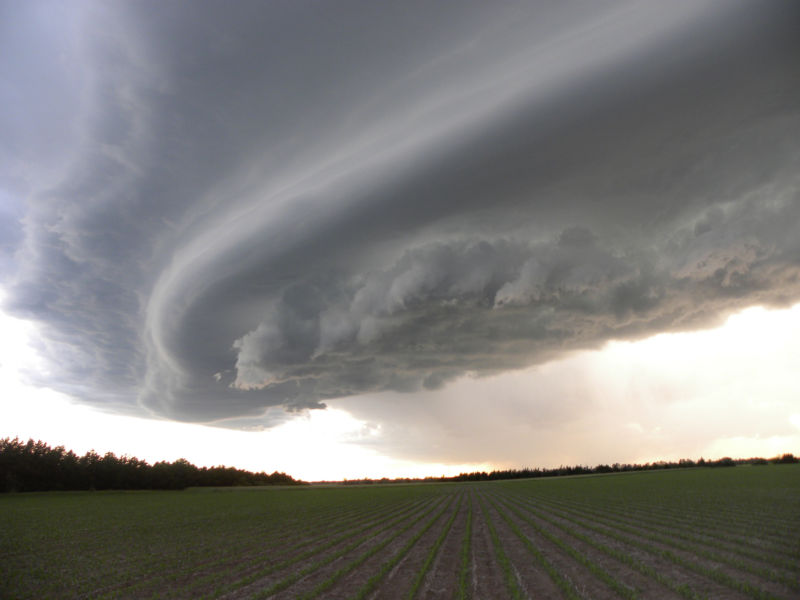
Eric Berger I recall you have been writing about weather for some time, weren’t you with the Houston Chron? Why then would you show an obvious shelf cloud (a Cb that is gusting out) and call it a wall cloud in this article and say it portends serious weather? From that, it appears you know very little about severe weather and probably should not be attempting to write about weather at all.
>>The nation's weather and climate organization, NOAA, has appointed a new director of its Environmental Modeling Center.<<
Given how the current gov't seems to put people actively hostile to the Agency in charge of said agency, I was half expecting a weather-denier to be put in place...
Glad to see I was (hopefully!) wrong.
You weren't wrong.
https://www.washingtonpost.com/news/cap ... roversial/
Barry Myers, the chief executive of the private weather forecasting company AccuWeather, is President Trump’s pick to run the National Oceanic and Atmospheric Administration.
…
As NOAA administrator, Myers would be in charge of the Weather Service whose data are heavily used by his family business, based in State College, Pa.
AccuWeather has, in the past, supported measures to limit the extent to which the Weather Service can release information to the public, so that private companies could generate their own value-added products using this same information. In 2005, for example, Myers and his brother Joel gave money to then-Sen. Rick Santorum (R-Pa.), who introduced legislation aimed at curtailing government competition with private weather services.
“Barry Myers defines ‘conflict of interest,'” said Ciaran Clayton, who was communications director at NOAA in the Obama administration. “He actively lobbied to privatize the National Weather Service, which works day in and day out to protect the lives and livelihoods of millions of Americans, to benefit his own company’s bottom line.”
Eric Berger I recall you have been writing about weather for some time, weren’t you with the Houston Chron? Why then would you show an obvious shelf cloud (a Cb that is gusting out) and call it a wall cloud in this article and say it portends serious weather? From that, it appears you know very little about severe weather and probably should not be attempting to write about weather at all.
The article touches on this a bit but the main goal with this FV3 upgrade is to get on the new core while keeping the results similar. Once that's completed and checks out, they'll work on the physics packages, etc. to, hopefully, improve the forecasts. I would compare it to replacing Win95 with WinNT on your computer -- it looks similar from a user and API standpoint but underneath it's completely different: a new and better core to build on.
IIRC, the FV3 will be used for more than just the GFS in the future.
Eric Berger I recall you have been writing about weather for some time, weren’t you with the Houston Chron? Why then would you show an obvious shelf cloud (a Cb that is gusting out) and call it a wall cloud in this article and say it portends serious weather? From that, it appears you know very little about severe weather and probably should not be attempting to write about weather at all.
The sound of a gauntlet hitting the ground (or a face)...
Eric Berger I recall you have been writing about weather for some time, weren’t you with the Houston Chron? Why then would you show an obvious shelf cloud (a Cb that is gusting out) and call it a wall cloud in this article and say it portends serious weather? From that, it appears you know very little about severe weather and probably should not be attempting to write about weather at all.
Stay classy, Margie K.
https://www.weather.gov/lmk/shelfcloudversusawallcloud
https://www.flickr.com/photos/noaaphotolib/25415885187/
The models produce numerous Cat 6 winter storms in their 240+ hour forecasts. It would be fun to add up all the model snow we get a year here in Atlanta and compare that to actual accumulation!How long till a Category 6 is added to these models?
If the European Model is so great, why don't the US use that? (Apparently, the European model was better at predicting Hurricane Sandy than GFS.)
It's interesting to look at the Forecast Discussion for NOAA weather and see how local forecasters deal with the models. It hasn't been unusual lately, in my area, for the GFS and Euro models to be more or less orthogonal, leaving the forecaster to guess, based on local history, which one might be closer to reality in a day or 2, or maybe to just average them. If all else fails, I guess, there's always John's Weather Stone (above).There's value in having different weather models, written by different teams and using different assumptions and approximations, even if one of the models seems to usually issue the more accurate forecast.If the European Model is so great, why don't the US use that? (Apparently, the European model was better at predicting Hurricane Sandy than GFS.)
I could write all day on why this is so, but here's a simple example: if three weather models which don't share a single line of code issue three forecasts which are relatively in line with each other, you can have considerably more confidence in the forecast than if the three models issue wildly different forecasts.
Hopefully he or she ends up saying "Based on [reasons] I'm forecasting X, but because there's a lot of disagreement in the models, there's more uncertainty than usual in this forecast"It's interesting to look at the Forecast Discussion for NOAA weather and see how local forecasters deal with the models. It hasn't been unusual lately, in my area, for the GFS and Euro models to be more or less orthogonal, leaving the forecaster to guess, based on local history, which one might be closer to reality in a day or 2, or maybe to just average them. If all else fails, I guess, there's always John's Weather Stone (above).
Very common, yes!Hopefully he or she ends up saying "Based on [reasons] I'm forecasting X, but because there's a lot of disagreement in the models, there's more uncertainty than usual in this forecast"It's interesting to look at the Forecast Discussion for NOAA weather and see how local forecasters deal with the models. It hasn't been unusual lately, in my area, for the GFS and Euro models to be more or less orthogonal, leaving the forecaster to guess, based on local history, which one might be closer to reality in a day or 2, or maybe to just average them. If all else fails, I guess, there's always John's Weather Stone (above).


