Hydrothermal carbonization can directly convert sloppy stillage into hard or activated carbon.
See full article...
See full article...
I thought the relevant measure would be energy (joules) per unit mass rather than power (watts) per unit mass.These proof-of-concept devices were able to store as much as 48 watts per kilogram.
No, it swapped a "d" for a "g".
Or maybe it's 25 times more but for a very short time.25x more seems to be revolutionary; maybe it's 25% more?

Is there a reason (in this use case) they don't just sun dry the stillage? Seems a perfect use of solar energy to make it virtually free, which would greatly reduce the weight to transport and energy needing to input to the process reducing the cost of the entire process? I'm assuming you don't care too much about if a little bit of spoilage occurs while it sits out since you're carbonizing the material, so bacteria would just carbonize along like the ones in there already along with the yeast do?
I'm also skeptical about that number. Carbon electrodes aren't revolutionary, but maybe something in the production process vastly increases the available surface area, or makes the size of the nanopores match the size of the lithium electrolyte ions. Or maybe there are trace elements left over from the mash that help. The lack of detail is frustrating.25x more seems to be revolutionary; maybe it's 25% more?
Legally, a whiskey can only be sold as bourbon if its mash is comprised of at least 51 percent corn, with any other cereal grain (usually rye and barley) making up the remainder.
I can vouch for the bourbon-aged maple syrup I have tried.The barrels are never reused for bourbon, typically being recycled for making barrel-aged beer, wine, and even barbecue and hot sauces.
To my department head: "My lab need to cultivate good relationships with distillery owners. Thank you for considering my request for travel funds. We request full per diem..."The lab has good relationships with several distillery owners
You can't leave it at that!I can vouch for the bourbon-aged maple syrup I have tried.
I really hate to be "this guy", but since you started with "Legally"... it also needs to be distilled in the United States. It's just like the more famous Champagne situation.Legally, a whiskey can only be sold as bourbon if its mash is composed of at least 51 percent corn, with any other cereal grain (usually rye and barley) making up the remainder.
I don't want to name brands, but the first batch I bought was beyond good. It was outstanding. I gifted some to a friend, and remember telling them: "don't even taste it right now. Just unscrew the cap and get a whiff of the aroma."You can't leave it at that!
Was it good?
It seems to me that even if all the carbon came from this method it won't make a dent on the amount of stillage produced.Given that the US bourbon industry is really hurting currently thanks to tariffs and changing drinking habits, this could be one way to boost it if scaling up is economically viable. And if not, well, they proved that something like stillage should be looked at for other uses other than tossing it. Science!
My guess is that you'd need a lot of room to dry out the stillage en masse, particularly at scale. And the drying times would be dependent on the weather; more time on cloudy days, less on hot summer days.Is there a reason (in this use case) they don't just sun dry the stillage? Seems a perfect use of solar energy to make it virtually free, which would greatly reduce the weight to transport and energy needing to input to the process reducing the cost of the entire process? I'm assuming you don't care too much about if a little bit of spoilage occurs while it sits out since you're carbonizing the material, so bacteria would just carbonize along like the ones in there already along with the yeast do?
Close. To be labeled bourbon, the whiskey must be made in the US and be at least 51% corn whiskey, but federal law (the same section) further states that any whiskey with 80% or higher corn whiskey must be labeled as "Corn Whiskey". Foreign made products can be sold as "Corn Whiskey" as well, and cannot be sold as "Bourbon". So all bourbons sold in the US are made in the US and have between 51% and 80% corn whiskey.
BOURBON WHISKY
Whisky produced in the U.S. at
not exceeding 80% alcohol by
volume (160 proof) from a
fermented mash of not less than
51 percent corn and stored at not
more than 62.5% alcohol by
volume (125 proof) in charred
new oak containers
CORN WHISKY:
Whisky produced at not
exceeding 80% alcohol by volume
(160 proof) from a fermented
mash of not less than 80 percent
corn and if stored in oak
containers stored at not more
than 62.5% alcohol by volume
(125 proof) in used or uncharred
new oak containers and not
subjected in any manner to
treatment with charred wood
I really hate to be "this guy", but since you started with "Legally"... it also needs to be distilled in the United States. It's just like the more famous Champagne situation.
Oh, and no state's name but Kentucky's is allowed to be advertised on the label, which is an additional twist to respect the birthplace of Bourbon Whiskey.
I once had the pleasure of tasting some different Texan bourbons many years ago. Wow, I was impressed at how good they are! Good American spirits are harder to find on this (far) side of the Atlantic.This is also not true, and is a common myth. Bourbon can be made in any state in the US.
In fact, if the bourbon is labeled “Straight bourbon” the state where it is distilled is required to be listed on the label. There’s Texas bourbon (still Austin is great), Missouri Bourbon (Ben Holladay is great), California bourbon (redwood empire is great), Utah bourbon, etc. It’s made all over the US.
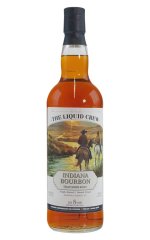
A lot of bourbon is distilled in Indiana by Midwest Grain Products (MGP). Look at a label of a bourbon, often on the back, and you’ll see “distilled in Indiana.” MGP makes great stuff, but they also make cheap stuff. They’re kind of like the Sysco of bourbon. A lot of small producers are actually “NDPs” non-distilling producers, and they buy their distillate from MGP.
I can vouch for the bourbon-aged maple syrup I have tried.
I should have been clearer in my wording. You can make Bourbon in Indiana, but you can only label that as "Bourbon", not as "Kentucky Bourbon". You can indicate that it was distilled in Indiana, because that is true, but you cannot label it as "Kentucky Bourbon" because you didn't make it in Kentucky. I don't think you'd even be allowed to label it as "Indiana Bourbon" (not that you'd want to), but I'm not lawyer.This is also not true, and is a common myth. Bourbon can be made in any state in the US.
In fact, if the bourbon is labeled “Straight bourbon” the state where it is distilled is required to be listed on the label. There’s Texas bourbon (still Austin is great), Missouri Bourbon (Ben Holladay is great), California bourbon (redwood empire is great), Utah bourbon, etc. It’s made all over the US.
A lot of bourbon is distilled in Indiana by Midwest Grain Products (MGP). Look at a label of a bourbon, often on the back, and you’ll see “distilled in Indiana.” MGP makes great stuff, but they also make cheap stuff. They’re kind of like the Sysco of bourbon. A lot of small producers are actually “NDPs” non-distilling producers, and they buy their distillate from MGP.
It’s often sold to farmers as livestock feed or soil additives
This. Though, I am not sure just how much drying it really needs. It does add to the weight and cost to transport, but air and drip drying should remove a large portion of the moisture. I guess they might have to deal with spoilage though, so it might need to be fully dried for feedstock.Is there anything particular about getting carbon this way to any other way, besides that it's a waste product?
Vaguely related, drying food produce is energy intensive and expensive, and something really suited to building a large amount of excess solar. Sell solar to the market when prices suit that, but having dryers ready to turn on when market prices drop due to too much solar would help boost the value of crops and leftover products like this. Win win!
Gotta keep the animals just a wee bit sloppy or they start getting ideas, donchaknow. All animals are created equal, but not all animals process alcohol at the same metabolic rate!Sounds like the poor farmers are going to get shafted on this...
Let them eat cake?Sounds like the poor farmers are going to get shafted on this...

This really needs to be addressed. It seems to be a glaring error, and I suspect they meant Wh/Kg as that would be an improvement over most supercaps (according to Gemini). However 48 W/Kg (which is a power density) would be kind of pathetic for a supercap (also according to Gemini).I thought the relevant measure would be energy (joules) per unit mass rather than power (watts)


If you aren't part of the solution you're the precipitate?So Homer Simpson was right again:
Alcohol is the cause of, and solution to, all of life's problems!
This was pretty trivial to find via image search.I should have been clearer in my wording. You can make Bourbon in Indiana, but you can only label that as "Bourbon", not as "Kentucky Bourbon". You can indicate that it was distilled in Indiana, because that is true, but you cannot label it as "Kentucky Bourbon" because you didn't make it in Kentucky. I don't think you'd even be allowed to label it as "Indiana Bourbon" (not that you'd want to), but I'm not lawyer.
If it's from Kentucky, you can call it Kentucky Bourbon or Kentucky Straight Bourbon (if it's aged properly) because that geographical distinction matters to some people. Kentucky Bourbon on the label isn't to denote style or flavor, it's an indicator that the product came from the birthplace of Bourbon.
EDIT: Also, if I'm wrong about this, please show me a label. I am far from an expert on Bourbons from outside the region.