
You are using an out of date browser. It may not display this or other websites correctly.
You should upgrade or use an alternative browser.
You should upgrade or use an alternative browser.
Belugas may pass the mirror test—but does the mirror test still pass?
- Thread starter JournalBot
- Start date
Trying to decipher the plant equivalent of "Oh no, not again" might prove a tad challenging.Has anyone tried this test on a bowl of petunias?
Upvote
8
(8
/
0)
That doesn't necessarily mean they realize it's their own reflection. They might just realize it's not really a cat, so they learn to ignore it. They probably treat TV screens similarly, even if it's showing a cat, right?When you have an openly hostile animal vs ANY other animal (EVEN HUMANS if they aren't known to be ones that feed them) and have them look in a mirror, we've had some cats that are still hostile to their own reflection even after years of seeing themselves they still have that Fight or Flight reaction at least for a moment but then they recognize themselves and they very quickly relax.
They never nod or wave or do any other BS "acknowledgement" of themselves other than relaxing when they NEVER relax even if you try to get them to accept another animal in their life and they never allow it without ALWAYS hissing if not outright attacking the other cat OR go into Flight mode.
THAT is a SIGNIFICANTLY better indication that they realize that it is themselves and not another animal.
I have a cat who often likes to look at herself in mirrors, even though she immediately chases any actual cat she sees. She also likes to watch TV shows about cats though, so I'm not sure exactly what to make of it. Does she know it's herself? Does she just know it's not an actual cat and is trying to figure out why it looks like one? I wish I knew.
Upvote
4
(4
/
0)
I think this is questionable - is mirror self recognition a necessary (or important?) condition for self-awareness? I think a sentient species can have subjective, individual experience without necessarily being able to connect a mirror image to themselves.Plenty of species we had assumed were self-aware have been tested and failed.
Upvote
7
(7
/
0)
Are you sure no other animal does?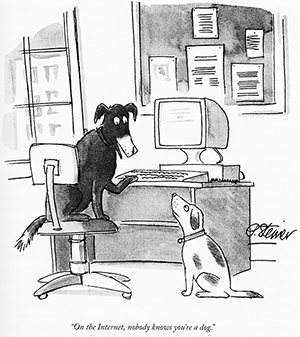

That WOULD explain that one 4M posting about his b****es.
Upvote
0
(0
/
0)
C.M. Allen
Ars Tribunus Angusticlavius
Indeed. If there is one thing truly unique to humanity, it's our constant, overwhelming desire to find some excuse, some justification, some 'evidence' to point to that makes us special and different from every other animal on Earth.Humans are special because they are the only species that keep looking for a specific thing that makes humans different from all other animals.
But what can you expect from a species so self obsessed that it'll cling to the belief in magical space daddies, even in the face of overwhelming contradicting evidence?
Upvote
-1
(3
/
-4)
Of course not. How would they respond? How would you measure their response?Has anyone tried this test on a bowl of petunias?
Upvote
-2
(0
/
-2)
Well, Dolphins engage in recreational sex as some humans.Indeed. If there is one thing truly unique to humanity, it's our constant, overwhelming desire to find some excuse, some justification, some 'evidence' to point to that makes us special and different from every other animal on Earth.
But what can you expect from a species so self obsessed that it'll cling to the belief in magical space daddies, even in the face of overwhelming contradicting evidence?
Upvote
1
(1
/
0)
It's all anecdotal, but I'll add my own 2 cents in.That doesn't necessarily mean they realize it's their own reflection. They might just realize it's not really a cat, so they learn to ignore it. They probably treat TV screens similarly, even if it's showing a cat, right?
I have a cat who often likes to look at herself in mirrors, even though she immediately chases any actual cat she sees. She also likes to watch TV shows about cats though, so I'm not sure exactly what to make of it. Does she know it's herself? Does she just know it's not an actual cat and is trying to figure out why it looks like one? I wish I knew.
Many years ago I had a cat who I thought was quite intelligent (for a cat, at least.) She regarded all cats as invaders who must be destroyed and driven out of her space, and would growl and scream and display other signs of aggression towards cats through windows. She'd also do the same to her reflection, unceasingly, for many years. She never got over that instinctual "KILL THE INTRUDER!" response. This was especially true with full-length mirrors.
Some years later I had a pair of cats (brother and sister) who did not seem to pay any attention whatsoever to mirrors. I never watched one interact meaningfully with a mirror. As far as I could tell they disregarded them completely.
More recently, I had a cat named Zeus who clearly recognized herself and others in a mirror. Sometimes she'd sit on the bathroom counter and seem to inspect herself in the mirror. In those cases, if I peeked my head in and she saw me in the reflection, she'd immediately turn to look at me in the doorway. Additionally, if I stood behind her she would make eye contact with me through the reflection and give me a kitty smile (squinted eyes, slight upward nod of the head) and if I positioned my hand above and behind her head, she would turn and look at it. You might think that in those cases she was reacting to the sound of me moving around and turning to look at the sound, but here's the thing: Zeus was stone deaf. She began losing her hearing when she was 14 or so, and by the time she was 16 she was completely unresponsive to sound.
Zeus was the smartest cat I've ever met. Not because she was quick or anything, actually if anything she seemed a bit slower on the uptake than most cats. But she was a deep thinker; she sat and she watched and she thought hard. To borrow a phrase from a book, you could see the thoughts racing around behind her eyes, and while they weren't going to win any sprints they seemed good for the long haul. She was one of those cats that figured out how door handles worked and, once that was accomplished, she would go around the house opening every door to go check the room behind at least once a day. She was completely confounded by her puzzle feeder until, one day, she sat there staring at it for almost an hour, after which she walked up and quickly fished out every treat I'd hidden in it like an expert. At some point in her life, she'd figured out mirrors, including her own reflection.
Do I think cats are self aware? Yes. I think they're intensely self aware. Do I think cats recognize themselves in mirrors? I think some do, yes. I also think some don't give a shit about mirrors. Some cats very clearly don't recognize themselves in mirrors. What does this prove about consciousness and self-awareness? Very little.
Upvote
16
(16
/
0)
No, it’s because as usual, you’re wildly overconfident in an understanding of a topic that’s shallower than you think.The ability to cry in response to joy or sadness is widely considered to be a uniquely human trait (putting it in bold since you're a fan of it). Many other animals have tear-producing glands, too. Otherwise, they wouldn't have eyes in the first place — there would need to be something to keep them moist.
God, I'm out of this place. I'm being attacked for stating well-known facts of life.
Upvote
5
(5
/
0)
"I started a discussion and others are taking part! Why are they attacking me?"The ability to cry in response to joy or sadness is widely considered to be a uniquely human trait (putting it in bold since you're a fan of it). Many other animals have tear-producing glands, too. Otherwise, they wouldn't have eyes in the first place — there would need to be something to keep them moist.
God, I'm out of this place. I'm being attacked for stating well-known facts of life.
No one was attacking you until now (me). Grow up. If you can't handle someone disagreeing with something you said, stay the fuck off of internet forums.
Upvote
3
(3
/
0)
Obviously, you're not a fan of the Hitchkikers Guide to the Galaxy series.Of course not. How would they respond? How would you measure their response?
Upvote
8
(8
/
0)
Well, Dolphins engage in recreational sex as some humans.
Some dolphins have attempted recreational sex with humans.
Upvote
4
(4
/
0)
ExhaustedTechConsumer
Smack-Fu Master, in training
All you'll get is "Oh no, not again".Of course not. How would they respond? How would you measure their response?
Upvote
6
(6
/
0)
And tending/herding cattle sort of by taking care of, and milking aphids. Those little buggers are amazing.Don't forget about farming. They were growing, cultivating, and farming their fungal 'fields' many, many, many thousands of years before human beings even existed. And they will likely be doing so long after humanity ceases to exist. Because ants are one of, if not the most successful and plentiful species on the planet. So much so, that formicidae predation has thus far been an evolutionary 1-way street. Once animals start eating ants for their diets, they never experience any pressure to do anything else.
Upvote
4
(4
/
0)
LOL yea. Years ago I read some warnings made for workers at a sea world type of place. Considering the anatomy of a Dolphin penis, I don't think that would have gone over well.Some dolphins have attempted recreational sex with humans.
Nope, not posting more on that, but if anyone is Dolphin "curious", the web is your friend.
And according to this page https://www.marinebio.org/creatures/dolphins/behavior/
*deleted. it may be data, but even my poor taste won't let me post it.
Upvote
0
(0
/
0)
C.M. Allen
Ars Tribunus Angusticlavius
Quite so. And surprisingly advanced architecture and large-scale construction, too.And tending/herding cattle sort of by taking care of, and milking aphids. Those little buggers are amazing.
As far as we've been able to find, the ant species beat us to the 'shaping our the environment to suit ourselves' shtick by millions of years. That's not even a competition.
Upvote
2
(2
/
0)
This is interesting evidence. But I also think that humans need to step well away from our default position that we're special and no other animal can do X. We've been proven wrong over and over and over.
Then we would have to start protecting those intelligent animals in all cases, not just against man-made effects.Humans have been saying "our species is special because we're the only animal that can do thus-and-such" for a long time. One supposedly unique trait after another has been shown not to be unique, including tool use. I sometimes suspect if there's something unique about our species, it's that we keep looking for a specific thing that makes us different from all other animals.
Animals are traditionally viewed as part of nature, where life is solitary, poor, nasty, brutish, and short. If an animal (no matter how intelligent) is eaten by a natural predator or succumbs to a naturally occurring disease or starves to death due to overpopulation, it is accepted by humans as a part of nature and natural selection. We only intervene to protect animals against things that are caused by humans, like a man-made oil spill, or a predator that was introduced by humans as an invasive species, or a shortage of food that was caused by urban sprawl cutting off land. Essentially, in environmentalism, humans try to make nature the way it was if human society didn't exist (or as close to that as we can feasibly get).
Society (and civilization), on the other hand, is meant to break out of that way of life and ensure that at least some humans live well regardless of natural selection or human fitness to the environment. It is based on the idea that humans, as sentient beings, have inherent value as individuals regardless of their fitness in natural selection or role in nature. If you believe that some existing animals can do everything humans can do, and there is nothing that makes humans special (at least among existing animals), then those animals should be in this category like humans. In that case, we should be doing things like protecting those intelligent animals even against their natural predators and disease, possibly intervening to improve their intelligence (you'd almost have to make things like schools for bonobos, dolphins, etc. to make this work), intervening to improve their quality of life (if that can be measured), etc. In general, the purpose would have to be to allow them to reach their maximum potential (in intelligence, happiness, health, etc.), rather than to eliminate human influence on their lives and environment.
Personally I don't think any existing animal can in fact meet this requirement for sentience (it's certainly possible for alien species, a future species, or some AI to achieve this, and then they would have the same rights as described above), but if they do meet this requirement, that's what the implications are.
Upvote
0
(0
/
0)
bettaboy123
Smack-Fu Master, in training
Studies like this just make me more convinced that going vegan was the right move. I know animals feel or perceive things the same way we do, but using them as products just stopped sitting right with me as I learned more about animals in general and how they perceive things.
Upvote
2
(2
/
0)
You are postulating a set of ideas that I have never actually seen reflected anywhere in reality. Humans emphatically do not do many of the things you seem to think we do. If you think that smart dolphins mean we have a moral imperative to save every dolphin from everywhere, then I want you to ask yourself why it is that we don't have universal health care in the richest nation in the world. If civilization is the force you say it is, war wouldn't exist. We just don't operate in the ways you're postulating.Then we would have to start protecting those intelligent animals in all cases, not just against man-made effects.
Animals are traditionally viewed as part of nature, where life is solitary, poor, nasty, brutish, and short. If an animal (no matter how intelligent) is eaten by a natural predator or succumbs to a naturally occurring disease or starves to death due to overpopulation, it is accepted by humans as a part of nature and natural selection. We only intervene to protect animals against things that are caused by humans, like a man-made oil spill, or a predator that was introduced by humans as an invasive species, or a shortage of food that was caused by urban sprawl cutting off land. Essentially, in environmentalism, humans try to make nature the way it was if human society didn't exist (or as close to that as we can feasibly get).
Society (and civilization), on the other hand, is meant to break out of that way of life and ensure that at least some humans live well regardless of natural selection or human fitness to the environment. It is based on the idea that humans, as sentient beings, have inherent value as individuals regardless of their fitness in natural selection or role in nature. If you believe that some existing animals can do everything humans can do, and there is nothing that makes humans special (at least among existing animals), then those animals should be in this category like humans. In that case, we should be doing things like protecting those intelligent animals even against their natural predators and disease, possibly intervening to improve their intelligence (you'd almost have to make things like schools for bonobos, dolphins, etc. to make this work), intervening to improve their quality of life (if that can be measured), etc. In general, the purpose would have to be to allow them to reach their maximum potential (in intelligence, happiness, health, etc.), rather than to eliminate human influence on their lives and environment.
Personally I don't think any existing animal can in fact meet this requirement for sentience (it's certainly possible for alien species, a future species, or some AI to achieve this, and then they would have the same rights as described above), but if they do meet this requirement, that's what the implications are.
So we've established that humans don't protect other humans very well. Why the hell would you think we would feel a moral imperative, as a society, to be required to set up schools for bonobos? I know my cat isn't as sentient as humans, but I will kill wildlife, other people's pets, and maybe even other people to keep him safe from predation. We're humans, we are not rational animals, we're rationalizing animals; I like my stuff, and my cat is part of my stuff, and I have a very human drive to defend my stuff. If other stuff isn't my stuff, I can feel some kind of vague and amorphous desire to be nice to that stuff, but I don't really feel a responsibility or necessity behind it. Dolphins can be the smartest, most sapient creatures in the world, and that's great for them, but they're gonna have to make do without me out there in the ocean taking care of them.
Upvote
0
(0
/
0)

The only way I can parse this sentence is by picturing dolphins wearing human disguises while having sex, but I'm not sure that's what you meant.Well, Dolphins engage in recreational sex as some humans.
Upvote
2
(2
/
0)
A few years ago I read that someone had figured out an equivalent of the mirror test using smell instead of vision (nope, I don't remember the details of that) and dogs passed with flying colors. It seems like a pretty big presumption to think the ways we demonstrate self-awareness are the only ways other animals demostrate it.
Upvote
4
(4
/
0)
I couldn't understand your post. But when I did, I think I'll be laughing for 20 minutes.The only way I can parse this sentence is by picturing dolphins wearing human disguises while having sex, but I'm not sure that's what you meant.
Upvote
1
(1
/
0)

Cue the Far Side cartoon "Heraldo Rivera of the Wild".I couldn't understand your post. But when I did, I think I'll be laughing for 20 minutes.
Upvote
2
(2
/
0)
He's pretending, dude.I dunno. My cat doesn't need a mirror to groom himself. I can easily see him dismissing a mirror image as simply useless. He'll play with shadow puppets, though. Also, many humans believe they appear to other people as they do to themselves in a mirror, i.e., reversed.
Upvote
0
(0
/
0)
Only one of many impediments faced amongst experimental psychologists, for sure. The research in this field is valid, and important, but all too often it's just squishy.A test with no false positives but very many false negatives, some implicit in the subjects, does not seem to be a good test.
Upvote
0
(0
/
0)

These are good articles and I always wonder why for the broad population they don’t lead to step 2 : if there’s even a chance that all animals are self aware, don’t farm and eat them
Upvote
0
(0
/
0)
A SIGNIFICANTLY better test is whether or not a typically hostile animal (including humans) towards ANY other animals and how they respond to seeing themselves in the mirror and do they attack the mirror or not is a SIGNIFICANTLY better test than the "I looked in the mirror, saw myself and nodded to myself" BS test.
We've had cats that INSTANTLY go into Fight or Flight ....
From your writing style i can certainly see why you would consider humans a "typically hostile animal"
Upvote
0
(0
/
0)
It's never occurred to me to consider that a uniquely human trait. So I'm not convinced it's a "well-known fact of life". It doesn't seem like a particularly important one, like being useful or something. If it's true, it may simply be something like "bipedal with opposable thumbs", part of the definition of our species, rather than an important feature of their mental landscape. (Bottlenose dolphins don't meet those criteria either.)The ability to cry in response to joy or sadness is widely considered to be a uniquely human trait (putting it in bold since you're a fan of it). Many other animals have tear-producing glands, too. Otherwise, they wouldn't have eyes in the first place — there would need to be something to keep them moist.
God, I'm out of this place. I'm being attacked for stating well-known facts of life.
Upvote
0
(0
/
0)