
You are using an out of date browser. It may not display this or other websites correctly.
You should upgrade or use an alternative browser.
You should upgrade or use an alternative browser.
The 2023 Hyundai Ioniq 6: A streamlined look equals serious range
- Thread starter JournalBot
- Start date
Absolutely. I used to have a Fiesta ST. Ferociously entertaining little car, hell on wheels on a track or road course, took on a twisty mountain road like a ferret shooting into a pipe full of raw meat. And, also, expensive to insure, had a ride like a shifter kart, and frankly just a hyperactive, annoying little handful to commute in. Tenable as a third car, but also not big enough for the dog, cramped and annoying when dealing with the rear-facing child seat legally mandated for my kid at the time, and too noisy. It went off to party with someone else as soon as I took on my current 42-mile daily commute.When I was a teenager I was very enthusiastic about the idea of fun to drive little sedans and sports cars. That was before I actually had to deal with real life and driving around in the city that I live in. I very quickly recognized that driving in a huge metro is actually a chore, and there was zero opportunity whatsoever to enjoy a sporty car with a manual transmission. I decided thereafter that I wanted my car to make everything else I was going to do with it less of a car. First car was a hatchback, next car was a crossover. Both maximize the ratio of inside space to outside size.
Very similar to my experience riding a motorcycle while touring around the countryside in beautiful foreign countries. I was sure I was going to go get my motorcycle license when I got home. Then I realized that driving a motorcycle in a Canadian city was actually going to be a nightmare, and I'd never be able to recreate the romance of the experience I had. Dropped that idea pretty quickly.
My Forester, on the other hand, gets 30-34mpg, is spacious and has incredible visibility, will take on any road I have an actual need to get down, is a comfortable and serene commuter, hauls three people and five days worth of camping gear with room to spare, tows my utility trailer capably if I need to bring home a couple yards of mulch, and is easy for my kid to get in and out of, especially now that he's in a booster seat. And that's all on the footprint of a C-segment compact sedan or wagon, so it's still easy to park and thread through traffic. Is it any wonder people generally pick similar vehicles as their primary practical family haulers?
But let's be real here - we don't have to keep relitigating this argument in every article about either a sedan or a crossover because people are genuinely confused about why people buy crossovers.
Last edited:
Upvote
5
(7
/
-2)
I know that's the theory and in OEM videos it seems to work, but then that's expected in what amounts to an ad. But I remain skeptical about the car tracking part, which is where these systems always seem to struggleActive matrix headlights are different from auto high beams. Active matrix headlights are extremely bright and aim their light well out in front of the car, but they have the ability to dynamically block off sections of that beam. So other cars are tracked and the headlights adjust to block segments of the beam that would blind other drivers. You end up with better light than high beams but without shining it at other drivers.
Every car with automatic high beams that I've tried (Tesla, BMW, Acura, Audi, to name a few) exhibits 2 things: (1) too slow to react, so that you're still blinding someone for 2-3 seconds, which we know takes minutes for the eye to recover from; (2) lots of false negatives from road signs and other things in the environment, which gets irritating. There are even false positives while driving alone on rural roads...
Is the approach to tracking in an active matrix setup vastly different from the one used in auto high beams?
Upvote
2
(2
/
0)
I've only had extensive experience with auto high beams from Ford, but they work really well on both of my cars. They only turn on when you're somewhere that actually needs them (so they're not on when you have street lights) and they turn off when there's oncoming traffic (even on divided highways where you legally don't have to but you're an obnoxious asshole if you don't) or when you come up behind someone else.I know that's the theory and in OEM videos it seems to work, but then that's expected in what amounts to an ad. But I remain skeptical about the car tracking part, which is where these systems always seem to struggle
Every car with automatic high beams that I've tried (Tesla, BMW, Acura, Audi, to name a few) exhibits 2 things: (1) too slow to react, so that you're still blinding someone for 2-3 seconds, which we know takes minutes for the eye to recover from; (2) lots of false negatives from road signs and other things in the environment, which gets irritating. There are even false positives while driving alone on rural roads...
Is the approach to tracking in an active matrix setup vastly different from the one used in auto high beams?
Active matrix headlights have been a thing in Europe for awhile now and I haven't heard any complaints. I might see about getting the EU spec headlights for my car now that they're legal here, though I suspect they're very pricey.
Upvote
0
(0
/
0)
This car does seem to check all my boxes. I historically have not been a fan of Hyundai vehicles but perhaps this view is unsound. If similar sedan is still offered in ~ 5 years, when my Honda Clarity PHEV is due for a change, I will definitely have it (or its successor) on the short list.
Last edited:
Upvote
0
(0
/
0)
romrunning
Ars Praetorian
Did @Dr Gitlin ever say if he talked to the mfg reps about why they are shoving the larger wheels onto new models?
Most of us here know it cuts down on the range, as well as produces a rougher ride. So is it just for the "style" factor? Why don't they offer the optimum tire size on all models, if only as an option? Also, why do they force you to go to larger tire sizes when going with higher trim levels?
Most of us here know it cuts down on the range, as well as produces a rougher ride. So is it just for the "style" factor? Why don't they offer the optimum tire size on all models, if only as an option? Also, why do they force you to go to larger tire sizes when going with higher trim levels?
Upvote
1
(2
/
-1)

Timtheenchanter
Ars Tribunus Militum
I’m a big fan of Hyundai and their recent vehicles. Yesterday I saw an Ioniq 5 for the first time in the St Louis area, these are very rare vehicles outside of CARB states. My only gripe is how slow hyundai is going with production, I wish they were ramping up, but they seems to have slowed down this quarter.

Upvote
-3
(0
/
-3)
- Add bookmark
- Featured
- #208
That chart is kind of irrelevant. Take a look at this one instead to judge Hyundai's EV rollout:I’m a big fan of Hyundai and their recent vehicles. Yesterday I saw an Ioniq 5 for the first time in the St Louis area, these are very rare vehicles outside of CARB states. My only gripe is how slow hyundai is going with production, I wish they were ramping up, but they seems to have slowed down this quarter.

Kind of tells the exact opposite story, doesn't it? The reality is that Hyundai simply doesn't care about the US market when they are in a supply-constrained manufacturing environment. In every other major EV market, every EV that they sell offsets heavy fines associated with fleet average emissions. That's not the case with the US market, since legislators in the US have decided on an "all carrot, no stick" approach to encouraging EV adoption.
The result is that every EV Hyundai sells in Europe or China (or Korea) has a much higher effective margin than one that they sell in the US. So why bother selling in the US?
Until they can match demand, Hyundai is basically just keeping the bed warm in the US, making sure that they have sufficient market share that consumers don't forget about them. And that strategy is working well enough, since Hyundai Group is in 2nd place for EV marketshare in the US, beating out Ford, GM, and VAG.
EDIT: Another point worth adding here is that Korea probably feels like America's "domestic only" IRA credits are more than a little bit alienating to its geopolitical partners in Europe and Asia. Despite being a viable alternative to the potential threat of Chinese domination in the future of EV supply chains, none of Hyundai's cars are eligible for the credits. So if they are going to need to cut their prices to compete in this market due to preferential incentives, it's yet another major reason to just cede the US market for now. At least until they get their Georgia EV & battery factory up and running in 2024 and can compete on an even playing field.
Last edited:
Upvote
5
(5
/
0)
Timtheenchanter
Ars Tribunus Militum
Well my chart was for ioniq5 which is also what I was discussing in the post (my point, I hope they actually sell Ioniq 6 in the US). Global production of Ioniq 5 also sucks, see chart below. Your chart included PHEVs and Genesis vehicles. I disagree with your conclusions (Hyundai doesn’t any to compete for BEV sales in the US) but it probably is true that they have a limited supply of batteries and are choosing to sell more expensive genesis vehicles.That chart is kind of irrelevant. Take a look at this one instead to judge Hyundai's EV rollout:
Kind of tells the exact opposite story, doesn't it? The reality is that Hyundai simply doesn't care about the US market when they are in a supply-constrained manufacturing environment. In every other major EV market, every EV that they sell offsets heavy fines associated with fleet average emissions. That's not the case with the US market, since legislators in the US have decided on an "all carrot, no stick" approach to encouraging EV adoption.
The result is that every EV Hyundai sells in Europe or China (or Korea) has a much higher effective margin than one that they sell in the US. So why bother selling in the US?
Until they can match demand, Hyundai is basically just keeping the bed warm in the US, making sure that they have sufficient market share that consumers don't forget about them. And that strategy is working well enough, since Hyundai Group is in 2nd place for EV marketshare in the US, beating out Ford, GM, and VAG.

Why do they have a limited supply of batteries still?
Upvote
-3
(0
/
-3)
Literally everyone has a limited supply of batteries. Including Genesis is perfectly reasonable. Kia/Hyundai/Genesis are all the same. A battery going into a Genesis is a battery not going into a Kia or Hyundai. That's like separating Chevy and Cadillac when talking about GM.Well my chart was for ioniq5 which is also what I was discussing in the post (my point, I hope they actually sell Ioniq 6 in the US). Global production of Ioniq 5 also sucks, see chart below. Your chart included PHEVs and Genesis vehicles. I disagree with your conclusions (Hyundai doesn’t any to compete for BEV sales in the US) but it probably is true that they have a limited supply of batteries and are choosing to sell more expensive genesis vehicles.
Why do they have a limited supply of batteries still?
Upvote
8
(8
/
0)
...you're seriously arguing that 10K monthly sales (120K annual run rate) for a single model in an auto group that sells 8 different EVs "sucks?" As a group they're roughly on track to match Tesla's 2019 EV sales So sure, they're 4 years behind in scaling compared to the market leader, but their growth trajectory is just as fast, and they're just one of a half-dozen other serious competitors on the market.Well my chart was for ioniq5 which is also what I was discussing in the post (my point, I hope they actually sell Ioniq 6 in the US). Global production of Ioniq 5 also sucks, see chart below. Your chart included PHEVs and Genesis vehicles. I disagree with your conclusions (Hyundai doesn’t any to compete for BEV sales in the US) but it probably is true that they have a limited supply of batteries and are choosing to sell more expensive genesis vehicles.
Why do they have a limited supply of batteries still?
In order to match their sales goals, Tesla doesn't need to just beat each company individually, they need to beat out the entire aggregate market of competition. If VW, GM, and Ford (as well as higher-end marques like M-B and BMW) all grow their EV volumes at the same rate that Hyundai is doing, there is no chance that Tesla can hit 20M vehicles (in any timescale, let alone by 2030), nor likely even 10M vehicles in the same timeframe. And I'm not even assuming anything from Toyota, here - maybe they're a sleeping giant or maybe they're a woolly mammoth at the end of the ICE age, who knows.
Last edited:
Upvote
4
(4
/
0)
Crossovers - the medium to larger ones are the modern equivalent of the station wagon; the smaller replace the family-size hatchbacks.This is a facile explanation that falls flat when you look at anything produced before 1955 or so, or after 1980 or so. Most cars in the '20s-'60s had a lot more in common with crossovers of today than European-influenced sedans of the '70s-'80s.
Crossovers just work best for most people. Their compromises are compromises most people can live with.
Upvote
6
(6
/
0)
I still think Buick should have called the.....uh....whatever the hell they call their big three-row crossover? Yeah,they should have called that shit the Roadmaster.Crossovers - the medium to larger ones are the modern equivalent of the station wagon; the smaller replace the family-size hatchbacks.
Upvote
1
(2
/
-1)

Ochre_face
Ars Praefectus
They can't hit 10 or 20 million vehicles with their current and announced lineup anyway. It takes nearly 50 models to get to 20 million units. Even if you double the sales of every model it still takes 14 or 15 models to get to 20 million, and the worst selling of those 14 or 15 models would be a top five model now....you're seriously arguing that 10K monthly sales (120K annual run rate) for a single model in an auto group that sells 8 different EVs "sucks?" As a group they're roughly on track to match Tesla's 2019 EV sales So sure, they're 4 years behind in scaling compared to the market leader, but their growth trajectory is just as fast, and they're just one of a half-dozen other serious competitors on the market.
In order to match their sales goals, Tesla doesn't need to just beat each company individually, they need to beat out the entire aggregate market of competition. If VW, GM, and Ford (as well as higher-end marques like M-B and BMW) all grow their EV volumes at the same rate that Hyundai is doing, there is no chance that Tesla can hit 20M vehicles (in any timescale, let alone by 2030), nor likely even 10M vehicles in the same timeframe. And I'm not even assuming anything from Toyota, here - maybe they're a sleeping giant or maybe they're a woolly mammoth at the end of the ICE age, who knows.
In other words, Tesla either needs 50 new models, or they need a smaller model lineup, each of which outsells most of the best selling cars today, and the top ones outsell the best selling cars in history by 2x.
Here's a likely guess at their total sales based on reasonable projections of all their current and announced models.
Model Y ~ 1 million
Model 3 ~ 500k
Model 2 ~ 500k
Model S,X, Cybertruck and Roadster ~300k
That's 2.3 million.
It takes Toyota and VW group each more than twenty models across many brands just to get to 10 million, each operating in ~190 markets with cars ranging from ~$10,000 to >$100,000, and in every form factor from Kei cars to supercars and everything in between.
As a side note, the best selling cars in any given year through the entire history of mass manufactured autos, from the Model T to today, appears to be around a million units give or take a couple hundred thousand. Doesn't matter what year you look up or how big the total car market was, it seems to plateau at about a million or so. I haven't yet found a period where a single model beat 1.5 million, although its possible since there are a lot of years to check.
I doubt they'll make 1.8 million this year, unless they really slash prices just to move metal.
Upvote
2
(3
/
-1)
Traumflug said:Larger wheels don't sink as deep into potholes, [...]
That's a typical Ars reader answer. Somebody writes something about wheels, they read too quickly and confuse wheels with rims. And then they blast into the face as if the original author had written about rims. Wheel = rim + tire, at least according to Wikipedia: https://en.wikipedia.org/wiki/Wheel#ConstructionThat is not true at all. It isn't just larger wheels it is larger wheels combined with smaller tires. [...]
Upvote
-4
(2
/
-6)

Statistical
Ars Legatus Legionis
That's a typical Ars reader answer. Somebody writes something about wheels, they read too quickly and confuse wheels with rims. And then they blast into the face as if the original author had written about rims. Wheel = rim + tire, at least according to Wikipedia: https://en.wikipedia.org/wiki/Wheel#Construction
Your usage is far from universal in fact your reference has this "A wheel with car tire made by BMW company". Still you are just as wrong. The outside diameter is not larger so even if by "wheel" you mean total diameter it isn't larger.
The entry level wheel/tire combo is 225/55R18. So sidewall is 225*0.55 = 123.75mm = 4.87 inches. So wheel + 2x sidewall = 18" +2*4.87" = 27.74" total diameter.
The upgraded wheel/tire combo is 245/40R20. So sidewall is 245*0.40 = 123.75mm = 3.86 inches. So wheel + 2x sidewall = 20" +3*3.86" = 27.72" total diameter.
So the claim that it has larger "wheels" (total diameter) because they are better for potholes is not correct. In fact the 20" wheels have smaller overall diameter although by a negligible amount. This is very common for OEM wheels & tires as significant changes to the outside diameter has potential suspension issues. When the OEM offers multiple tire/wheel combinations for a vehicle they usually (a few sports cars and off road vehicles aside) have near identical total diameter because they can just adjust the amount of each wheel/tire combinations to meet demand without any other change in the vehicle. In one combo is more popular they can slap more of those own at the last step in the factory and up the orders of those wheels & tires.
"Larger wheels don't sink as deep into potholes"
The outer diameter is not larger. It will sink exactly as deep into the pothole. In fact if you hit the pothole hard enough the much thinner tires are more likely to be damaged and in the process increase risk to the wheel as well. The 20" wheels are simply style because any increase in the size of the wheel is offset by a decrease in the size of the tire. "Low Profile" tires use to have aspect ratios of around 55 (55% of the tire width). That has shrunk further and further as wheels got larger. 45 & 40 are pretty common now and 35 & 30 are starting to be seen. The outside diameter is not getting any larger. The handling of potholes is getting worse not better.
Last edited:
Upvote
8
(8
/
0)

Back when cars came on 13" wheels, the move to larger sizes (15-17 inches) was usually in aid of better handling. 18 inch wheels were about as big as anyone went, and most forms of motorsport have settled on 18-inch wheels as their preferred size.
But that was before everyone and their dog wanted an SUV. 15-inch wheels look fine and dandy on a two-box shape the size of a VW Golf, but when you make the body 15 percent larger you need to increase the size of the wheels to match or it looks wrong.
Then came the move to EVs, where there's that slab of batteries to hide too, and again, maintaining an aesthetically pleasing ratio of car to wheel requires larger wheels. There's no other reason for 20/21/22s, they don't make the cars handle better.
But don't for a second pretend that appearances don't matter when it comes to selling cars. I have no doubt a few posters here truly do pay no attention to aesthetics and would make their decision purely on kWh/mile or something, but that's not the general public. And it hasn't ever been, from Edsel to Aztek.
But that was before everyone and their dog wanted an SUV. 15-inch wheels look fine and dandy on a two-box shape the size of a VW Golf, but when you make the body 15 percent larger you need to increase the size of the wheels to match or it looks wrong.
Then came the move to EVs, where there's that slab of batteries to hide too, and again, maintaining an aesthetically pleasing ratio of car to wheel requires larger wheels. There's no other reason for 20/21/22s, they don't make the cars handle better.
But don't for a second pretend that appearances don't matter when it comes to selling cars. I have no doubt a few posters here truly do pay no attention to aesthetics and would make their decision purely on kWh/mile or something, but that's not the general public. And it hasn't ever been, from Edsel to Aztek.
Upvote
15
(15
/
0)
And if you have strong feelings about wheel size, nothing is stopping anybody from selling the dubs your car came with - a clean set of wheels with fresh tires mounted sells for $250-500+ a corner, depending on the tire and wheel - and swapping them out for some 15s, or whatever clears your brakes. Nothing at all. You'll make money.Back when cars came on 13" wheels, the move to larger sizes (15-17 inches) was usually in aid of better handling. 18 inch wheels were about as big as anyone went, and most forms of motorsport have settled on 18-inch wheels as their preferred size.
But that was before everyone and their dog wanted an SUV. 15-inch wheels look fine and dandy on a two-box shape the size of a VW Golf, but when you make the body 15 percent larger you need to increase the size of the wheels to match or it looks wrong.
Then came the move to EVs, where there's that slab of batteries to hide too, and again, maintaining an aesthetically pleasing ratio of car to wheel requires larger wheels. There's no other reason for 20/21/22s, they don't make the cars handle better.
But don't for a second pretend that appearances don't matter when it comes to selling cars. I have no doubt a few posters here truly do pay no attention to aesthetics and would make their decision purely on kWh/mile or something, but that's not the general public. And it hasn't ever been, from Edsel to Aztek.
Upvote
1
(3
/
-2)

A boyott that requires a tailpipe emits 3 metric tones of co2 while you wait until 2024 for delivery of an ioniq 6. lovely.
Show me on the doll where the Ioniq 6 hurt you.How is that impressive? Model 3 LR is AWD and 78kwh. It manages 359mi. Been that way for nearing 3 years now.
This car with AWD drops to 316mi.
A model 3 with 78kwh lithium ion and only one motor could probably do closer to 400mi.
Range is mostly a factor of weight + battery pack + number of motors.
apparently ioniq 6 awd is ~4600lbs, model 3 lr awd is 4250lbs. This car is 350lbs heavier than a model 3 lr. Id say thats the opposite of an achievement really, they are clearly struggling in terms of engineering at hyundai and arent able to compete with tesla when it comes to building lighter vehicles that can utilize each kwh more efficiently.
As influential as Tesla have been in bringing in the EV revolution, there are many reasons why one might not want to buy their vehicles. Don't get me wrong, I was a fan in the past and for a long time I also wanted a Tesla. If I'd been in a position to buy one at that time I would have. But not wanting to support a company for reasons (whether it's to do with how it treats its employees, fit and finish of the car, or the person in charge) is a perfectly valid reason to not buy that brand of vehicle.
"You can buy an EV that gets delivered right now so you MUST buy an EV that gets delivered right now" is a ridiculous stand to take.
Upvote
7
(7
/
0)
Timtheenchanter
Ars Tribunus Militum
Yes turbofrog, I am literally arguing that 10k per month sucks. When it is the flagship BEV product and the company is producing 300k total vehicles in a month, that 10k per month is disappointing- particularly because it is not increasing (note the flat graph), a vehicle that has been on the market a year. I’m impressed with the ioniqs so far, but they really need to make and sell a lot more of them here and less icevs. I see a few Kia EV6s, but the Ioniqs are not being sold in a lot of the US....you're seriously arguing that 10K monthly sales (120K annual run rate) for a single model in an auto group that sells 8 different EVs "sucks?" As a group they're roughly on track to match Tesla's 2019 EV sales So sure, they're 4 years behind in scaling compared to the market leader, but their growth trajectory is just as fast, and they're just one of a half-dozen other serious competitors on the market.
In order to match their sales goals, Tesla doesn't need to just beat each company individually, they need to beat out the entire aggregate market of competition. If VW, GM, and Ford (as well as higher-end marques like M-B and BMW) all grow their EV volumes at the same rate that Hyundai is doing, there is no chance that Tesla can hit 20M vehicles (in any timescale, let alone by 2030), nor likely even 10M vehicles in the same timeframe. And I'm not even assuming anything from Toyota, here - maybe they're a sleeping giant or maybe they're a woolly mammoth at the end of the ICE age, who knows.
Upvote
-2
(1
/
-3)
Statistical
Ars Legatus Legionis
Yes turbofrog, I am literally arguing that 10k per month sucks. When it is the flagship BEV product and the company is producing 300k total vehicles in a month, that 10k per month is disappointing- particularly because it is not increasing (note the flat graph), a vehicle that has been on the market a year. I’m impressed with the ioniqs so far, but they really need to make and sell a lot more of them here and less icevs. I see a few Kia EV6s, but the Ioniqs are not being sold in a lot of the US.
They aren't selling as many in the US because the US is third world nation when it comes to BEVs. The EU has incredibly tough emission standards and the penalties are bankrupt the company harsh. They get tighter every three years. Companies need to move mountains of BEVs to stay ahead of the curve. China is the major growth market in the world and also has plugin vehicle fleet requirements. Establishing brand dominance there is critical for everyone (including Tesla).
The US doesn't even have a BEV mandate. Hell even CARB states won't have one until 2026. Companies dump whatever leftover BEVs they have in the US after meeting the two major markets that matter: EU and China. Now post 2026 maybe that will change at least in CARB states.
Last edited:
Upvote
5
(5
/
0)
Rim is the edge of the wheel. The wheel is the whole metal (or carbon composite if you're fancy) bit that you mount your tires to, which in turn is mounted to one of the hubs of your car (confusing because a wheel has a hub as well). The tire is the big, black rubbery bit that goes around the wheel.That's a typical Ars reader answer. Somebody writes something about wheels, they read too quickly and confuse wheels with rims. And then they blast into the face as if the original author had written about rims. Wheel = rim + tire, at least according to Wikipedia: https://en.wikipedia.org/wiki/Wheel#Construction
Rim is slang, though it has somewhat fallen out of usage, for wheels of a particular sort. Chromed to hell and back, as big as can reasonably fit on the car or larger, and some eye catching design (for better or worse). Other slang includes dubs/dubz, duces, 20s/24s/whatever other size is the new big thing, Ds, and probably a million others I've never heard of. But slang is slang. Rim has an actual meaning, and that meaning probably led to the slang. Probably because "rims" as slang refers to large, flashy wheels and the measurement for wheels is the diameter from edge to edge of the rim. Big wheels could be small diameter but wide as hell (wide being the length of the barrel), but you wouldn't call those "rims."
Upvote
1
(1
/
0)
The top trim has a HUD outside the US. I have no idea why the US model doesn't get it.Apparently no HUD available so gets crossed off my short list. After having one I will not buy another vehicle w/o one.
Upvote
2
(2
/
0)
Statistical
Ars Legatus Legionis
The top trim has a HUD outside the US. I have no idea why the US model doesn't get it.
It is mentioned on the global site but weirdly omitted from the Hyundai USA website which is either a huge oversight or it for whatever reason has been omitted in the US version. Maybe the author can confirm?
Last edited:
Upvote
3
(3
/
0)

I'm not sure if you meant it literally - but it really is only a few miles, and that's actually something that made me decide to actually get an Ioniq 5 with the greater supply and more negotiable pricing in March.
The SEL RWD Ioniq 5 (probably a popular trim) gets two miles less than the SEL RWD Ioniq 6. The AWD version gets four miles less. Here, at least, in the PNW, where the AWD version is 95-100% of new car sales, and the SEL is probably ~80% of in stock vehicles (where every dealer in the Portland region has a dozen on the low), assuming the Ioniq 6 follows a similar makeup, the majority of Ioniq 6s will have had their range neutered by those huge wheels.
Dr. Gitlin - first - thanks for the review! I'd been eagerly awaiting Ars' full take on the Ioniq 6 ever since it was announced. One of the photo comments says Hyundai believes 85% of customers will opt for the larger wheels. Did you have an opportunity to talk with them at greater length about this statistic? Is it because 85% of customers prefer larger wheels, or because 85% of customers are going to pick SEL/Limited trims? It seems like a stretch for Hyundai to claim it when there are no other options - the SE is missing quite a few features compared to the SEL that consumers might prefer to pay the relatively small charge on.
I'm mostly venting because I would have leapt at an opportunity for an AWD SEL Ioniq 6 with > 300 miles of range. The 20" wheels nix that opportunity. My two most common trips are Portland to Seattle (and vice versa) - a ~180 mile trip, and from my home to Mt. Hood, either through Hood River or through Sandy (for anybody familiar with Mt. Hood skiing trips, traveling through Sandy is faster but prone to road stopping traffic). A 300 mile range AWD model makes all of my trips out and back without charging once, but a 270 mile trip is juuuuuust brushing up against needing to charge on some of them. Knowing why manufacturers are making this design decision would be really great - maybe the wheel aesthetic really is something people are going for.
Agree with you completely.
I'm really liking the thought of this car, but with the stereo I can't get unless I go top-end --and the 18" wheels. I'd rather have the range, and I don't want to pay more for tires, and risk greater damage in my state from spring potholes that can occasionally just eat rims.
Upvote
1
(1
/
0)
Timtheenchanter
Ars Tribunus Militum
2 things:They aren't selling as many in the US because the US is third world nation when it comes to BEVs. The EU has incredibly tough emission standards and the penalties are bankrupt the company harsh. They get tighter every three years. Companies need to move mountains of BEVs to stay ahead of the curve. China is the major growth market in the world and also has plugin vehicle fleet requirements. Establishing brand dominance there is critical for everyone (including Tesla).
The US doesn't even have a BEV mandate. Hell even CARB states won't have one until 2026. Companies dump whatever leftover BEVs they have in the US after meeting the two major markets that matter: EU and China. Now post 2026 maybe that will change at least in CARB states.
1. I’m convinced there is a huge market in the US for BEVs, far beyond what is available today. Companies that put mainstream and premium BEVs (I’m not including the vehicles that cost over $90k here) on the market seem to be selling out rapidly. US is a huge auto-market, larger than Europes, but I guess Hyundai and some other players are content to let Tesla, VW and Ford have that market for the time being. Make a great product and people will line up to buy it in the US. Below Is an article along these lines but from global perspective:
https://www.bloomberg.com/news/arti...llion-in-wake-up-call-for-carmakers#xj4y7vzkg2. the idea that the sales of BEVs in the US are mediocre because most of them are going to Europe and asia doesn’t make a lot of sense to me, because I can see that Hyundai isn’t making much of a dent there either. They are essentially still thinking compliance and pushing ICEVs as hard as ever. While this lovely ioniq6 came out, they also rolled out an updated Sonata (hybrid available but will be mostly ICE) and are selling about 25k Palisades, 12k Tuscons and 12k Sante Fe SUVs per month. Looking at the global picture, Hyundai is an also ran for xEVs even though they have an excellent model that has been in production over a year.
Upvote
-4
(0
/
-4)
Ochre_face
Ars Praefectus
You're posting the wrong table.2 things:
1. I’m convinced there is a huge market in the US for BEVs, far beyond what is available today. Companies that put mainstream and premium BEVs (I’m not including the vehicles that cost over $90k here) on the market seem to be selling out rapidly. US is a huge auto-market, larger than Europes, but I guess Hyundai and some other players are content to let Tesla, VW and Ford have that market for the time being. Make a great product and people will line up to buy it in the US. Below Is an article along these lines but from global perspective:
https://www.bloomberg.com/news/arti...llion-in-wake-up-call-for-carmakers#xj4y7vzkg2. the idea that the sales of BEVs in the US are mediocre because most of them are going to Europe and asia doesn’t make a lot of sense to me, because I can see that Hyundai isn’t making much of a dent there either. They are essentially still thinking compliance and pushing ICEVs as hard as ever. While this lovely ioniq6 came out, they also rolled out an updated Sonata (hybrid available but will be mostly ICE) and are selling about 25k Palisades, 12k Tuscons and 12k Sante Fe SUVs per month. Looking at the global picture, Hyundai is an also ran for xEVs even though they have an excellent model that has been in production over a year.
View attachment 53987
The brand table is lower down that article and puts Kia at number 12 and Hyundai at number 13 with a combined ~22,000 units in January.
Upvote
0
(0
/
0)
Timtheenchanter
Ars Tribunus Militum
Feel free to share the articl, I pulled that graphic from here, and it only had the one chart: https://cleantechnica.com/2023/03/08/tesla-byd-nearly-40-of-bev-sales-globally/You're posting the wrong table.
The brand table is lower down that article and puts Kia at number 12 and Hyundai at number 13 with a combined ~22,000 units in January.
since ars published an article today about this topic, we probably should be arguing over on that thread…
Upvote
-2
(0
/
-2)
Ochre_face
Ars Praefectus
Ah, sorry. The chart is one of José Pontes' and is identical to the article I looked at.Feel free to share the articl, I pulled that graphic from here, and it only had the one chart: https://cleantechnica.com/2023/03/08/tesla-byd-nearly-40-of-bev-sales-globally/
since ars published an article today about this topic, we probably should be arguing over on that thread…
Heres the same one with brands and OEMs included.
https://cleantechnica.com/2023/03/03/best-selling-electric-cars-in-the-world-january-2023/
Hyundai/Kia didn't make the top 7 OEMs which are the only ones explicitly listed under manufacturers.
Upvote
0
(0
/
0)
This is an extremely weird point to try to make when Hyundai Group is the #2 seller of EVs in the US! While Tesla has just over 50% market share, Hyundai Group has 9%, with the remaining ~40% split between everyone else. Yes, including VAG and Ford.2 things:
1. I’m convinced there is a huge market in the US for BEVs, far beyond what is available today. Companies that put mainstream and premium BEVs (I’m not including the vehicles that cost over $90k here) on the market seem to be selling out rapidly. US is a huge auto-market, larger than Europes, but I guess Hyundai and some other players are content to let Tesla, VW and Ford have that market for the time being. Make a great product and people will line up to buy it in the US. Below Is an article along these lines but from global perspective:
Upvote
1
(1
/
0)
I wonder if it's a regional thing. Up here in Canada, I've always heard it as "rim is the metal part, tire is the rubber part, wheel is the tire on the rim". To me, a 20" wheel is measured with the tire on the rim. Which always throws me for a loop reading car articles on here where everyone understands "wheel is only the metal part". Meaning, to me, a 20" wheel is much larger than an 18" wheel (2" difference in diameter) while the usage on here shows a 20" wheel is virtually the same size as an 18" wheel due to the tire being thinner.Rim is the edge of the wheel. The wheel is the whole metal (or carbon composite if you're fancy) bit that you mount your tires to, which in turn is mounted to one of the hubs of your car (confusing because a wheel has a hub as well). The tire is the big, black rubbery bit that goes around the wheel.
Rim is slang, though it has somewhat fallen out of usage, for wheels of a particular sort. Chromed to hell and back, as big as can reasonably fit on the car or larger, and some eye catching design (for better or worse). Other slang includes dubs/dubz, duces, 20s/24s/whatever other size is the new big thing, Ds, and probably a million others I've never heard of. But slang is slang. Rim has an actual meaning, and that meaning probably led to the slang. Probably because "rims" as slang refers to large, flashy wheels and the measurement for wheels is the diameter from edge to edge of the rim. Big wheels could be small diameter but wide as hell (wide being the length of the barrel), but you wouldn't call those "rims."
You put tires on rims to make wheels. You put wheels on the vehicle.
Having multiple meaning for "wheel" is confusing, as some people use it to refer to just the metal part, and others use it to refer to the metal+rubber. So, how do you differentiate between "wheel" and "wheel+tire" without having to specify "wheel+tire" all the time?
When we go into a car parts store, they have big displays of rims on one side, with big displays of tires on the other side, and no mention of wheels anywhere.
Upvote
1
(1
/
0)
Timtheenchanter
Ars Tribunus Militum
Yes, good data point, though these charts are about plugins, and includes PHEVs. I was trying to make a point about BEVs, ioniq5 was most of Hyunda’s BEV sales last year I believe.Ah, sorry. The chart is one of José Pontes' and is identical to the article I looked at.
Heres the same one with brands and OEMs included.
https://cleantechnica.com/2023/03/03/best-selling-electric-cars-in-the-world-january-2023/
Hyundai/Kia didn't make the top 7 OEMs which are the only ones explicitly listed under manufacturers.
Upvote
-1
(0
/
-1)
Is this your local parts store?I wonder if it's a regional thing. Up here in Canada, I've always heard it as "rim is the metal part, tire is the rubber part, wheel is the tire on the rim". To me, a 20" wheel is measured with the tire on the rim. Which always throws me for a loop reading car articles on here where everyone understands "wheel is only the metal part". Meaning, to me, a 20" wheel is much larger than an 18" wheel (2" difference in diameter) while the usage on here shows a 20" wheel is virtually the same size as an 18" wheel due to the tire being thinner.
You put tires on rims to make wheels. You put wheels on the vehicle.
Having multiple meaning for "wheel" is confusing, as some people use it to refer to just the metal part, and others use it to refer to the metal+rubber. So, how do you differentiate between "wheel" and "wheel+tire" without having to specify "wheel+tire" all the time?
When we go into a car parts store, they have big displays of rims on one side, with big displays of tires on the other side, and no mention of wheels anywhere.
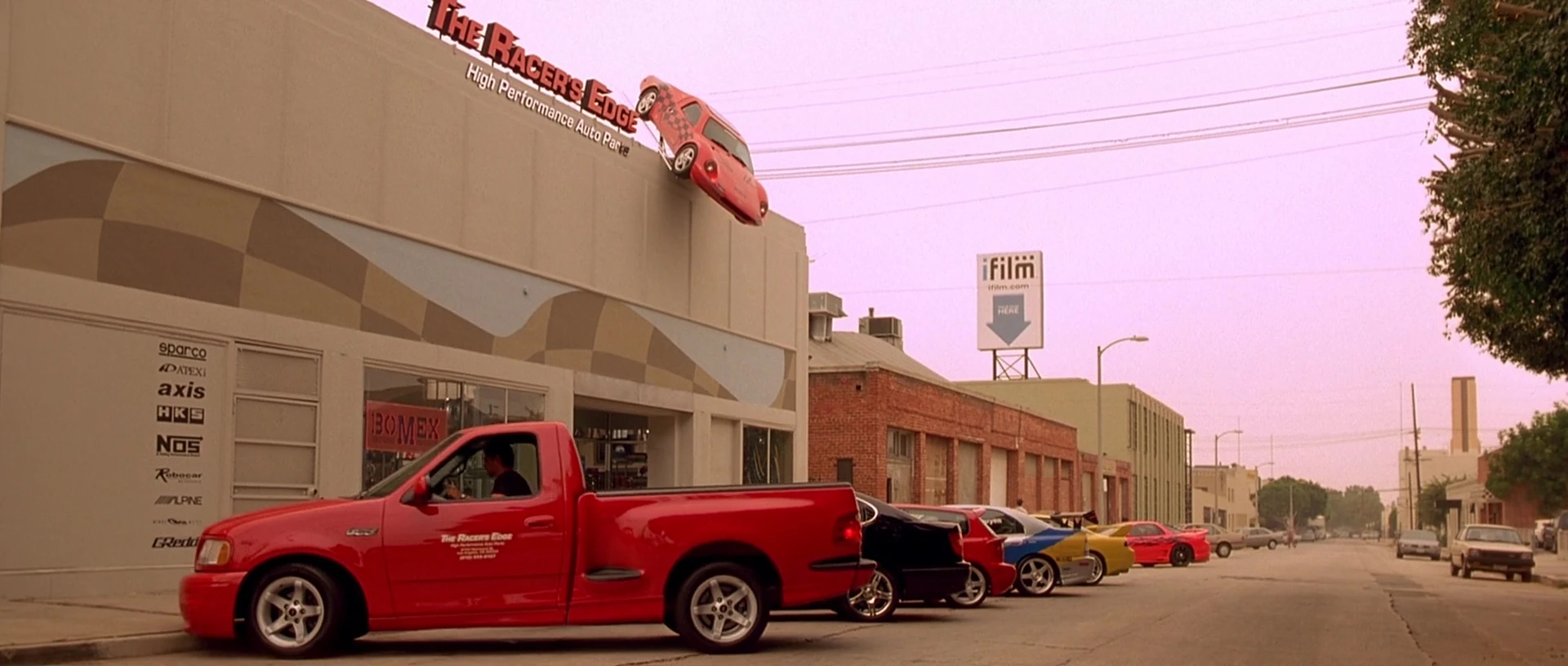
I don't know what to tell you, the wheel is the wheel. The tire is the tire. The wheel and tire together are the wheel and tire.
Go to tirerack.com and browse their selection of wheels. They don't include tires. And nowhere do they list "rims" for sale.
Rim is exactly what it sounds like. It's the rim forming the outer edge of the wheel. The rim of your toilet bowl isn't the whole toilet.
Upvote
0
(2
/
-2)
watermeloncup
Ars Tribunus Angusticlavius
I've definitely heard people refer to wheels as "rims" in the Midwest. But I don't recall if I'd ever seen that used at a mechanic or auto parts store.I wonder if it's a regional thing. Up here in Canada, I've always heard it as "rim is the metal part, tire is the rubber part, wheel is the tire on the rim". To me, a 20" wheel is measured with the tire on the rim. Which always throws me for a loop reading car articles on here where everyone understands "wheel is only the metal part". Meaning, to me, a 20" wheel is much larger than an 18" wheel (2" difference in diameter) while the usage on here shows a 20" wheel is virtually the same size as an 18" wheel due to the tire being thinner.
You put tires on rims to make wheels. You put wheels on the vehicle.
Having multiple meaning for "wheel" is confusing, as some people use it to refer to just the metal part, and others use it to refer to the metal+rubber. So, how do you differentiate between "wheel" and "wheel+tire" without having to specify "wheel+tire" all the time?
When we go into a car parts store, they have big displays of rims on one side, with big displays of tires on the other side, and no mention of wheels anywhere.
Upvote
3
(3
/
0)

I've definitely heard people refer to wheels as "rims" in the Midwest. But I don't recall if I'd ever seen that used at a mechanic or auto parts store.
I'm in Canada I've heard Wheels and Rims interchangeably. Though I just call them wheels.
Upvote
1
(1
/
0)
Timtheenchanter
Ars Tribunus Militum
I’m not sure how or what data source you are looking at, but what I see says otherwise. Last year Ford sold more EVs than hyundai. Maybe you are adding Hyundai and Kia together? Tesla sold more model Ss than Hyundai sold ioniq 5s las year even though the S is clearly old and out of date according to some people.This is an extremely weird point to try to make when Hyundai Group is the #2 seller of EVs in the US! While Tesla has just over 50% market share, Hyundai Group has 9%, with the remaining ~40% split between everyone else. Yes, including VAG and Ford.
if you are talking about just the Q1 2023, GM sold more than Hyundai and Kia combined, and VW is actually increasing production of their ID series since they are getting their Chattanooga plant online, they seem likely to overtake Hyundai this year in the US. Ford had a “bad“ quarter with their Mexico plant offline to do upgrades to increase Mach E production and their battery issue on Lightning, but supposedly they are ramping up hugely this year. Maybe Hyundai will too, I hope so…
Upvote
-3
(0
/
-3)
Timtheenchanter
Ars Tribunus Militum
Tesla and BYD don’t seem to have that problem.Literally everyone has a limited supply of batteries. Including Genesis is perfectly reasonable. Kia/Hyundai/Genesis are all the same. A battery going into a Genesis is a battery not going into a Kia or Hyundai. That's like separating Chevy and Cadillac when talking about GM.
Genesis and Hyundai: depends on if you are talking about brand or group. I’m talking about brand. I think Genesis going all BEV is great, unfortunately they are a small brand in the US selling only about 50k vehicles last year.
Upvote
-3
(0
/
-3)
Hyundai and Genesis are literally the same thing. Genesis is just the name slapped on premium models. Genesis used to be a single Hyundai model, but it became an entire line of more luxury models.Tesla and BYD don’t seem to have that problem.
Genesis and Hyundai: depends on if you are talking about brand or group. I’m talking about brand. I think Genesis going all BEV is great, unfortunately they are a small brand in the US selling only about 50k vehicles last year.
I'm not even touching Tesla or Chinese manufacturers when it comes to you. We all know where you stand in that. Every "legacy manufacturer" is doomed to fail any day now.
Upvote
3
(3
/
0)
Thats very surprising/disappointing, and I agree. I very much rely on the HUD on my Ioniq 5, and to anyone cross shopping the 5 vs 6, I think its a big enough deal to pick the 5 over the 6 (unless you're getting an SE/SEL trim anyway).Apparently no HUD available so gets crossed off my short list. After having one I will not buy another vehicle w/o one.
The worst part is it looks like it is available in Canada and other markets, just not in the US.
Upvote
1
(1
/
0)