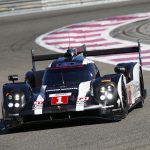
Porsche's 919 Hybrid program has been a spectacular success, winning Le Mans three times in a row. But it's also now a victim of that success. This is the 2017 car of Neel Jani, Andre Lotterer, Nick Tandy at Le Mans.
Credit:
Porsche
Porsche's 919 Hybrid program has been a spectacular success, winning Le Mans three times in a row. But it's also now a victim of that success. This is the 2017 car of Neel Jani, Andre Lotterer, Nick Tandy at Le Mans.
Credit:
Porsche
Porsche’s 919 Hybrid program has been a spectacular success, winning Le Mans three times in a row. But it’s also now a victim of that success. This is the 2017 car of Neel Jani, Andre Lotterer, Nick Tandy at Le Mans.
Porsche
Porsche’s 919 Hybrid program has been a spectacular success, winning Le Mans three times in a row. But it’s also now a victim of that success. This is the 2017 car of Neel Jani, Andre Lotterer, Nick Tandy at Le Mans.
Porsche
Porsche says it is keeping on the entire LMP1 team to work on the Formula E effort, among other activities.
Porsche
Porsche says it is keeping on the entire LMP1 team to work on the Formula E effort, among other activities.
Porsche
The car was introduced to the world in 2014.
Porsche
The car was introduced to the world in 2014.
Porsche
Porsche says it is keeping on the entire LMP1 team to work on the Formula E effort, among other activities.
Porsche
The car was introduced to the world in 2014.
Porsche
Porsche’s first overall win at Le Mans came in 1970 with the 917K driven by Hans Herrmann and Richard Attwood.
Porsche
In 1971 Porsche did it again. This time the 917K of Helmut Marko and Gijs van Lennep took the victory.
Porsche
Win number three came in 1976 with Jackie Ickx and Gijs van Lennep (again), driving the 936.
Porsche
Jackie Ickx delivered another win for the 936 in 1977, driving with Jürgen Barth and Hurley Haywood.
Porsche
Klaus Ludwig and Don and Bill Whittington won in 1979 with a 935 K3.
Porsche
For 1981, Jackie Ickx was paired with Derek Bell in a 936. Ickx scored his fifth Le Mans win that year.
Porsche
1982 was Ickx and Bell again, this time in the all-new 956. This car and its successor, the 962, would be built in fairly large numbers for a race car and would dominate sports car racing for some time.
Porsche
1983 was another victory for the Rothmans Porsche 956. Ickx and Bell finished second though; the win went to Vern Schuppan, Hurley Haywood (again) and Al Holbert.
Porsche
Joest Racing had a lot of success at Le Mans. More recently that has been with Audi, but its first wins came with this Porsche 956. The same car won in 1984 (Henri Pescarolo and Klaus Ludwig) and 1985 (Ludwig, Paolo Barilla, and “John Winter”).
Porsche
The factory team was back with the 962C and ready to beat Joest in 1986. Derek Bell scored his fourth win, sharing the car with Hans Joachim Stuck and Al Holbert.
Porsche
1987: another win for the Rothmans’ Porsche team, the 962C, and Bell, Stuck, and Holbert
Porsche
By 1994 the 962 was pretty old compared to that year’s LMP1 prototypes. But the car won overall again, this time competing in the GT1 class! Dauer had modified some 962s into a (very expensive) road version, and two of these were converted back into racing cars and entered by Joest. Yannick Dalmas, Hurley Haywood, and Mauro Baldi beat the fastest Toyota LMP1 car by a lap.
Porsche
The WSC-95 started life as a Group C Jaguar XJR-14. Tom Walkinshaw Racing modified it into an open-top car and replaced the engine with a 3.0L turbocharged Porsche flat-six engine. Campaigned by Joest Racing, it won in 1996 (Davy Jones, Alexander Wurz, and Manuel Reuter) and again the following year (Michele Alboreto, Stefan Johansson, and Tom Kristensen).
Porsche
By 1998 GT1 was finally the top category, and Porsche’s factory team finally made its 911 GT1 car a winner. Laurent Aïello, Allan McNish, and Stéphane Ortelli were the drivers responsible.
Porsche
2014 was a learning year for the 919 Hybrid. But 2015 was a full-out effort, with three cars entered for Le Mans. The #19 car (right) of Earl Bamber, Nick Tandy, and Nico Hülkenberg came first, followed by the #17 (left) of Timo Bernhard, Brendon Hartley, and Mark Webber. The #18 car (middle) of Marc Lieb, Romain Dumas, and Neel Jani was fifth.
Porsche
Porsche sent two cars to the french race in 2016. Defending WEC champions Timo Bernhard, Brendon Hartley, and Mark Webber finished a distant 13th overall.
Porsche
But the 919 Hybrid’s second 24-hour victory was claimed by 2016’s winners: Romain Dumas, Marc Lieb, and Neel Jani (l-r). Toyota had the measure of the Porsches throughout the race, but the leading Toyota broke just as it started what should have been its final lap, handing the win to Porsche.
Porsche
2017’s race was an odd one. The #2 Porsche had to pit early on, losing 19 laps to change the front electric motor-generator unit. With this car out of contention it was a battle between the remaining Porsche 919 Hybrid and three Toyota TS050s. But each of these succumbed to problems! For a long time it looked as if the #38 LMP2 car of Jackie Chan Racing would take overall victory, but the superior lap time and fuel economy of the #2 919 Hybrid (the sole remaining LMP1 hybrid in the race) saw it eventually run down and pass the LMP2 car, beating it by a lap. Your winners were Brendon Hartley, Timo Bernhard, Earl Bamber (l-r).
Porsche
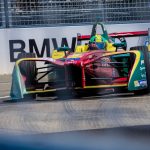
As was sadly expected, on Friday Porsche confirmed its plans to end the all-conquering 919 Hybrid LMP1 racing program at the end of 2017. Like Audi before it, the German brand is going to refocus its energy on Formula E, entering the fray in season six, which starts in 2019. That’s a boost for the all-electric racing series, which is also adding Mercedes-Benz to the grid for season six, but it’s a huge blow for the World Endurance Championship (WEC) and the 24 Hours of Le Mans.
Just two years ago, the uppermost echelon of endurance racing was at a zenith with the 1,000-hp hybrids from Audi, Toyota, and Porsche duking it out in thrilling races around the world. But Audi ended its Le Mans participation at the end of 2016, no thanks to dieselgate. With Porsche gone from the end of this year, one has to question whether Toyota will stand by an earlier commitment to keep its own hybrid prototype program running until 2019. (Porsche will still keep racing the 911 RSR in WEC’s GTE-Pro and IMSA’s GTLM classes.)
The 1,000-horsepower hybrids that race in the LMP1 category are some of the fastest and most complex vehicles the world has ever seen. Porsche’s 919 Hybrid first turned a wheel in anger in 2014; the following year it achieved its purpose, adding to Porsche’s roster with another overall win at the 24 Hours of Le Mans (the marque’s 17th victory overall). Since then Porsche has notched up two more: in 2016 when Toyota failed with three minutes to go, and again this year in a bizarre race. The winning #2 919 Hybrid lost 19 laps early after its front motor-generator unit failed and needed replacing; this was less trouble than befell every other hybrid LMP1 car, though, and the overall win nearly went to an LMP2 car. (It eventually finished a lap behind the much quicker Porsche.)
Porsche built up its 919 Hybrid program from scratch, recruiting plenty of ex-BMW Formula 1 team members in the process. It has said it is keeping the team—including the six drivers—together, working on the Formula E effort as well as “examining other fields of application and development areas.” But a Formula E team only needs two drivers, so we reckon some of Porsche’s hotshots will be looking at other series.
The stated reason for the switch to Formula E hits all the usual notes. “The growing freedom for in-house technology developments makes Formula E attractive to us,” says Michael Steiner, Member of the Executive Board for Research and Development at Porsche AG. “Porsche is working with alternative, innovative drive concepts. For us, Formula E is the ultimate competitive environment for driving forward the development of high-performance vehicles in areas such as environmental friendliness, efficiency and sustainability.”
It is true that Formula E is becoming more of a testbed for electric vehicle components and systems, and there will be an increasing amount of technical development allowed, particularly beginning in season eight. But it’s also true that the budgets involved are a fraction of those required to win in LMP1. We’ve heard estimates that Porsche (and Audi) were spending anywhere between $200 to $500 million a year on their prototype programs. Even at the lower end of the range, you’d be hard pressed to spend more than five percent of that on a Formula E program.
Jonathan is the Automotive Editor at Ars Technica. He has a BSc and PhD in Pharmacology. In 2014 he decided to indulge his lifelong passion for the car by leaving the National Human Genome Research Institute and launching Ars Technica's automotive coverage. He lives in Washington, DC.


 Loading comments...