After losing in court earlier this month, the broadcasters trying to shut down TV streaming startup Aereo are asking for another chance to make their case. This time, their aims are broader. They warn of dire economic consequences if a broader panel of judges from the Second Circuit Court of Appeals doesn’t reconsider the previous decision, which was decided by a narrow 2-1 margin.
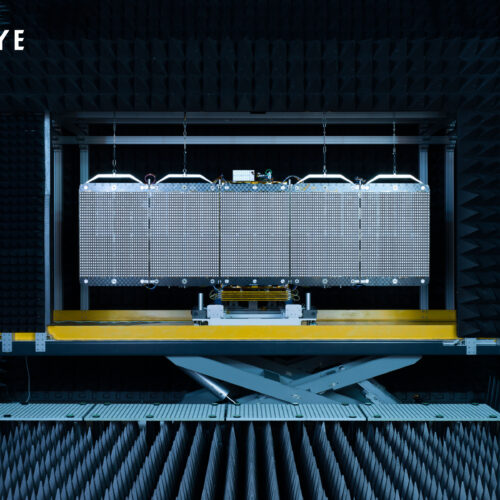
Aereo’s technology is designed to take advantage of a landmark 2008 ruling by the Second Circuit, based in New York. It held that a “remote DVR” service designed by Cablevision was legal because it kept a separate copy of a program for each user who recorded it. Reasoning that the same principle should apply to broadcast television, Aereo built a television streaming service with thousands of tiny antennas. Aereo claims that because it assigns each active user an individual antenna, and stores separate copies of recorded programs, it isn’t infringing copyright holders’ public performance rights.
On April 1, two judges from the Second Circuit accepted Aereo’s argument, ruling that its service was no different, legally speaking, from renting a TV tuner with a really long cable. But Judge Denny Chin dissented, described Aereo’s technology as “a Rube Goldberg-like contrivance, over-engineered in an attempt to to avoid the reach of the Copyright Act.”
Now broadcasters are asking for the case to be reheard by an “en banc” panel consisting of all Second Circuit judges. The broadcasters hope that Judge Chin’s argument will carry the day on the larger panel.
The company’s existence, and the future of many other cloud-based businesses, hangs in the balance. Aereo’s entire business strategy relies on Cablevision’s 2008 legal victory, and the broadcasters are asking the appeals court to overturn it.

 Loading comments...