A federal appeals court has handed a big setback to broadcasters trying to stop Aereo, a startup that streams New York-area television content over the Internet. Broadcasters such as Fox and Univision argued that transmitting TV content without permission was copyright infringement. But Aereo countered that its service was analogous to a television and DVR that happened to have a really long cable between the antenna and the screen. On Monday, the United States Court of Appeals for the Second Circuit agreed.
Aereo’s technology was designed from the ground up to take advantage of a landmark 2008 ruling holding that a “remote” DVR product offered by Cablevision was consistent with copyright law. Key to that ruling was Cablevision’s decision to create a separate copy of recorded TV programs for each user. While creating thousands of redundant copies makes little sense from a technical perspective, it turned out to be crucial from a legal point of view. Because each copy was viewed by only one household, the court ruled that Cablevision was not engaged in a “public performance” of copyrighted works.
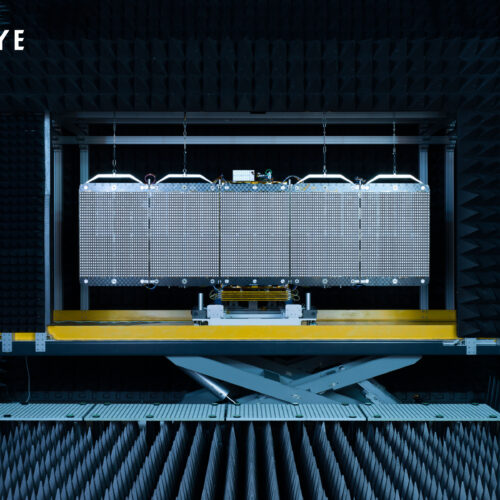
Aereo’s founders realized that the Cablevision ruling offered a blueprint for building a TV rebroadcasting service that wouldn’t require the permission of broadcasters. In Aereo’s server rooms are row after row of tiny antennas mounted on circuit boards. When a user wants to view or record a television program, Aereo assigns him an antenna exclusively for his own use. And like Cablevision, when 1000 users record the same program, Aereo creates 1,000 redundant copies.
Broadcasters argued that the rows of tiny antennas were little more than a publicity stunt. They claimed that in reality, Aereo was merely re-transmitting their content without permission to thousands of users, an infringement of copyright’s public performance right.
But on Monday, a panel of Second Circuit judges sided with Aereo in a two-to-one ruling. The broadcasters had sought a preliminary injunction shutting Aereo down for the duration of the trial. The trial court judge denied that request, and the Second Circuit judges upheld the judge’s decision. In the process, they settled some of the key legal issues in Aereo’s favor.

 Loading comments...