Comcast has been serving Comcast ads to devices connected to its public Wi-Fi hotspots, but not on its home Internet service. Comcast does deliver targeted ads based on viewing history to its TV subscribers.
Verizon Wireless customers’ browsing is tracked by an online advertising clearinghouse that “tak[es] advantage of a hidden undeletable number that Verizon uses to monitor customers’ habits on their smartphones and tablets,” ProPublica reported in January. Verizon later agreed to let customers opt out of the tracking. Verizon also has a “Verizon Selects” service that delivers personalized marketing in exchange for “Smart Rewards” points that can be turned in for prizes. The program is opt-in and there is no fee to avoid joining.
Although AT&T has gone further than its biggest competitors, any Internet provider could track its customers’ browsing and use the information to make money on advertising.
“Internet service providers provide Internet connection to end users, and the natural consequence is that it is possible to monitor the network traffic over those channels. In this light, any ISP is capable of performing such analyses,” Olejnik told Ars.
“If you’re an engineer you know that every ISP has every scrap of data of everything coming in,” White said. “They have to manage their networks, they have to on the DNS side, they have to on the attack side, on peering, all of that. It’s really not a question of ‘do we have your data,’ it’s which groups in house are going to be able to see that.”
Olejnik described in detail what kinds of information Internet service providers could collect about their users:
According to the information on their website, AT&T will be analyzing the websites accessed by users—the websites, frequency of visits, time spent on them.
Web browsing history conveys rich information about the users’ preferences. Methods exist to analyze this data and extract various insight about users and their interests—the content they like. It may be, for example, possible to infer the user’s age, gender, even incomes or racial profile, just based on Web browsing history. Consequently, this allows the profiling of users and it can be typically leveraged to target the user with specific advertising content. Similar [profiling] is also possible in the traditional model of Web advertising. However, [an] ISP is in a privileged position due to the potential of controlling virtually all network activities of its users. In particular, ISPs have perfect user identification and tracking capabilities; it is straight-forward to associate a particular network traffic with specific real users.
Moreover, AT&T mentions the possibility of analyzing data “like search terms.” Web browsing histories, and in particular search terms, may reveal the users’ interests in specific topics, such as medical information. Consequently, by the analysis of user browsing patterns, as well as the typed search terms it may also be possible to infer medical conditions. In these scenarios, users would be advised to use search engines over secured connections (HTTPS).
Obviously, Internet Service Providers already may possess some information about their subscribers, for example their names, ages, and genders. But they may not have this information relating to the other household members. Since Web browsing histories carry detailed insight, it may be possible to create other versatile analyses. Perhaps it would be possible to distinguish between the particular household residents, since Web browsing patterns can be attributed to particular people. Research shows that Web use patterns of men and women may differ in some circumstances. But this difference can also be attributed to the psychological traits of users, e.g. introverted people may access different websites than extroverted ones. The datasets of users’ Web use patterns may certainly offer a lot of possibilities in these regards.
It’s all seamless
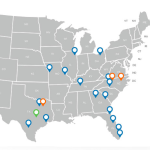
The “U-verse with AT&T GigaPower” fiber service is available in Austin, Texas; Dallas-Fort Worth; Kansas City; Raleigh and Winston-Salem, North Carolina; and could be coming to dozens more cities. The Internet Preferences data collection program does not apply to AT&T’s slower home Internet services, such as DSL and fiber-to-the-node, or its wireless network, although AT&T could extend Internet Preferences to those networks if it wants to.





 Loading comments...