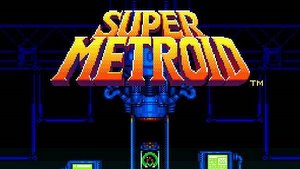
At its best, the Metroid series is about solitude; you’re left alone on a strange alien planet and its up to you to figure out where to go and what to do. And while the first game introduced the concept, it was with Super Metroid, released nearly a decade later, that the developers at Nintendo perfected it.
The game begins heavy on the exposition, with series heroine Samus Aran outlining what has happened so far. The story isn’t all that necessary though, and it’s not long before you’re on a self-destructing space station running for your life. From there you move on to a strange alien planet in search of a stolen metroid. And it’s here that the game actually reveals itself.
Though it has the appearance of an action game, at its heart, Super Metroid is about exploration. You make your way through a series of interconnected rooms and caves, unsure of exactly where to go. The series pioneered a new form of backtracking, and it’s on full display in Super Metroid. As you progress you come across areas that are inaccessible, forcing you to turn around and search elsewhere. But they’re not inaccessible forever. A large part of the Metroid series is collecting power-ups, and most of the time when you come across a new weapon or ability, there’s an “ah ha!” moment where you remember just where to use it.
To make things easier, Super Metroid introduced the concept of a map to the series. Though it gives only a bare outline of your surroundings, pointing out important rooms and items, it’s incredibly useful, especially given the size of the world you are exploring. And, if nothing else, it eliminates the need to play with a pad of graph paper at your side.
 Loading comments...