Last night’s release of November US console sales data by tracking firm NPD gave both Sony and Microsoft something to crow about in the largest single market for video games. Microsoft was able to claim the mantle of fastest-selling new system, with 909,000 US sales between its November 22 launch and the end of the month. Sony was able to brag that the PS4 was the top-selling system for the month overall, but the company hasn’t released raw sales figures, suggesting it might not have beaten Microsoft’s US sales numbers by an overwhelming amount in November.
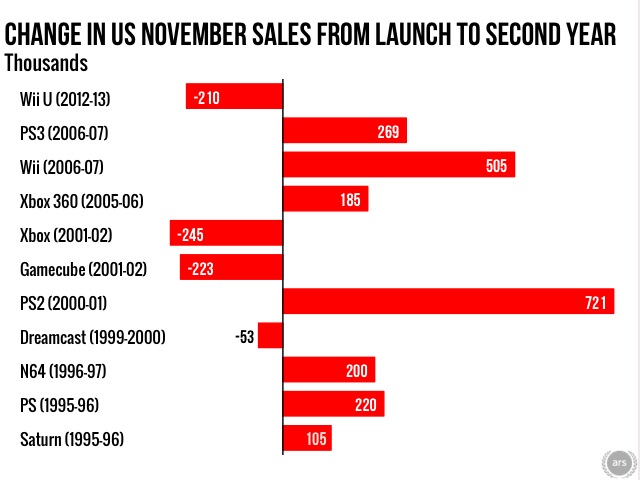
The most interesting hardware number to come out of the report, though, came from Nintendo. The company said Wii U sales increased by more than 340 percent over the month before. That sounds impressive, until you look back at the leaked data from October and realize the Wii U only sold between 50,000 and 60,000 units that month (lining up with reported September sales of 55,500 units). That means Nintendo sold roughly between 220,000 and 260,000 Wii U systems in November.
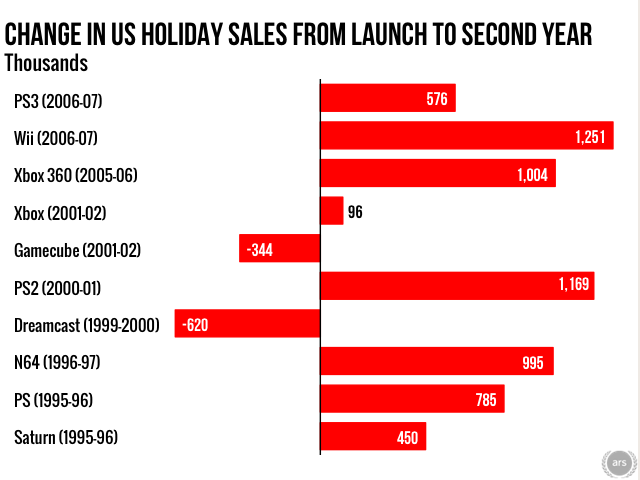
That would be a decent raw sales number in the summer doldrums or in the post-holiday lull at the beginning of the year. For performance during the start of the explosive holiday season, though, 250,000 sales isn’t too inspiring, especially when the Wii U has had a year to theoretically entrench itself against upstart competition (an early launch strategy that worked for the PS2 and Xbox 360, to some extent). The Wii U’s November sales look even worse when you realize that the system is poised to be one of the few systems that actually performs worse in its second holiday season than its first, which has historically been a very bad sign for a system’s long-term success.
It may seem counterintuitive during these days of irrational, launch-window exuberance, but game consoles usually see better sales one year after hitting the market than they do in the months surrounding the launch itself. This makes sense when you think about it. By the second holiday season, system makers and retailers have had time to build up their supply stockpiles, game makers have had time to release what’s usually the first wave of actual quality games on the system, and consumers have had time to evaluate new consoles by visiting their early adopter friends.

 Loading comments...