Skip to content
Gaming

Lord British wants to take you to space, and he’s closer than you think

Richard Garriott has been to space, but it took his fortune, a few major …

Ben Kuchera | 129
Story text

It is very easy to fall asleep in space. When you’re at your desk at home and you’ve been working for hours and you nod off, your chin bumps your chest and you wake up with a start. In space, your head doesn’t fall—you simply fade into sleep, and then if you’re unattached you begin to float away. This is the sort of thing you hear when you speak with Richard Garriott, a man you may know better as Lord British. He made millions of dollars creating and selling video games, and then spent most of that money trying to get into space.

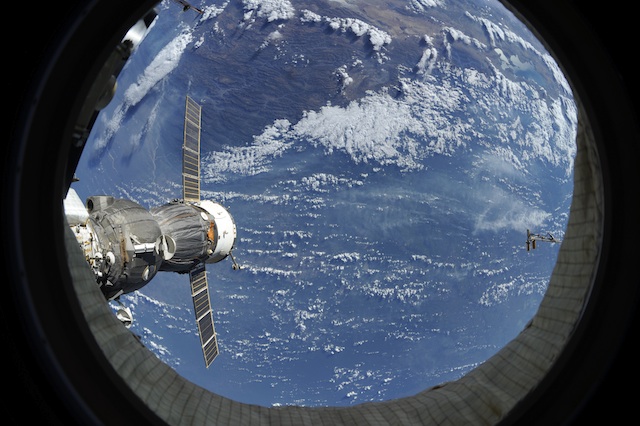
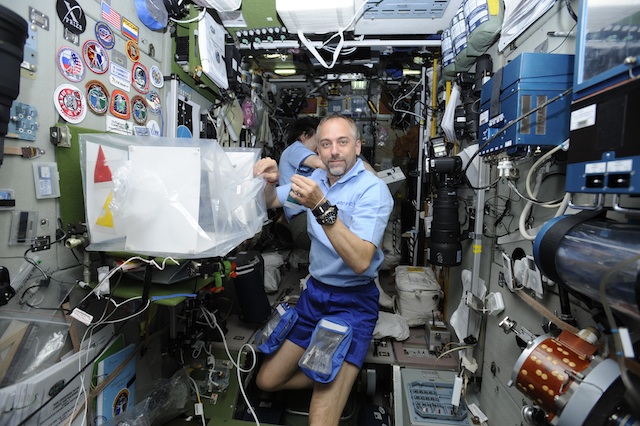
He says that there is no ground on the International Space Station, nor is there a ceiling. There are instruments and items and all sorts of things connected to the walls, and you can tell the people who are new to space flight by how they bump into things, which sends them spinning in zero gravity. They zoom around, followed by a mess of items and benign, space-faring shrapnel. It collects by the air vents if no one picks it up. Sleeping bodies find their way there as well.

This is where Richard Garriott wants to take you, and he is much closer than you think.

Flying poets

It’s hard not to romanticize a man like Richard Garriott. His father was an astronaut, and only poor eyesight stopped the son from following the father off the planet. He began working with computers, and created the games many of us grew up playing. In some circles the name “Avatar” has nothing to do with James Cameron, and everything to do with our adventures in Britannia. We remember when he was killed by his own people.

This is how Richard Garriott speaks when describing what it was like to fly into space on the Soyuz rocket: “You know, unlike television where it’s always loud and has lots of vibration or you might imagine it feels like a dropping the clutch on the sports car as you take off at a green light, it’s actually much more cerebral,” he explains. “It’s almost perfectly smooth. It’s almost perfectly silent and feels much more like a confident ballet move, lifting you ever faster into the sky, than something scary or threatening.”
This is in stark contrast to the vision of space flight we’ve been sold, the violent and overwhelming cacophony of the liftoff, as if man was by his very will pushing the Earth away from himself. The way Garriott explains liftoff, it’s simply man taking his rightful place in the heavens.

Returning to Earth is also different than you’d imagine. There is almost perfect silence as you hit the atmosphere at 17,000 miles an hour. “That creates plasma around the vehicle that is hotter than the surface of the sun. Literally, my right shoulder was against that window,” he told us. “And that window is, you know, about five panes of glass and quartz and a few other things. There is a gap in the window that’s a vacuum, and that’s why the material doesn’t melt.”

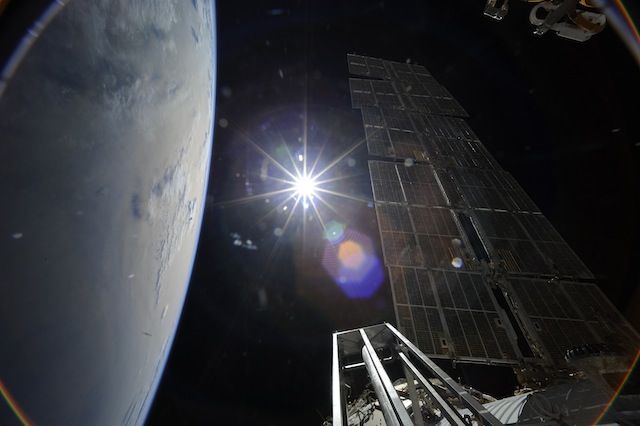
The Earth, near sunset

This is where Garriott sat as he fell back to Earth, intellectually aware that a few inches away was something that hot and that ferocious. If something were to go wrong, he would have to go to work. He knew the craft as well as the other astronauts next to him, as there is no such thing as a passenger seat in space; you have to work if you want to go up. He spent months in Russia learning how to do this, and he knows that until they touch down on land, not water, there is radio silence. The reason for this is disturbing: if you’re speaking when you hit land, you’re likely to bite through your own tongue.

The landing did not go smoothly, as debris was knocked loose and kept his seat from operating normally. Smoke began to pour into the capsule from under one of the instrument panels, a moment Garriott referred to as being “a little alarming.”

“When you hit the ground, even under a big parachute like that, that’s a six-ton boulder that hits the ground really, really hard,” he said, talking about what it was like to literally crash back into our planet. “And it really is like a car crash into a brick wall.” His father, the astronaut, was there to greet him, and Garriott learned that it was just as hard getting used to being back on land as it was getting used to being in space. “When I would lie in bed, since the inner ear fluid sloshed to the back, it makes you feel like you’re accelerating forward so you feel like you’ve got the bed spins after a bad night of drinking,” he said. This goes on for three days.

In the International Space Station

He and his father talked about what it was like to fly into space. Richard Garriott was the 483rd person to go into space, and to get there he had to spend the majority of this fortune, undergo corrective eye surgery, and fix his fused kidneys and liver hemangioma in order to pass the medical tests. His body is heavily scarred from the procedures. It cost tens of millions of dollars, made from selling over a hundred million games. This is not a man with a lack of will.

Talking with Richard Garriott

We met in a small hallway during the D.I.C.E. summit to chat about space flight and what it taught him. Richard Garriott is a thin man, with an intense speaking voice and a fierce intelligence. I brought up a chart put together by the aviator Burt Rutan that shows how long it took modern flight to go from the Wright Brothers to the average person getting into a plane, and how that Wright-to-airplane transition took a much shorter time than it’s taking to get the middle class into rockets. Garriott shook his head, unhappy with the timeline.

“There’s a counter-graph that I talk about, which is when tall ships first started crossing the Atlantic,” he said. Back in the time of Columbus it took the money and power of governments to fund and outfit these expeditions, and the value of that long-distance travel was murky at best. “That’s how hard it was. It took a government to fund it. It was dangerous, and required huge expense.” 

The expeditions required the work of scientists and governments, and soon there was gold, slaves, and other possibilities. Once the value of these dangerous trips was understood, private individuals began undertaking the journeys, and the technology to travel across the ocean became more affordable. It took fifty years for it to happen, and those people who took over were wealthy champions who were looking for business and research opportunities. This is the path space flight has taken, and not the Wright Brothers analogy.

Clouds, and smoke from fires, above the Amazon

It has to be science and industry that takes us to space, Garriott explained to me. Tourism just won’t cut it. “The current price is so high, we’re going to run out of billionaires who can afford the ticket price. So the price has to come down to sustain the tourism market. The real problem with space is cost.”

And governments are simply unwilling to pay what’s required, so the opportunities for private expeditions are great. The United States government has opened the equipment on the space station to anyone who wants to go up and use it, but those brave souls also have to pay for the privilege. Garriott wanted to go online when he was in the space station, but he found out it would cost $300,000 to send the first byte of information. This frustrated him, and he still seemed exasperated when he described the situation. “[NASA] is not even using a fraction of their bandwidth, so your marginal cost is zero, because the infrastructure is in place! The money you spent to put all this in orbit is sunk, it’s sunk cost. It’s too late to amortize it. The cost to use anything in space—frankly, I can’t think of any business that can pay those prices and be profitable.”

He spent tens of millions of dollars to go, and earned singles of millions with the work he did, paid for by private companies. “Relevant, but not profitable,” he said. He went because he wanted to go, and had a fortune to spend on the trip. There simply aren’t many people able and willing to do that to go into space.

The cost

Space flight is a hobby for the insane and rich: it costs $250 million to go up on the Shuttle, assuming the US government will let you. It will only cost you $50 million to go up on the Soyuz. “Already darn good savings!” Garriott said. These are government ships, however, and they weren’t designed for profit or with modern day materials and know-how. Conversely, going up in Elon Musk’s Dragon capsule is going to cost half that, according to estimates. Garriott claims the more reusable space crafts being designed now will get the cost down to the single-digit millions. “That’s still not pocket change, but an important thing happens when you go from hundreds to ones. If I only had to pay ones of millions to go into space, I already would have been profitable,” he told me. He could have funded his own trip by doing research and experiments for third parties, and made money on his time in space

At this point, I began to notice how electrified Garriott gets when talking about this topic. He doesn’t want us to make money in space in a hundred years, and he doesn’t want our kids to be able to afford sub-orbital ships—he wants these things right the hell now. He leaned forward as we spoke, and he named real projects being worked on by real people that exist today. The cost to send a person into space is crashing in a real, measurable way. Bigelow Aerospace already has two modules orbiting in space, and is on the path to creating a privately owned space station. Jeff Bezos has a privately funded space program named Blue Origin. John Carmack’s Armadillo Aerospace has been active in creating suborbital crafts. Garriott names these men and their projects in his speeches as he goes around the world evangelizing space flight, ticking off the wealthy visionaries pouring money into private space flight.

In a few short years, if these trends continue, the possibilities for business and research from the private sector are going to explode. Soon, you won’t need the government to make you an astronaut, but Intel may be able to turn you into one. Google? Why not. And we’re going to be going on ships paid for, in part, by money made creating video games.

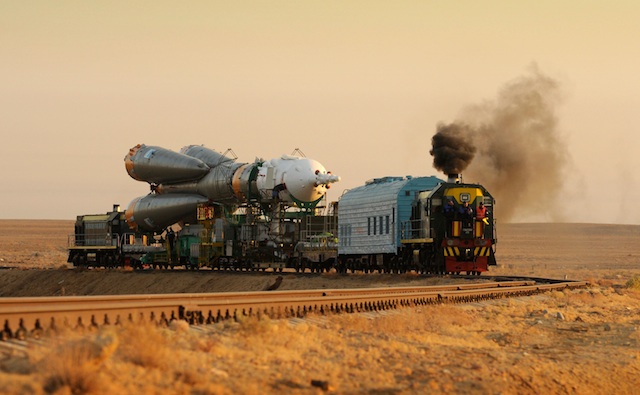
The Soyuz is made of three stages, all of which are one-use

Garriott talked about how expensive it is to send a person to an oil platform at sea, and how the promise of oil is enough to make that expenditure worth it. The logistical and safety nightmare is offset by the profits we get from the oil, and space is no different. “Business will work in orbit,” he said flatly.

The important thing is to get the cost down. The cost of the Soyuz is immense, because it takes thousands of people to create it, and then it’s thrown away. Garriott explained this would be like buying a new car every time you go to the gas station. “Once we get to true reusability, the price will drop enormously.” That’s the trick: creating a ship that can be flown over and over, safely and cheaply. Even if corporations take over space, the possibility of flying in orbit goes up for those interested, and Garriott pointed out that we will all be able to afford seats on a suborbital craft very soon.

What we will learn once we go

Your worldview changes significantly after you orbit the planet, but it takes time to sink in. “The Earth changes scale. It goes from being infinite in your mind’s eye to now… not only finite, but frankly pretty damn small,” Garriott told me.

Pollution and forest fires become much more scary. Garriott described just how thin our atmosphere looks from space, and how you can watch the smoke rise from the land, hit the gases in the atmosphere, and spread over large distances. “If that’s one fire, think of the amount of industrial waste, the volume of air we’re filling with junk over and over again. Your perception of whether or not we can fill the air with crap changes. Of course we do. Every day we fill the entirety of our airspace with crap we’re now breathing.”

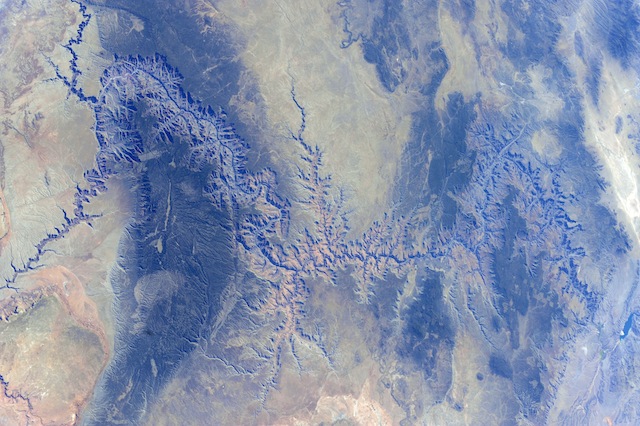
The next big epiphany was weather. Half the Earth is always covered in clouds, and what you notice is that clouds are not the same. “Over the Pacific there are giant laminar fronts, there is nothing but water of relatively similar temperature,” Garriott said. Over the Atlantic with more chaotic landmasses with weather formations, the clouds are nowhere near as stable. Garriott described what it was like to learn about meteorology passively, simply by looking out the window and watching how clouds formed, and to observe the very plates of the Earth and how they fit together. He noted the land erosion, long plumes of matter at the mouths of rivers. “You get a sense of the scale, of how much mass is being washed into the world’s oceans.”

The Grand Canyon

He told Ars that everyone who goes into space not only experiences what he calls the “overview effect,” but they also change their behavior back home. He said his lifestyle at home was terrible, despite giving to environmental causes and the fact that he considered himself a conservationalist. He owned multiple sports cars, created large amounts of trash, and lived in large houses with many electronics. Since he went up, he no longer runs the cars, and is building an electric SUV from scratch. He has added solar panels to his property to become energy neutral. “I’m not there yet, but close,” he told Ars.

This is where it gets interesting. As he noted, he’s a big evangelist for people who can afford to do it right, to choose to do it right. “There’s a lot of things we do I’m not sure are very helpful. Ninety percent of the water we waste is from agriculture. I would rather have a toilet that works and fix [the agriculture waste issue] than install a low-flow toilet or shower.” If you have the money to make the changes, it’s going to spiral out to everyone. “Now, to become energy neutral is not cost-effective on an individual basis. If those who can afford to can get close, to elect to do it, that will help get the industry moving to where it is more and available to a broad audience,” he said.

This change in behavior and thought doesn’t happen instantly. “It would require everyone to have a few orbits,” he explained. It would also take many, many people going into orbit. “More than 1 percent of humanity—it has to be a large amount of people, millions of people into space. I can assure you it will change life on Earth,” he said. People who are religious have religious thoughts, but space flight does not cause you to open to the idea of God, according to Garriott. When people get back, they try to share the story, and change their lifestyle. It’s a very holistic, apolitical process.

There is also the matter of pollution in space, an issue that’s only getting worse. “If you ask where the space station is going to be six months from now, they can’t tell you. Every few months they adjust the orbit to remain a safe distance away from a known piece of debris,” he said. He claimed it’s only a matter of time before someone is killed in space, and it won’t be when they’re in the spacecraft, noting how you can tell the age of the windows on the space station by how many pockmarks and chunks have been taken out by small collisions. A piece of space junk hitting someone’s suit and causing decompression is much harder to survive. Were a piece of junk to hit the space station, fixing the hole is not as difficult as you’d think. “We’re only talking about a difference of 32 pounds per square inch pressure. Unlike the movies where you get sucked through the window, that just wouldn’t happen.”

We’ll go

During his talk, Richard Garriott showed video of a vertical takeoff and a landing craft. This is a design that John Carmack, the creator of the DOOM series of games, is working on, and Garriott’s company is currently selling seats. “And this vehicle—you can literally just refuel and refly. There’s no wear parts on it of any kind,” Garriott tells the crowd. “This vehicle will fly so frequently that it really is just the fuel costs that you have to cover because it’s so efficient from an operational standpoint.”

They have already sold tickets for rides on the ship, Garriott told me later, and the cost is reasonable after the tens of millions he spent to go into space: $100 grand a seat is all it takes. Garriott then told me he believes he can get that down to $50,000 a seat, maybe $25,000. “It’s just a multiple of the fuel cost,” he told me.

The only cost is fuel

The room was spellbound watching the rocket take off, and then land. It’s beautiful. This is the magic of speaking with Richard Garriott, and hearing his passion for exploration and for testing the limits of what we can do both inside the planet and out of it. Suddenly we were all looking at the future, and it’s a very beautiful one.

“How’s that? You want to go for a ride on that one?” he asked, and the room erupted in cheers. I keep my mouth shut, my tongue still, thinking of what it would be like to bite through it.

129 Comments