Samsung and Nokia have signed an agreement to bring Nokia’s HERE mapping service to just about every Samsung device imaginable. Nokia announced that HERE for Android will be exclusive to Samsung’s Galaxy smartphone line, and it will also be bringing a mini version of HERE to Samsung’s Tizen-based smartwatches, including the newly-announced Samsung Gear S.
Nokia HERE’s origins lie in Nokia’s Ovi mapping service and the company’s 2007 purchase of Navteq. HERE data is one of the main competitors to Google Maps—besides the in-house app, the data also powers Yahoo Maps, Bing Maps, Amazon Maps, and Garmin GPS devices. This Nokia has nothing to do with Microsoft, which only bought Nokia’s “Devices & Services” division. The remaining parts of the company deal with maps, cellular networking technology, and R&D.
The move is Samsung’s latest attempt to distance itself from the Google ecosystem. “What will you do without Google Maps” is one of the biggest questions any company (or customer) needs to answer if it wants to ask itself how it could survive a Google-free existence. While it’s not very difficult to dump the Play Store or Gmail for a different client, Google Maps is much harder to replace.
Mapping the entire world is not an easy prospect. Maps is the product of the largest division within Google, a 7,100-strong team of employees and contractors in a company of only 48,000 employees. Running an operation like that naturally costs a lot of money, but Google can afford it because Maps is really a big local ad platform. Competing with this is a bit of a nightmare for other companies, especially when there is a lack of an equally lucrative business model.
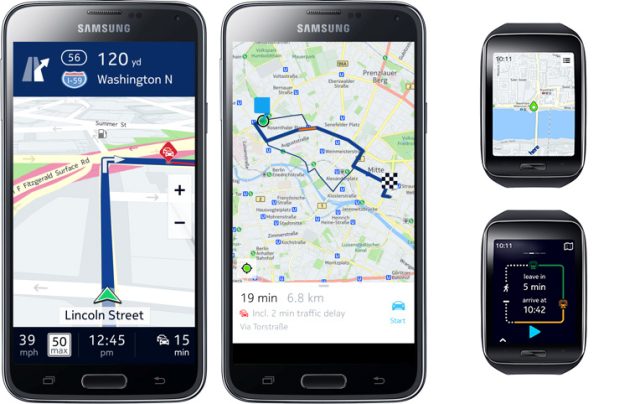
Nokia’s business model is to charge for access to the map data, which presumably is what Samsung is doing, plus a little more to get HERE for Android as an exclusive. This gives Samsung an alternative to leaving the Google ecosystem, but it also puts the company in the terrible position of paying to compete with a Google revenue source. Samsung loses money for every user of its map app, while Google makes money from its maps users.


 Loading comments...