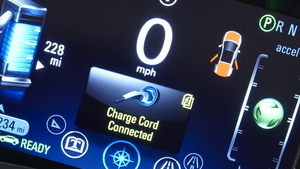
Back in 2008, we got a chance to take a look under the skin of Chevrolet’s range-extended hybrid, the Volt. A couple of weeks ago, thanks to the fine people at ShopAutoWeek, I got a chance to spend some time driving one. It was an impressive machine; not the sort of thing a boy racer like me would usually go for, but (in my opinion) pleasing to the eye and equipped with a great interior. The thing I was most struck by was the dashboard, which left me wondering if it might just be the key to modifying behavior on the open roads.
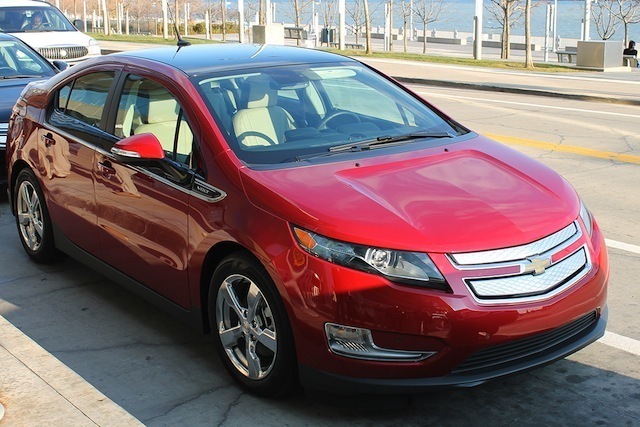
At first, I jumped in the car and just started driving it normally, or at least normally for me (other people might describe this as spirited driving). But in an electric car (even one with an on-board generator), driving flat-out from point to point isn’t really the idea. That’s when I started paying attention to the dashboard, which Chevrolet is calling the Driver Information Center.
Every other car I’ve driven presents information to the driver in the same way, with dials for speed, engine rpm , and various ancillary dials. But you don’t need to know your revs in a Volt, since the internal combustion engine is not directly connected to the drivetrain; rather, it runs at optimum rpm when needed to charge the onboard batteries. The screen behind the steering wheel displays your speed and estimated range, and a sort of activity level on the right hand side. It’s this widget that has captivated me.
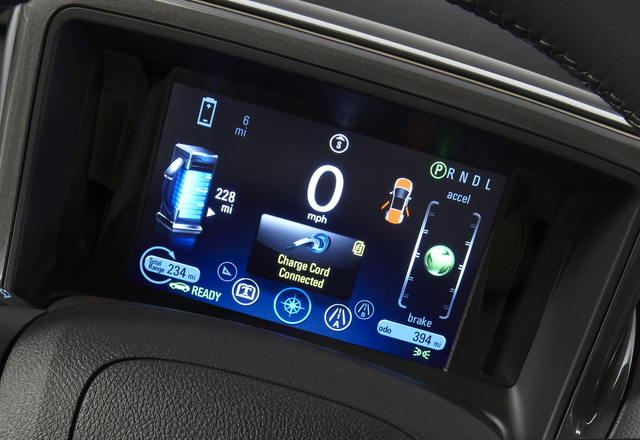
It’s designed to give you real-time feedback on your driving style. When the car is happy (i.e. being driven efficiently), the ball is green and in the center of the gauge. Stomp on the accelerator, and it rises to the top, changing color to yellow. Brake too hard (so you’re bypassing the kinetic energy recovery) and it dives to the bottom, again changing color to yellow. The more time you spend in yellow, the fewer miles you’ll go before you have to start burning hydrocarbons.

 Loading comments...