Last May, the web sites of a number of high-ranking Estonian politicians and businesses were attacked over a period of several weeks. At the time, relations between Russia and Estonia were chillier than usual, due in part to the Estonian government's plans to move a World War II-era memorial known as the Bronze Soldier (pictured below at its original location) away from the center of the city and into a cemetery. The country's plan was controversial, and led to protests that were often led by the country's ethnic Russian minority. When the cyberattacks occurred, Estonia claimed that Russia was either directly or indirectly involved—an allegation that the Russian government denied. Almost a year later, the Russian government appears to have been telling the truth about its involvement (or lack thereof) in the attacks against Estonia. As InfoWorld reports, an Estonian youth has been arrested for the attacks, and current evidence suggests he was acting independently—prosecutors in Estonia have stated they have no other suspects. Because the attacks were botnet-driven and launched from servers all over the globe, however, it's impossible to state definitively that only a single individual was involved.
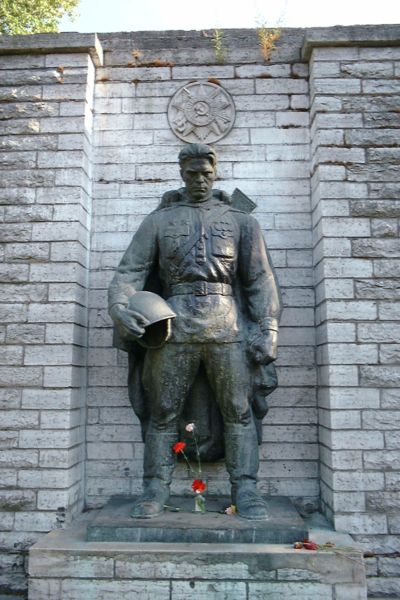
Dmitri Galushkevich, a 20-year-old Estonian student, launched the DoS (denial-of-service) attacks from his own PC last year. Although he's a native Estonian, Galushkevich was angry over his government's plans to move the statue, and launched the attack as a means of protesting the decision. The fact that a single angry student was able to impact international relations between two countries is an startling development. Understanding why Estonia and Russia got into a tiff about a war memorial statue in the first place, however, requires that we take a trip down history lane.
American history tends to focus its coverage of World War II on the theaters of combat we participated in. This makes logical sense—but it leaves the story of the eastern front largely untold, and doesn't begin to explain why the Russians would be upset over Estonia's movement of a statue nearly 63 years after the war's end—or why the Estonians would want to move it in the first place.