The growing maturity of the smartphone and tablet markets was readily apparent in Apple’s financial results for the second quarter of its fiscal 2014, which runs from the beginning of January to the end of March. Even though it sold a few more iPhones than it did in the second quarter of 2013, it sold slightly fewer iPads, and both revenues and profit margins were up a little from last year (think single-digit percentage growth).
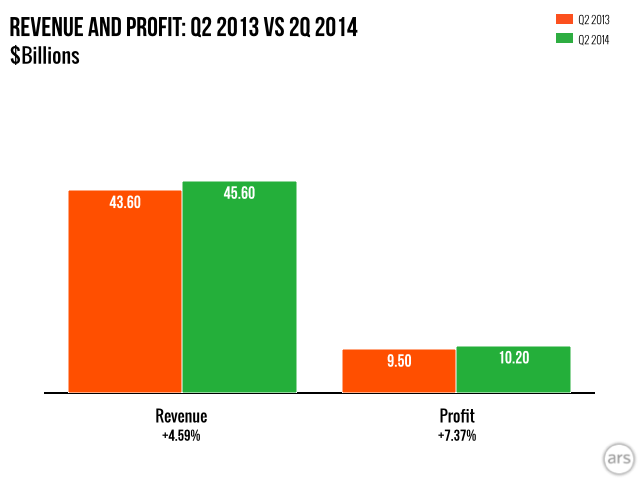
There’s no question that Apple is still making money hand over fist: it reported profits of $10.2 billion on revenue of $45.6 billion, giving it a profit margin of 39.3 percent and beating its own upper guidance of $44 billion from last quarter—those margins also beat the company’s upper guidance of 38 percent. It’s just that the company is no longer growing as explosively as it once was, something that investors and analysts alike are quick to lose their heads over. Apple’s guidance for next quarter predicts revenues between $36 and $38 billion and a profit margin between 37 and 38 percent.
Apple’s past growth has been driven mostly by entering entirely new product categories, like it did when it introduced the iPod in 2001, the iPhone in 2007, and the iPad in 2010. The most persistent rumors involve TV (whether a new Apple TV set-top box or an entire television set) and wearable computing devices (the perennially imminent “iWatch”), but calls for larger and cheaper iPhones also continue. An internal Apple presentation shown as part of the ongoing Apple v. Samsung case suggested that most of the continued growth in the smartphone market is coming from phones with larger screens and phones that cost less than $300, though Apple’s Phil Schiller noted that the presentation “didn’t represent Apple policy.”
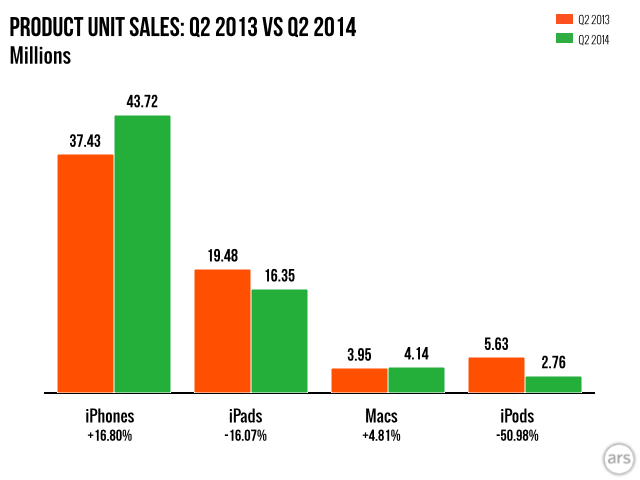
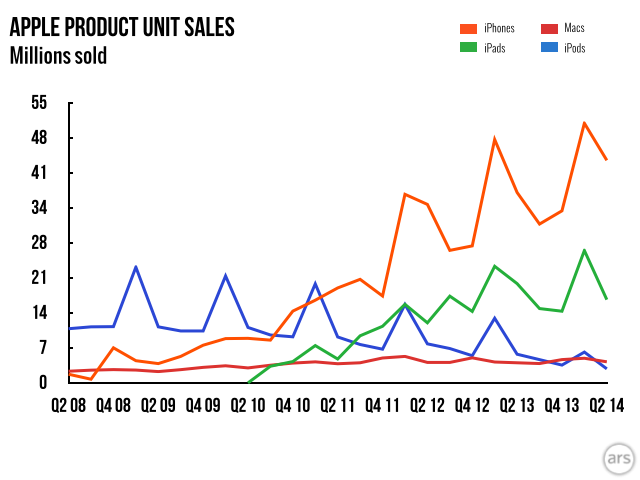
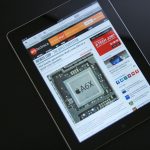
For now, iPhone growth isn’t quite done: Apple sold 43.72 million iPhones this quarter, up from the 37.43 million phones it sold in Q2 of 2013. That growth is offset by a sizable 16 percent decrease in iPad sales—Apple sold just 16.35 million tablets this quarter, down from 19.48 million a year ago. This decrease comes despite a brand new design for the iPad Air, an oft-requested Retina display upgrade for the iPad mini, and the fact that the iPad lineup now starts at $299 (its lowest price ever for a 16GB first-generation iPad mini). It’s possible that the three-year-old iPad 2, which was still being sold for $399 up until mid-March, contributed to this dip. It’s hard to imagine that tablet being solely responsible for a three million unit drop.

 Loading comments...